
HEALTH JOURNAL
Diabetes Symptoms: Recognizing Patterns Without Guessing a Diagnosis
Understand common diabetes symptoms, why some people have none, what blood tests can show, and which warning signs need emergency attention.

Being tired, thirsty, or up in the night does not automatically mean diabetes. These experiences can have many explanations. At the same time, familiar symptoms can be easy to dismiss when they arrive gradually or blend into a busy week.
A useful approach considers the pattern, how quickly it has changed, and whether you need testing or urgent care. Symptoms cannot identify the type of diabetes on their own. Some people have no noticeable symptoms, which is why screening and personal health history also matter.
Common symptoms are clues, not a checklist diagnosis
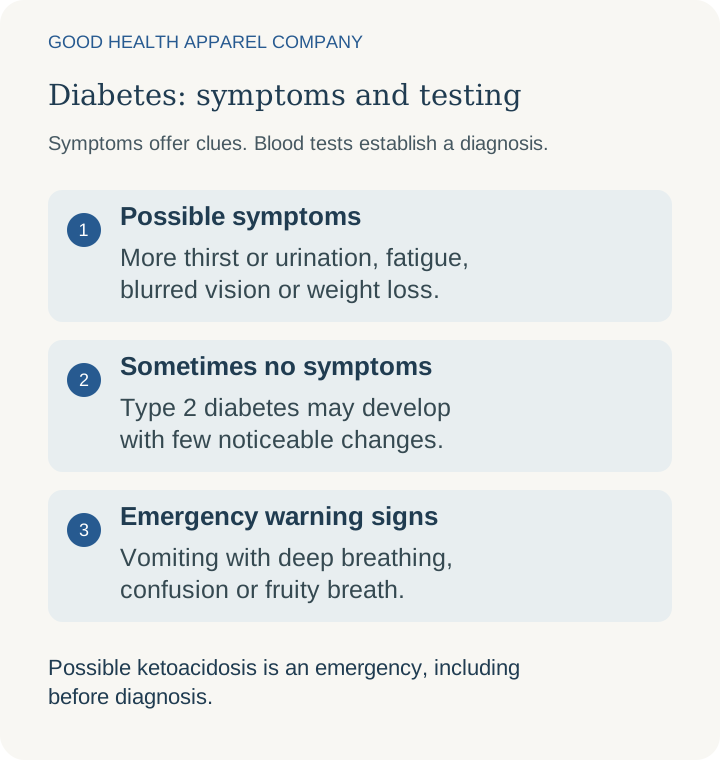
NIDDK’s symptom overview includes increased thirst and urination, unusual hunger, tiredness, blurred vision, slow-healing sores, and repeated infections. These symptoms can occur with different types of diabetes. Having one does not establish the condition, and missing one does not exclude it.
Think in terms of change from your usual pattern. Are you drinking much more despite no obvious change in heat or activity? Is waking to urinate new? Have several changes appeared together? Those details can help a clinician understand what has happened.
A short record may be useful, but there is no need to complete a diary before seeking help. Rapidly worsening symptoms or feeling seriously unwell take priority over gathering a perfect history. A symptom list is a conversation aid, not a waiting requirement.
Speed of onset can change the urgency
NIDDK explains that type 1 diabetes symptoms often develop over days or weeks, while type 2 symptoms may appear slowly over years or remain unnoticed. Type 1 can begin at any age. An adult’s age alone cannot establish that new diabetes must be type 2.
Unexpected weight loss alongside thirst or frequent urination deserves prompt assessment, especially when changes are progressing. In children, a new pattern of drinking and urinating more may be particularly noticeable to a parent or caregiver.
Even so, the timeline does not reliably identify the type. Some adults with type 1 have a slower presentation. Medical assessment and, when needed, additional testing help determine the cause and treatment. Neither age nor a person’s appearance is a dependable shortcut.
Some warning signs need emergency care
CDC describes diabetic ketoacidosis, or DKA as a potentially life-threatening complication caused by insufficient insulin. It is more common in type 1 diabetes but can also occur in type 2. Sometimes it is the first noticeable sign that a person has diabetes.
Severe warning signs can include fast, deep breathing, fruity-smelling breath, vomiting, abdominal pain, or marked tiredness. Trouble breathing, repeated vomiting with inability to keep fluids down, or several DKA signs together warrant immediate emergency attention. In the United States, call 911 or seek emergency care.
This is different from arranging a routine screening appointment. Waiting to buy a home glucose meter or to see whether a dietary change helps can delay necessary treatment. A person with known diabetes should also follow their own illness and emergency plan from their care team.
Testing answers a different question from symptom tracking
NIDDK’s testing guide explains that clinicians diagnose diabetes using blood tests. Common options include A1C, fasting plasma glucose, and an oral glucose tolerance test. A random plasma glucose test may be used when symptoms are present.
A1C reflects average blood glucose over roughly three months. Fasting glucose measures it at a particular time after fasting. The choice depends on the circumstances, and pregnancy or certain blood conditions can affect which test is suitable. The team can explain preparation and interpretation.
A home meter or wearable reading cannot independently diagnose diabetes. A result needs clinical context and may need confirmation with another test. If a result is borderline or unexpected, understanding the follow-up plan is more useful than trying to interpret every online threshold yourself.
Screening matters when symptoms are absent
NIDDK’s type 2 risk guide includes age, family history, prediabetes, and a history of gestational diabetes among relevant factors. Risk can also be affected by activity and other health conditions. These factors help inform a testing conversation rather than establish a diagnosis.
Two people who feel equally well may have different reasons for screening. Someone with prior elevated blood glucose may need a different follow-up schedule from someone without that history. A previous normal result does not mean testing will never be useful again.
If relatives have diabetes, knowing which type and roughly when it was diagnosed can help. If those details are unavailable, simply sharing the history still gives your clinician a place to start. Screening decisions should account for the whole person rather than a single risk label.
Pregnancy has its own testing pathway
NIDDK’s gestational diabetes overview notes that this condition often has no symptoms or only mild ones. Testing during pregnancy is therefore important even when a person feels well. Routine testing commonly takes place between 24 and 28 weeks, with individual circumstances affecting the plan.
Thirst or frequent urination during pregnancy cannot reliably separate normal pregnancy changes from diabetes. The pregnancy care team can explain which test is planned, whether fasting is needed, and what happens after an abnormal result.
A history of gestational diabetes also matters after birth because later type 2 risk is higher. Keeping that history in your general medical record supports continued follow-up. A diagnosis is information that can guide care, not a judgment about how someone has eaten or managed a pregnancy.
About this article
This original GHAC article was inspired by WebMD’s related topic, used as topic inspiration.
Information here is educational and does not replace personalized medical advice.
Frequently asked questions
Can diabetes be present without symptoms?
Yes. Type 2 and gestational diabetes can occur without noticeable symptoms. Screening can identify concerns before symptoms appear.
Can a home glucose meter diagnose diabetes?
No. Clinicians use appropriate blood tests and clinical assessment. A home reading can be information to discuss, but it does not establish the diagnosis.
Can an adult develop type 1 diabetes?
Yes. Type 1 diabetes can begin at any age, so age alone cannot determine the type.
When are symptoms an emergency?
Trouble breathing, repeated vomiting with inability to keep fluids down, or multiple signs of DKA need immediate emergency attention. Do not wait for routine testing.
Make room for a clearer conversation
A short note about your symptoms, health history, and questions can make a conversation with your health care team more useful.
More everyday wellbeing reading

Understanding Cholesterol: Which Numbers Matter?
Understand LDL, HDL, triglycerides, and why your cholesterol results belong in a wider conversation about heart health and treatment.
Read article →
Food and Nutrition Terms: A Practical Everyday Glossary
Make sense of serving sizes, added sugars, fiber, fats, and ingredient labels with plain-language definitions and everyday examples.
Read article →