
HEALTH JOURNAL
Understanding Cholesterol: Which Numbers Matter?
Understand LDL, HDL, triglycerides, and why your cholesterol results belong in a wider conversation about heart health and treatment.

A cholesterol report can look like a collection of competing scores. One number is marked high, another is described as good, and the total may seem to settle everything. In practice, the results make more sense when you know what each measurement represents and how your clinician uses it.
The purpose of testing is to guide care that reduces cardiovascular risk. This article explains the main terms, why a reassuring HDL result does not erase a high LDL result, and how to prepare for a useful conversation about the next step.
Cholesterol is necessary, but excess in the blood matters
Cholesterol is a substance the body uses to make cells and hormones. Your liver makes the cholesterol your body needs. The American Heart Association’s overview explains why too much in the blood can increase the risk of heart disease and stroke.
Dietary cholesterol and blood cholesterol are related terms, but they are not interchangeable. The first describes cholesterol in food. The second describes what is measured in your blood. A food package that says cholesterol-free does not, by itself, tell you whether the food supports your treatment goals.
High cholesterol often has no symptoms. Feeling energetic is not a replacement for testing, and an abnormal result is not a personal failure. Ask your clinician about a screening schedule that fits your age and health history.
LDL, HDL, and triglycerides have different roles
The AHA distinguishes LDL, HDL, and triglycerides. LDL is associated with fatty buildup in artery walls. HDL participates in carrying cholesterol back toward the liver. Triglycerides are a separate type of blood fat involved in storing energy.
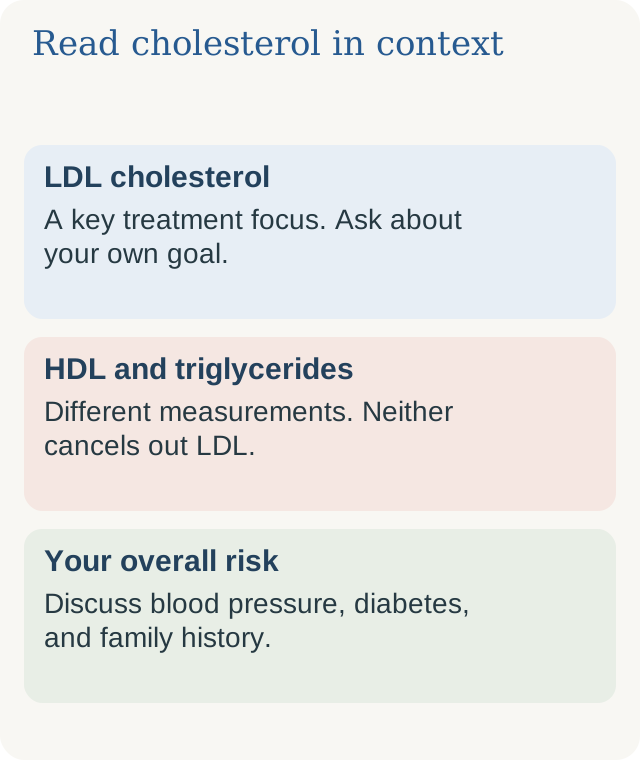
The nicknames good and bad cholesterol are shorthand. They can help you recognize terms, but they are not enough to interpret your report. HDL does not remove all LDL from the bloodstream or make a high LDL harmless. A clinician considers the measurements together.
Total cholesterol is a combined measure. Two people with similar totals can have different combinations of results and different health histories. Bring the full report to an appointment rather than just remembering whether the total was inside the laboratory’s printed range.
Ask for your goal, rather than borrowing someone else’s
The AHA’s guide to cholesterol levels explains that there is no single LDL goal suitable for everyone. Age, family history, diabetes, and a history of heart attack or stroke can affect the goal and the recommended response.
HDL is considered when assessing risk, but it is not a treatment target on its own. Trying to raise it without addressing the rest of your care can distract from the actual decision. Ask which result your clinician is focusing on and why.
Other parts of the discussion may include blood pressure, tobacco exposure, kidney health, and the medicines you already take. A family history of early cardiovascular disease is useful information to bring. Do not wait until you have perfectly organized records to mention it.
Make food changes specific and realistic
The NHLBI Therapeutic Lifestyle Changes program emphasizes reducing saturated fat and including soluble fiber from foods such as oats, beans, and fruit. These are parts of an eating pattern, not promises that a single breakfast will normalize a result.
For a practical example, consider oatmeal for a breakfast you already eat at home, beans in a soup or grain bowl, or a smaller amount of a rich creamy topping alongside more vegetables. These are options for adapting familiar meals. Choose an adjustment that fits taste, budget, and any other dietary requirements.
Changes work best when the replacement is clear. Instead of deciding only to eat less of something, decide what will go on the plate in its place. If the whole plan feels overwhelming, a registered dietitian can help identify the most useful place to start.
Lifestyle changes and medicine can belong in the same plan
NHLBI’s treatment guidance describes healthy habits and medicines as possible parts of care. The appropriate combination depends on your risk, cholesterol results, other conditions, and response to treatment. Some people need medication even when they eat thoughtfully and stay active.
If a medicine is recommended, ask what benefit is expected, which side effects to discuss, and what follow-up is planned. Do not stop it because a food article sounds promising or a later number improves. An improved result may reflect treatment working.
Movement suited to your abilities, avoiding tobacco, and managing other cardiovascular conditions can also matter. You do not need to make every change at once. Ask your care team which actions deserve priority and how they will assess progress.
Bring four questions to your next review
A useful appointment can begin with four questions: What do my individual results show? What goal makes sense for me? Which lifestyle changes or medicines do you recommend? When should I repeat the test or contact you about a problem?
Bring a medicine list and mention a family history of high cholesterol or early heart disease. If cost, side effects, food access, or uncertainty makes the plan hard to follow, say so. A plan that looks good on paper needs to fit daily life.
For help understanding food packaging, see our everyday food and nutrition glossary. Labels can support your decisions, but they cannot diagnose cardiovascular risk or replace an individual treatment discussion.
Sources and further reading
This original GHAC article was inspired by WebMD’s topic on what matters in cholesterol management.
- American Heart Association: What is cholesterol?: Basic roles, sources, and cardiovascular relevance.
- American Heart Association: LDL, HDL, and triglycerides: Different lipid measurements and their roles.
- American Heart Association: What your levels mean: Personal goals and interpretation in context.
- NHLBI: Therapeutic Lifestyle Changes: Food patterns and soluble fiber.
- NHLBI: Blood cholesterol treatment: Healthy habits, medicines, and individualized treatment.
Information here is educational and does not replace personalized medical advice.
Frequently asked questions
Is total cholesterol enough to judge my risk?
No. The individual lipid measurements and your wider health history matter. Ask your clinician to review the complete report.
Does a high HDL cancel out a high LDL?
No. HDL does not erase the risk associated with high LDL. Results need to be considered together in context.
Can I lower cholesterol through food alone?
Food changes can help, but some people also need medicine. Your clinician can recommend the right combination for your risk and results.
Should I stop my medicine when my numbers improve?
Do not stop prescribed medicine on your own. Improvement may mean treatment is working. Discuss any changes and side effects with your care team.
Leave with a clear personal plan
Ask for your goal, your next practical action, and your follow-up date in language you can use at home.
More everyday wellbeing reading

Fruit and Vegetable Skins: What to Keep, Peel, and Wash
A practical guide to edible produce skins, simple meal ideas, safe washing, and when peeling is the more comfortable choice.
Read article →
Food and Nutrition Terms: A Practical Everyday Glossary
Make sense of serving sizes, added sugars, fiber, fats, and ingredient labels with plain-language definitions and everyday examples.
Read article →