
HEALTH JOURNAL
Heart Health: Risk Factors Beyond the Usual Checklist
Explore how sleep, pregnancy history, stress, and family history fit alongside blood pressure and cholesterol in a heart-risk conversation.

A headline about surprising causes of heart disease can leave almost anything looking dangerous. A more useful starting point is the difference between a risk factor and a prediction. A risk factor changes the likelihood of a problem. It does not tell you that a particular person will have one.
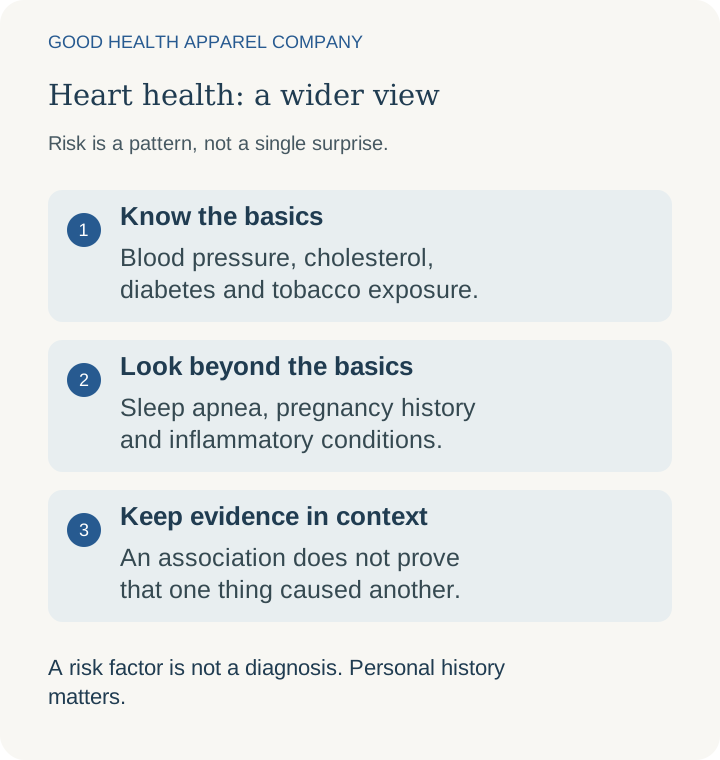
Blood pressure, cholesterol, smoking, and diabetes remain central to the picture. Less familiar information, including sleep problems and pregnancy history, may add context. Understanding how these pieces fit together can make a health conversation more complete without turning ordinary life into a list of threats.
Start with the factors that can be quiet
NHLBI’s heart-risk overview identifies high blood pressure, high cholesterol, diabetes, smoking, limited physical activity, and family history among major considerations. Someone who feels well can still have elevated blood pressure or cholesterol. Appearance, fitness, and the absence of chest discomfort cannot substitute for measurements.
A useful review brings the pieces together: what your recent results show, whether treatment is helping, and what has changed since your last visit. A single number rarely explains everything. Age, existing illness, medicines, and family history influence what a result means for you.
Sleep belongs in the heart-health conversation
NHLBI’s sleep guidance connects inadequate or poor-quality sleep with cardiovascular concerns. Most adults need seven to nine hours a night. Time in bed and restorative sleep are not always the same, particularly when work, caregiving, pain, or a sleep disorder interrupts the night.
An occasional difficult night is different from a persistent pattern. Useful details include how often sleep is disrupted, whether you feel sleepy during the day, and whether your schedule permits enough rest. These observations offer more practical information than a sleep score viewed in isolation.
A realistic conversation also considers circumstances. A rotating work schedule or caring for someone overnight cannot always be solved by an earlier bedtime. Describing those constraints helps the care team discuss options that fit real life.
Loud snoring can be a clue, not a diagnosis
NHLBI explains sleep apnea as repeated interruptions in breathing during sleep. Untreated sleep apnea can contribute to serious problems, including heart attack and stroke. Loud snoring, gasping, and daytime sleepiness are reasons to discuss whether assessment would be useful.
Not everyone who snores has sleep apnea, and a partner’s observation cannot establish a diagnosis. Conversely, someone sleeping alone may never hear their own breathing changes. Clinicians consider symptoms and may arrange a sleep study rather than relying on one sign.
It can help to describe effects on daily life: nodding off during quiet activities, waking unrefreshed, or having trouble staying alert. Those details give the conversation a focus beyond whether your snoring bothers someone else.
Pregnancy and family history add important context
NHLBI includes preeclampsia and a family history of early heart disease among risk factors. Preeclampsia is a pregnancy complication involving high blood pressure. A remote pregnancy history can still matter years after the immediate problem has resolved.
For family history, the relative’s relationship and age at diagnosis are useful. “Heart trouble runs in the family” is a starting point, but a parent’s early heart attack gives more specific information than an older relative’s unrelated heart condition.
This history is context for prevention, not a verdict. It may help explain why a clinician asks different questions of two people whose current cholesterol readings look similar. Missing old records is common; sharing what you know is still useful.
Stress matters without making illness a personal failure
NHLBI’s stress overview describes how stress can contribute to high blood pressure and influence coping behaviors. An intensely upsetting event can also trigger angina or a heart attack in some people. These observations do not mean that every stressful day damages your heart.
Long-running financial pressure, bereavement, discrimination, caregiving, or unsafe working conditions are not simple attitude problems. Describing the pressure and its effects on sleep, smoking, drinking, or daily routines gives a clinician something concrete to discuss.
Relaxation, supportive relationships, movement that fits your abilities, and professional support can all belong in that discussion. None guarantees freedom from heart disease or replaces treatment for blood pressure, cholesterol, or an existing heart condition.
Know when the conversation cannot wait
NHLBI’s emergency guidance explains that possible heart-attack symptoms are not a situation for comparing risk factors online. New chest pressure or discomfort, especially with shortness of breath, sweating, nausea, or discomfort spreading to the arm, back, neck, or jaw, warrants immediate emergency attention. In the United States, call 911 for a suspected heart attack, even if you are unsure.
For prevention visits, a brief record of recent results, medicines, sleep concerns, pregnancy complications, and relatives’ diagnoses helps organize a broader assessment. The purpose is a more informed conversation, not proving that you have followed every health rule.
About this article
This original GHAC article was inspired by WebMD’s related topic, used as topic inspiration.
Information here is educational and does not replace personalized medical advice.
Frequently asked questions
Can I have heart risk without symptoms?
Yes. High blood pressure and cholesterol often have no obvious symptoms. Measurements and health history help assess risk.
Does snoring mean heart disease?
No. Snoring alone does not diagnose sleep apnea or heart disease. Persistent snoring with gasping or daytime sleepiness deserves assessment.
Does a stressful week cause a heart attack?
Stress can affect heart health, but an individual event cannot be predicted from a stressful week. Possible heart-attack symptoms require emergency care.
Does pregnancy history still matter later?
Yes. A history of preeclampsia can inform later cardiovascular risk discussions, even many years after pregnancy.
Make room for a clearer conversation
A short note about your symptoms, health history, and questions can make a conversation with your health care team more useful.
More everyday wellbeing reading

Understanding Cholesterol: Which Numbers Matter?
Understand LDL, HDL, triglycerides, and why your cholesterol results belong in a wider conversation about heart health and treatment.
Read article →
Food and Nutrition Terms: A Practical Everyday Glossary
Make sense of serving sizes, added sugars, fiber, fats, and ingredient labels with plain-language definitions and everyday examples.
Read article →