
HEALTH JOURNAL
Can Probiotics Help Acid Reflux? What to Know
What probiotic research does and does not show about acid reflux, plus practical food choices, treatment context, and when to seek care.

A probiotic can sound like a simple answer when heartburn keeps interrupting dinner or sleep. The useful starting point is more cautious: probiotics are being studied for digestive symptoms, but they are not an established replacement for acid-reflux treatment.
This guide separates an interesting research question from a treatment recommendation. It also offers a way to prepare for a conversation about symptoms, food choices, and supplements without turning a shopping decision into a substitute for care.
Start by separating reflux from other digestive symptoms
Acid reflux happens when stomach contents move back into the esophagus, the tube connecting the mouth and stomach. Heartburn and a sour taste can be clues. GERD is the more persistent condition that can require ongoing care. Bloating, burping, and upper-abdominal discomfort can occur alongside reflux, but they are not interchangeable measures of the same problem. NIDDK explains the symptoms and causes of reflux.
That distinction matters when someone says a supplement helped their digestion. Fewer episodes of gas may be welcome, but that does not tell us whether acid exposure in the esophagus changed. Likewise, feeling better after a food change does not establish why it helped. Keep the symptom you want to improve specific: burning after dinner, sour fluid coming up at night, or another concern.
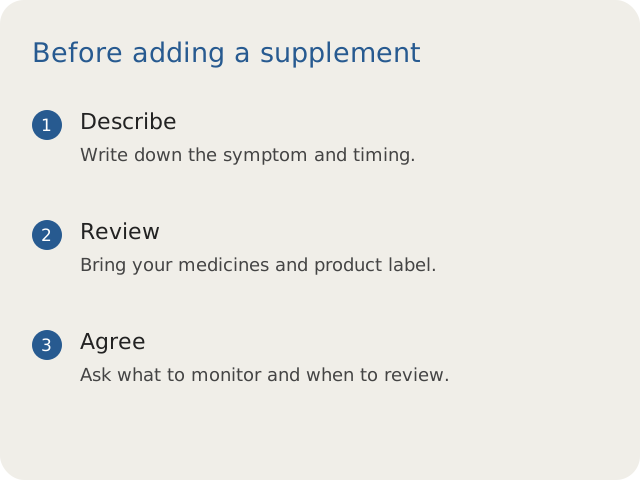
Before shopping, write down what is happening in your own words. Note whether the sensation is burning, fullness, nausea, or regurgitation, and when it tends to occur. Bring that description to a clinician rather than assuming every digestive complaint needs the same product. This also makes the conversation more useful than a broad request for something to improve gut health.
What the probiotic research can actually tell us
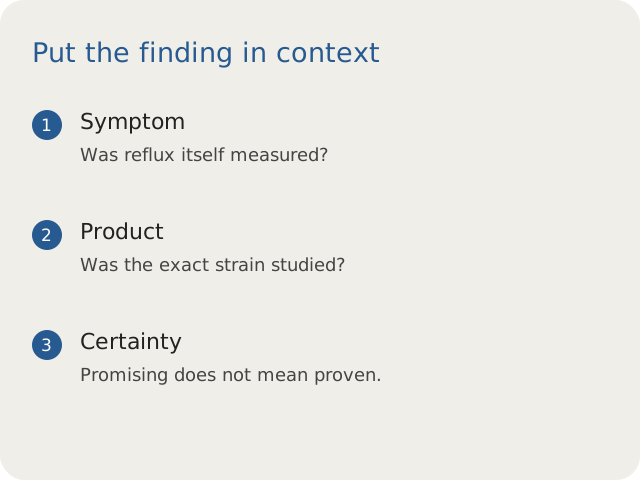
A 2020 systematic review of probiotics and reflux-related symptoms found encouraging results in some studies, but the studies differed in products, quality, participants, and symptoms measured. Some outcomes concerned indigestion or gas rather than reflux specifically. The authors called for stronger controlled trials. Their industry affiliations are disclosed in the paper.
The review is a reason to keep investigating, not a reliable shopping guide. It does not identify one proven probiotic, dose, or treatment duration for everyone with GERD. Nor does a favorable result for one formulation establish that another brand with a similar label will do the same thing. This is an older review, not a newly announced treatment breakthrough.
It helps to read a result as a complete sentence: a particular product was studied in a particular group for a particular outcome. Remove those details and a cautious finding can become an overly broad promise. A headline about digestive benefits should leave you asking which symptoms improved and how the researchers measured them, rather than assuming the benefit covers every digestive condition.
A strain name matters more than a broad gut-health promise
Probiotics contain live microorganisms, but they are not one uniform ingredient. NIH’s consumer probiotic fact sheet explains that products differ by microorganism and strain. A larger number of organisms or a longer ingredient list does not automatically make a supplement better suited to your needs.
If you bring a product to an appointment, bring the actual label or a clear photo. Ask what evidence applies to its named strain, what benefit would be reasonable to expect, and how a decision to continue or stop would be made. A recommendation based only on the word probiotic leaves too much unspecified.
Be equally cautious with testimonials. A reviewer may have changed meal timing, started a medicine, or had symptoms that were different from yours. Their experience can be sincere without predicting your outcome. Spending more for an impressive-looking bottle does not resolve those uncertainties. It is reasonable to leave a product on the shelf while you get a clearer answer.
Yogurt and fermented foods are food choices, not reflux prescriptions
A bowl of yogurt can be part of a meal if you enjoy and tolerate it. That is a different decision from taking it as a treatment. Fermented foods vary in their microorganisms and processing, and the word fermented does not guarantee a demonstrated probiotic benefit. NIH’s detailed probiotic overview explains these distinctions.
Instead of forcing yourself to eat a food because it sounds beneficial, consider how it fits your usual meals. A small serving with breakfast may be more appealing than adding a large extra snack after an already filling dinner. This is a practical meal-planning example, not a tested treatment schedule. Choose the version you like and discuss persistent symptoms separately.
You do not have to tolerate discomfort to prove that a food is healthy. If a particular yogurt, fermented drink, or spicy fermented vegetable consistently seems to make symptoms worse, record that observation and discuss it. There is no need to turn one food into an obligation. Dietary variety can come from many ordinary foods, and no single fermented product is essential.
Put established reflux care ahead of supplement experiments
Established care may include changes in habits and medicines selected for your symptoms. NIDDK’s reflux treatment guidance describes antacids, H2 blockers, and proton pump inhibitors, which have different roles. A probiotic should not be treated as a substitute for a prescribed medicine or a reason to change a dose independently.
When considering any added product, start with the treatment plan you already have. Make a list of prescriptions, over-the-counter medicines, and supplements so a clinician or pharmacist can review the whole picture. Include how often you actually take them. A plan that looks appropriate on paper may need clarification if instructions are hard to follow in everyday life.
Ask practical questions: What should I do on days when symptoms break through? When should I call back? Am I taking this medicine at the intended time? These questions can be more productive than adding another bottle. Do not interpret ongoing symptoms as proof that you need probiotics, and do not assume symptom relief means any underlying irritation has healed.
Make food changes personal and manageable
For symptoms that occur at night or while lying down, NIDDK suggests leaving at least three hours between eating and lying down. Trigger foods differ between people. Common possibilities include coffee, alcohol, chocolate, acidic foods, and high-fat or spicy meals, but a universal forbidden-food list is not the goal.
Choose one workable adjustment rather than removing several food groups at once. If dinner often happens just before bed, consider whether an earlier meal is realistic. If the schedule cannot move, discuss options that suit your work and family routine. Advice that ignores your day is difficult to use, so bring the constraint into the conversation instead of treating it as a failure.
A brief food-and-symptom note can organize observations without turning every meal into a test. Record the time, approximate portion, symptom, and whether you lay down afterward. Keep it simple enough to maintain. The record can suggest a pattern to discuss, but it cannot diagnose a cause. Avoid declaring a food permanently off limits after one uncomfortable evening.
A simple checklist before trying a supplement
First, name the decision you are making. Are you hoping to ease occasional discomfort, manage a diagnosed condition, or replace a treatment you dislike? Those are different situations. If the real issue is concern about a medicine, say that directly. A conversation about its benefits and risks is more useful than quietly swapping it for an unproven alternative.
Second, decide what information is missing. You may need a symptom assessment, advice about a specific product, or help understanding an existing prescription. Write down two or three questions and keep the label available. There is no need to arrive with a theory about your microbiome or a preferred brand to have a useful appointment.
Third, discuss what a reasonable review would look like if a professional does recommend trying something. Ask which outcome to watch, what unwanted effects to report, and when to reassess. Do not invent your own escalating dose or combine several new products to speed things up. More changes at once make your experience harder to interpret and can add avoidable expense.
Plan the conversation around your priorities
You may care most about sleeping through the night, eating comfortably with family, or understanding whether a daily medicine is still appropriate. Say which goal matters most. A visit can cover the science and still miss your main concern unless you put it into words. Bring one concrete example of how symptoms interfere with the day rather than trying to recall every meal you have eaten.
If cost is part of the decision, include that too. Paying repeatedly for a product with an uncertain benefit may not be a useful tradeoff for your household. Ask whether there is a clearer, simpler next step before committing to an ongoing purchase. A subscription discount is a pricing offer, not evidence that a product should become part of your routine.
It is also reasonable to ask for the plan in writing: what to keep doing, what to change, and when to check back. Share it with anyone who helps with your meals or medicines if you want their support. The aim is to leave with fewer unanswered questions and a manageable next step, rather than a longer list of things to buy.
Safety deserves its own conversation
Probiotics are not risk-free simply because they are sold without a prescription. NCCIH’s safety overview notes greater concern for people with serious illnesses or weakened immune systems. Some people experience digestive side effects, and safety knowledge varies by product and population.
If you have a significant medical condition, are receiving treatment that affects immunity, or are choosing something for a child, get individualized advice before use. Pregnancy is also a reason to discuss reflux treatment choices with your maternity team. Advice written for adults in general should not be transferred automatically to infants or children.
A useful safety conversation includes your circumstances, not just the brand name. Tell the professional about current treatments and the symptoms you are trying to address. If a product makes you feel worse, do not assume the discomfort is a necessary adjustment or evidence that it is working. Ask for advice rather than pushing through an unexplained reaction.
Know when to seek care rather than keep experimenting
Reflux that keeps returning, disrupts sleep, or persists despite over-the-counter treatment deserves assessment. Difficulty swallowing, unexplained weight loss, persistent vomiting, or signs of digestive bleeding require prompt medical attention. NHS guidance on heartburn also emphasizes getting help for ongoing symptoms rather than relying indefinitely on self-treatment.
New, severe, or unexplained chest pain should never be assumed to be heartburn. Seek emergency help, particularly with shortness of breath, sweating, faintness, or pain spreading to the arm or jaw. Do not wait to see whether a supplement or antacid changes it. The purpose of this advice is to avoid letting a familiar label obscure a potentially urgent problem. See the American Heart Association’s warning signs.
For a routine visit, bring your symptom notes and medication list. Say whether the pattern has changed, whether swallowing is uncomfortable, and whether symptoms affect sleep or eating. Those details help the clinician decide what needs attention. You do not need to complete a supplement trial before asking for help, and you do not need to prove your symptoms are severe enough to discuss.
About this article
This original GHAC article was inspired by Health’s article on probiotics and acid reflux.
Information here is educational and does not replace personalized medical advice.
Frequently asked questions
Is there a best probiotic for acid reflux?
There is no established best strain, dose, or duration for everyone with GERD. Ask a clinician about evidence for the exact product before using one for reflux.
Can probiotics replace my reflux medicine?
Do not replace or stop prescribed reflux medicine without discussing it with your clinician. Probiotics are not an established substitute.
Does yogurt cure heartburn?
No. Yogurt can be a food you enjoy, but it should not be presented as a cure. Choose based on tolerance and your overall eating needs.
Are fermented foods always probiotics?
No. Fermentation alone does not establish that a food contains a live strain in an amount with a demonstrated health benefit.
When should recurring reflux be checked?
Arrange an assessment when symptoms keep returning, disrupt sleep, or persist despite self-care. Seek prompt help for difficulty swallowing, bleeding, unexplained weight loss, or persistent vomiting. New or severe unexplained chest pain needs emergency assessment.
Start with one useful question
Write down the symptom that bothers you most and ask what established care fits that problem. A clear plan is more useful than a supplement chosen on a broad gut-health promise.
