
HEALTH JOURNAL
Protein and Fiber: Everyday Foods That Bring Both to the Table
Build practical meals with beans, lentils, nuts, seeds, and simple food pairings, without chasing a perfect nutrient score.

A bowl of lentil soup, peanut butter on whole-grain toast, or beans tucked into a favorite rice dish can make everyday meal planning feel easier. These familiar combinations offer a practical way to think about protein and fiber together, without buying a special powder or rebuilding your entire diet.
The useful question is not which food wins a nutrition contest. It is which ingredients you enjoy, can afford, and know how to use. This guide separates foods that contribute both nutrients from meals that combine different sources, then turns those ideas into ordinary breakfasts, lunches, dinners, and snacks.
Protein and fiber do different jobs
Protein helps the body repair and make cells. MedlinePlus’s protein overview describes animal and plant sources, including eggs, dairy, soy, beans, and nuts. Fiber is a type of carbohydrate found in plant foods. Its dietary-fiber guide explains its role in digestion and lists whole grains, nuts, seeds, produce, and other plant foods as sources.
Neither nutrient tells the whole story of a meal. Taste, enough food, variety, affordability, and any individual medical advice still matter. A food does not have to supply both nutrients to be useful. An egg with toast and fruit can make sense even though the egg itself supplies no fiber.
It also helps to distinguish a food that contains some of a nutrient from a product that qualifies for a particular label claim. This article uses everyday food examples rather than declaring every ingredient high in both nutrients. A spoonful of seeds, a bowl of lentils, and a serving of whole-grain bread contribute different amounts.
Beans and lentils: a flexible starting point
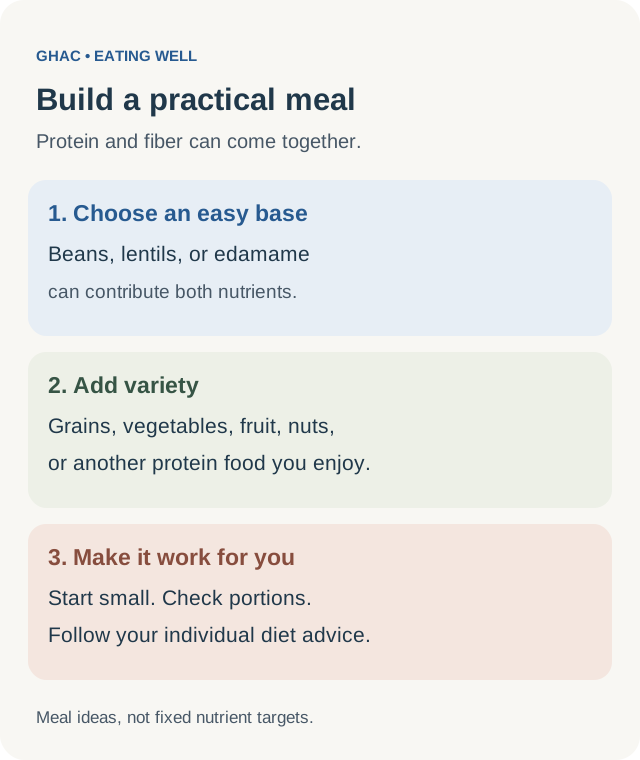
Black beans, pinto beans, chickpeas, kidney beans, lentils, and split peas are useful ingredients to try when you want plant foods that bring protein and fiber together. Their kitchen roles vary: whole chickpeas hold their shape in a salad, red lentils soften into soup, and mashed beans spread easily inside a tortilla.
For a quick lunch, mash cooked chickpeas with a little olive oil or plain yogurt, then add chopped vegetables and seasonings you already like. Serve in a sandwich, alongside crackers, or over greens. This is a meal idea rather than a fixed recipe, so the texture and seasoning can follow your preferences.
For dinner, stir cooked lentils into a tomato-based sauce, or add beans to a vegetable soup. You can combine them with meat if that suits your household. Replacing part of an ingredient is often a more comfortable experiment than changing a whole familiar dish at once.
Canned, frozen, and dried options can each have a place. Canned beans are convenient when cooking time is short. Dried beans may suit batch cooking if you have time, equipment, and storage. Follow the package’s preparation instructions, especially for dried beans, rather than assuming every variety cooks in the same way.
Soy foods: compare the form you actually eat
Edamame, the green soybeans often sold frozen, can become a simple side or an addition to a grain bowl. Buy shelled edamame if you want less preparation, and cook according to the package. Toss with rice and chopped vegetables, or use it in place of another bean in a familiar combination.
Tofu and soy beverages are different products from whole soybeans. Do not assume that a protein-rich soy food automatically provides the same amount of fiber as edamame. Processing and ingredients affect what remains in the finished food, so check the product you use.
For a warm bowl, combine cooked edamame with rice, a vegetable you enjoy, and a dressing. For a tofu dish, think of the tofu as one part of the meal and add a fiber-containing ingredient such as beans, vegetables, or a whole grain. The combination can do the work even when one ingredient does not provide both nutrients.
You do not need to learn several unfamiliar foods at once. If soy is new to your kitchen, choose one format and one straightforward preparation. If you have a soy allergy, use another ingredient that fits your allergy plan instead.
Nuts, seeds, and spreads: useful additions
Nuts and seeds can contribute both protein and fiber, but a small topping is still a small portion. Think of chopped nuts on oatmeal or seeds stirred into a meal as additions, rather than assuming a light sprinkle replaces the rest of breakfast. Nut and seed butters offer another texture for people who prefer a spread.
Try peanut butter on whole-grain toast with sliced fruit, or stir a suitable seed butter into oatmeal. Chopped walnuts can add crunch to a lentil salad. Pumpkin seeds can finish a soup. The best option is one that suits your budget, taste, chewing comfort, and allergy needs.
Check ingredient lists when comparing spreads. Some products contain added sweeteners, salt, or other ingredients, and different brands can have different nutrition profiles. Choose the version that answers your actual need rather than relying on a broad promise on the front of the jar.
Whole nuts can be a choking concern for young children and may be difficult for some people with chewing or swallowing problems. Choose age-appropriate textures and follow any swallowing guidance. A smooth spread is not automatically suitable for every person either, so individual instructions matter.
Whole grains contribute, but compare portions
Oatmeal, whole-grain bread, and other whole-grain foods can contribute to the mix. They do not all supply the same protein or fiber, and a grain does not have to be the main protein source in a meal. A useful approach is to build around the food you like and add another ingredient where needed.
If oatmeal is already part of breakfast, try it with milk or a suitable alternative and a nut or seed topping. If you prefer savory foods, serve an egg with whole-grain toast and a vegetable. If you enjoy rice bowls, add beans or lentils rather than expecting the rice alone to meet every goal.
Whole-grain wording is a starting point for shopping, not a complete nutrition comparison. A bread, cereal, or grain mix can vary substantially from another product. Use the ingredient list and nutrient panel to see what is in the food you actually bring home.
Keep convenience in the plan. A plain frozen grain or a quick-cooking option may be more useful on a busy evening than an ingredient you rarely have time to prepare. There is no requirement to cook every component from scratch for the meal to count.
Three breakfasts to adapt to your morning
Oatmeal with a protein companion: Cook oats as directed, then add a suitable milk, plain yogurt on the side, or a nut or seed butter. Finish with fruit if you enjoy it. Adjust the thickness and toppings to your appetite rather than forcing a very large bowl because the ingredients sound nutritious.
Toast with a spread and fruit: Use whole-grain toast, a nut or seed spread you can safely eat, and sliced pear, banana, or another favorite fruit. For a different texture, put the fruit alongside the toast. A familiar arrangement can be easier to repeat than a recipe with a long ingredient list.
A savory breakfast bowl: Warm cooked beans with a grain and vegetables, and add an egg if desired. Leftover components can help, provided they have been stored and reheated safely. Use seasonings you already know you like; breakfast does not have to be sweet or follow a special food category.
These are flexible combinations, not meals with guaranteed nutrient totals. A small bowl and a large one differ, as do the products used. If you need a specific protein or fiber target, a dietitian can help translate it into portions that fit your usual morning.
Lunch and dinner without a new recipe collection
Soup and a side: Start with a lentil, split-pea, or bean soup. Add bread, vegetables, or another side according to appetite. For packaged soup, compare the amount you plan to eat with the labeled serving, and consider sodium alongside protein and fiber.
A bowl or wrap: Combine beans or edamame with a grain, vegetables, and a sauce. Keep the components separate if household members prefer different textures. A flexible meal can be shared without everyone eating exactly the same proportions or toppings.
A familiar dinner with one addition: Add chickpeas to a salad, lentils to a sauce, or a bean side to a meal you already make. You can also pair fish, chicken, eggs, or tofu with plant foods. Protein and fiber can arrive on the same plate through different ingredients.
Choose one of these structures and repeat it with a few variations before adding more. A pantry ingredient becomes useful when you know where it fits. Buying several unfamiliar foods at once can create cost and waste without making meals any easier.
A short shopping list can support this approach: choose one bean or lentil, one grain, a couple of vegetables or fruits, and a protein food you already use. Before buying anything new, check what is in your pantry and freezer. Plan one meal around those ingredients, then give the remaining portions another purpose. Chickpeas might go into a sandwich filling today and a soup tomorrow. A cooked grain could accompany dinner and become part of a lunch bowl. Keep sauces or crunchy toppings separate when possible so you can change the texture. The purpose is to reduce daily decisions, not to make every meal look identical. If a combination is unappealing, change the seasoning or preparation before deciding the ingredient cannot work for you.
Read the label for the serving you will eat
The FDA’s Nutrition Facts guide explains that the listed nutrients apply to the labeled serving. Serving size reflects amounts typically consumed and is not a personal recommendation. Check that first, then look at protein and dietary fiber for the amount you expect to use.
A practical comparison might be between two canned bean soups you already enjoy. Compare similar portions, then look at sodium or other nutrients relevant to you. If you plan to eat the entire container, do not accidentally treat a per-serving number as the container total.
Package phrases such as protein-packed do not replace the numbers, ingredients, or allergen information. A product can emphasize one nutrient while being less useful for another goal. You also do not need a labeled specialty snack if an ordinary food combination works for you.
Start gently and respect individual needs
MedlinePlus recommends increasing fiber slowly, because a rapid increase can cause gas, bloating, or cramps. Try one modest change rather than adding beans, bran cereal, and several seed toppings all at once. Give yourself room to notice how the change feels.
Follow any prescribed low-fiber diet instead of applying general advice to increase fiber. Persistent digestive symptoms, difficulty swallowing, or a poor appetite deserve individual attention. Softer preparation may help with texture, but it does not make every food suitable for every medical condition.
Protein goals also differ. NIDDK’s guidance for adults with chronic kidney disease describes the need for individualized nutrition advice as kidney disease changes. If you have kidney disease, ask your care team about protein and other dietary requirements before deliberately increasing high-protein foods.
For an ordinary starting point, choose one food you already recognize and one meal where it could fit. Try lentils in a soup, beans beside dinner, or a suitable spread on toast. Notice the cost, preparation time, taste, and comfort. Those details help turn a nutrition idea into a routine you can actually use.
About this article
This original GHAC article was inspired by Health.com’s topic on foods containing protein and fiber, used as topic inspiration.
Information here is educational and does not replace personalized medical advice.
Frequently asked questions
Which foods contain both protein and fiber?
Beans, lentils, nuts, seeds, and whole soybeans such as edamame can contribute both. Amounts vary with the food, portion, and preparation, so compare the product or serving you use.
Do eggs, chicken, or plain yogurt provide fiber?
These can provide protein, but fiber comes from plant foods. Pair them with whole grains, beans, fruit, or vegetables if you want fiber in the same meal.
Do I need a protein-and-fiber supplement?
A supplement is not required to try the meal ideas here. Ordinary foods can contribute both nutrients. Ask your clinician or dietitian if you have a specific nutritional need or difficulty eating enough.
Why do beans sometimes cause bloating?
A rapid increase in dietary fiber can cause gas, bloating, or cramps. Start with a smaller change and increase gradually. Persistent or severe symptoms should be discussed with a clinician.
Is more protein always better?
No single protein target fits everyone. Needs depend on individual circumstances, and some conditions require a tailored plan. Follow your care team’s advice, especially if you have kidney disease.
Choose one meal to make easier
Pick one familiar ingredient that contributes protein, fiber, or both. Give it a place in a meal you already enjoy, then build from what works for your appetite, budget, and routine.
