
HEALTH JOURNAL
Liver Health Beyond Alcohol: Risks Worth Understanding
Learn how metabolic health, medicines, viral hepatitis, and supplements can affect the liver, without relying on detox claims or symptom checklists.

Alcohol is part of many conversations about liver disease, but it is not the whole conversation. Someone who rarely drinks can still develop a liver condition. Someone with a liver diagnosis should not have to defend their habits before receiving understanding and care.
The useful question is not which everyday ingredient is secretly destroying your liver. It is which established risks, medicines, infections, and health conditions deserve attention in your circumstances. Different causes require different assessments, and a product marketed as a cleanse does not replace that work.
Metabolic health can matter even without alcohol
NIDDK’s fatty liver overview describes a form of fatty liver associated with metabolic health. You may see the newer name metabolic dysfunction-associated steatotic liver disease, or MASLD, alongside the older term NAFLD. The inflammatory form is now often called MASH, previously NASH.
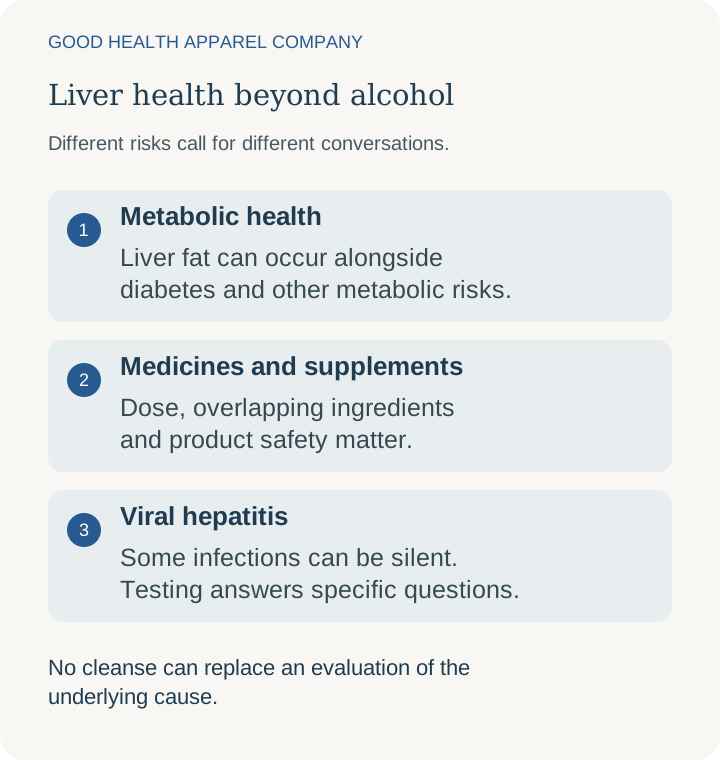
Insulin resistance, type 2 diabetes, and abnormal blood fats are among the associated conditions. These are reasons to consider the liver as part of a wider health picture. They do not prove that a person has liver disease, and a person’s body size alone cannot establish a diagnosis.
This distinction helps avoid blame. The condition reflects more than one meal or a lack of willpower. Medical history, inherited susceptibility, and metabolic factors may all be relevant, while the appropriate care plan depends on what an assessment finds.
Medicines: the same ingredient can hide in different boxes
FDA’s acetaminophen information warns that taking too much acetaminophen can cause severe liver injury. It is used in some pain relievers, cold and flu products, and prescription combinations. Different brand names do not necessarily mean different active ingredients.
Imagine taking a cold medicine at night and a separate headache product earlier. The important comparison is the ingredient list and total exposure, not whether the packages look alike. A pharmacist can help interpret overlapping labels and individual cautions.
Following the product’s directions and prescribed instructions matters. This article does not supply a universal dose, because age, the product, liver health, alcohol use, and medical advice affect safe use. Suspected overdose requires immediate medical or poison-control advice, even when the person feels well.
Viral hepatitis is a different kind of liver risk
NIDDK’s viral hepatitis guide explains that hepatitis viruses cause liver inflammation. Hepatitis A, B, and C differ in how they spread, how long infection can last, and the prevention and treatment options available. The word hepatitis is not a diagnosis of one specific infection.
NIDDK’s guides to hepatitis B and hepatitis C explain that chronic infection may be present without obvious symptoms and can damage the liver over time. Vaccination is available for hepatitis A and B, while hepatitis C has no vaccine. Testing and care depend on the virus and individual history.
A conversation about vaccination records, previous test results, and relevant exposures is more informative than assuming that a lack of pain rules infection out. A positive test also needs explanation: different tests answer different questions about exposure, immunity, or current infection.
Other causes should not disappear from the picture
NIDDK’s cirrhosis guidance lists several pathways to lasting liver scarring, including autoimmune disease, bile duct conditions, and inherited disorders. A clinician may investigate these when the history or test pattern suggests them. “Liver damage” describes a problem, not its underlying cause.
It is equally important not to stop a prescribed medicine because it appears on a frightening list. Medicines can have important benefits, and the relevant question is whether a particular treatment is appropriate for your health and monitoring plan. Bring the full list, including nonprescription products, to that discussion.
A cleanse is not a shortcut to an answer
NCCIH’s review of detoxes and cleanses finds no convincing research supporting detox diets for removing toxins from the body. Some products have been associated with hidden ingredients or safety concerns. “Natural” and “liver support” are marketing descriptions, not proof of benefit.
Fasting, restrictive regimens, laxatives, and large amounts of juice can also create problems for some people. The potential consequences depend on the approach and the person. Someone managing diabetes or taking medicines may face additional concerns.
For a useful product discussion, the exact bottle is better than a general description such as “herbs for energy.” A label or photograph helps a pharmacist or clinician identify ingredients and possible overlaps. The same principle applies to powders, teas, and bodybuilding products.
Symptoms and tests need context
NIDDK explains liver assessment as a combination of medical history, examination, blood tests, and, when appropriate, imaging or other investigations. A liver enzyme result does not by itself identify the cause or establish how much scarring is present.
Persistent symptoms or abnormal results deserve follow-up. Yellowing of the skin or eyes, a swollen abdomen, or unusual bleeding need prompt medical assessment. Vomiting blood, black tarry stools, or sudden confusion can signal an emergency and warrant immediate care.
For a routine visit, prior results and a clear medication list help the clinician understand the pattern over time. The aim is a specific explanation and appropriate care, rather than treating every liver concern with the same dietary rule.
About this article
This original GHAC article was inspired by WebMD’s related topic, used as topic inspiration.
Information here is educational and does not replace personalized medical advice.
Frequently asked questions
Can liver disease happen if I do not drink?
Yes. Metabolic liver disease, viral infections, autoimmune disorders, and other conditions can occur without alcohol use.
Does a normal-looking body size rule out fatty liver?
No. Appearance alone cannot diagnose or exclude a liver condition. Medical history and appropriate tests matter.
Are liver detox supplements proven to work?
No convincing evidence supports detox programs for removing toxins, and some products can carry risks.
Should I stop a medicine if I worry about my liver?
Discuss the specific medicine with your prescriber or pharmacist rather than stopping it yourself. A suspected overdose requires immediate help.
Make room for a clearer conversation
A short note about your symptoms, health history, and questions can make a conversation with your health care team more useful.
More everyday wellbeing reading

Understanding Cholesterol: Which Numbers Matter?
Understand LDL, HDL, triglycerides, and why your cholesterol results belong in a wider conversation about heart health and treatment.
Read article →
Food and Nutrition Terms: A Practical Everyday Glossary
Make sense of serving sizes, added sugars, fiber, fats, and ingredient labels with plain-language definitions and everyday examples.
Read article →