
HEALTH JOURNAL
Fruit and Vegetable Skins: What to Keep, Peel, and Wash
A practical guide to edible produce skins, simple meal ideas, safe washing, and when peeling is the more comfortable choice.

Peeling an apple or cucumber can feel automatic. Sometimes leaving an edible skin in place makes preparation easier and keeps more of the whole food on your plate. Sometimes peeling makes a food more enjoyable or suits a particular medical diet. Both can be reasonable choices.
The useful question is not whether every peel is a hidden superfood. It is which skins you enjoy eating, how to prepare them safely, and what fits your needs. This guide focuses on everyday produce, without turning food scraps into a health requirement.
Start with familiar, edible skins
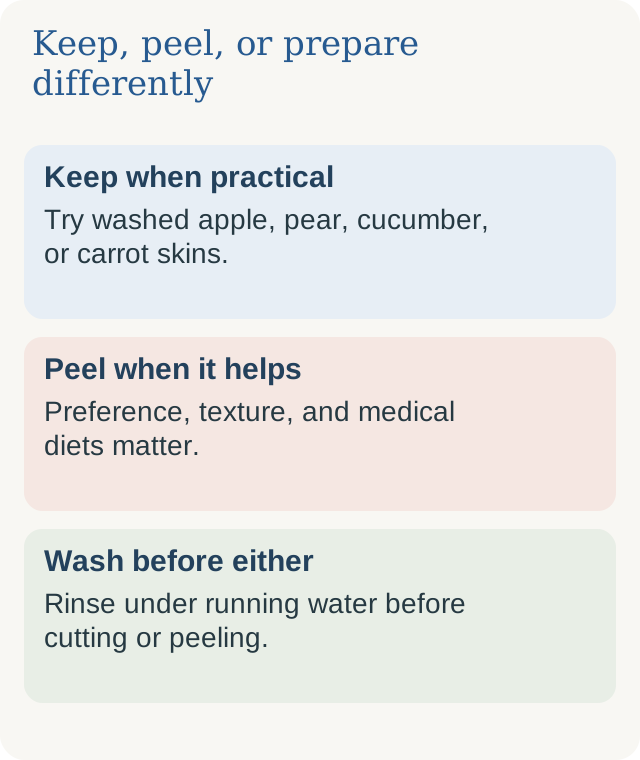
Apples, pears, cucumbers, zucchini, carrots, and eggplant are familiar starting points for skin-on preparation. You can slice a washed apple into oatmeal, roast carrot pieces without peeling, or add thin cucumber slices to a sandwich. These are kitchen examples, not a ranking of which food is healthiest.
The texture matters as much as the ingredient. A tender zucchini skin may almost disappear in a cooked dish, while a thick cucumber skin may feel unpleasant to someone who prefers a softer bite. Try one food at a time. Keeping half the skin, cutting smaller pieces, or cooking the food can be more appealing than making an all-or-nothing rule.
Keep the nutrition claim in proportion
Plant foods supply dietary fiber. MedlinePlus explains that fruits, vegetables, whole grains, nuts, and seeds can all contribute. Edible skins are one way to retain the whole food, but they are not the only way to include fiber in meals. Beans or oatmeal can be useful choices too.
Nutrients are not all confined to the outside of a fruit or vegetable. Peeling does not make the remaining food worthless, and there is no single percentage of nutrition lost that applies to every food and preparation. The comparison depends on the particular produce, the portion, and how it is prepared.
For a household that enjoys peeled apples but leaves unpeeled ones untouched, the peeled fruit may be the more useful choice. Eating a variety of produce over time is a more practical goal than maximizing every bite at the cost of appetite or enjoyment. For more ideas, explore our guide to everyday fruit choices.
Wash before peeling or cutting
The FDA’s produce-cleaning guidance recommends rinsing produce under plain running water, including produce you plan to peel. A knife can carry material from the surface into the flesh. Gently rub the food as you rinse, and use a clean produce brush for firm items such as cucumbers or melons.
Skip soap and commercial produce wash. Wash your hands before preparation, use clean equipment, and dry rinsed produce with a clean cloth or paper towel. Cut away bruised or damaged areas. These are ordinary food-safety steps, not a promise to remove every possible contaminant.
A useful kitchen sequence is to wash your hands, rinse the whole item, dry it, and then decide whether to peel. This keeps the safety step independent of the recipe. Leaving a skin on is not a reason to skip washing, and removing it is not a substitute for washing.
Do not treat every outside layer alike
The skin of an apple and the tough outside of a pineapple do different jobs in the kitchen. For this guide, keep the experiment to produce you already recognize as commonly eaten with its skin. Remove pits, cores, tough shells, and other parts the recipe does not call for. Do not assume a list of edible skins is permission to eat every part of that plant.
For potatoes, use sound produce and prepare it appropriately. This article is not a guide to salvaging green, heavily sprouted, spoiled, or unfamiliar plants. If an item seems questionable, choose a different one rather than relying on peeling as a universal safety fix.
Reducing waste can be a welcome side benefit, but you do not need to make chips, powders, or smoothies from every discarded peel. A manageable habit could simply be leaving carrot skins on for one tray of roasted vegetables.
Let comfort and medical advice guide you
Fiber is not a contest. MedlinePlus advises increasing it gradually, because a rapid increase can cause gas, cramps, or bloating. Trying several new skin-on foods at once can make it harder to identify what agrees with you.
Some conditions need a different approach. NIDDK’s guidance for gastroparesis explains that clinicians may recommend lower-fiber foods and softer, well-cooked textures. If you have a prescribed low-fiber diet, swallowing difficulty, or persistent digestive symptoms, ask your clinician or dietitian which preparations fit your plan.
Try a small practical change: leave the skin on one familiar food this week, and note whether preparation and eating feel easier. If the skin is uncomfortable or unappealing, peel it. The aim is a meal you can safely enjoy, not proving that you can tolerate a tougher texture.
Sources and further reading
This original GHAC article was inspired by WebMD’s topic on edible fruit and vegetable skins.
- FDA: Cleaning fruits and vegetables: Washing and preparation guidance.
- MedlinePlus: Dietary fiber: Food sources and gradual changes in fiber intake.
- NIDDK: Eating with gastroparesis: Why individual conditions can require a lower-fiber approach.
Information here is educational and does not replace personalized medical advice.
Frequently asked questions
Do I have to leave skins on to eat well?
No. Peeled produce can still contribute to varied meals. Preference, texture, and personal dietary advice are good reasons to peel.
Should I wash fruit if I plan to peel it?
Yes. Rinse it before cutting or peeling so the knife does not transfer surface material into the flesh.
Can I use soap to wash produce?
The FDA recommends plain running water, without soap or commercial produce wash. Rub gently and use a clean brush on firm produce.
Are skins appropriate for a low-fiber diet?
Not always. Follow your prescribed plan and ask which fruits, vegetables, textures, and portions are suitable for you.
Choose one easy preparation
Try washed, skin-on slices of a familiar food, or keep peeling if that is what makes the meal work. Start with enjoyment and safe preparation.
More everyday wellbeing reading

Understanding Cholesterol: Which Numbers Matter?
Understand LDL, HDL, triglycerides, and why your cholesterol results belong in a wider conversation about heart health and treatment.
Read article →
Food and Nutrition Terms: A Practical Everyday Glossary
Make sense of serving sizes, added sugars, fiber, fats, and ingredient labels with plain-language definitions and everyday examples.
Read article →