
HEALTH JOURNAL
CPAP Comfort: Mask Leaks, Dryness, and Better Follow-Up
Understand common CPAP comfort problems, useful observations to share, cleaning considerations, and which questions belong with your sleep-care team.

A CPAP machine can be important treatment and still feel awkward to sleep with. A mask that shifts, an unfamiliar flow of air, or a dry mouth can turn bedtime into a troubleshooting session. Those experiences deserve practical help, rather than the assumption that you simply are not trying hard enough.
This guide explains common comfort concerns and ways to describe them to a sleep clinician or equipment supplier. It does not diagnose the cause of symptoms, select a mask for you, or provide instructions for changing prescribed pressure. The aim is a clearer conversation that makes treatment more workable.
Understand what the machine is doing
The National Heart, Lung, and Blood Institute explains CPAP as continuous positive airway pressure: a machine delivers pressurized air through tubing and a mask to help keep the airway open during sleep. A mask may cover the nose, or both the nose and mouth. CPAP is prescribed treatment, rather than a general sleep gadget.
Prescribed PAP treatment is generally used whenever you sleep, including naps, as the NHLBI explains. That makes resolving comfort problems important. The goal is not simply to make the machine quieter or the mask less noticeable. It is to find a setup you can use and that provides effective treatment. A comfortable arrangement that leaves important breathing problems untreated would not settle the whole question.
It can help to separate two conversations: what feels difficult, and what the treatment information shows. Both deserve attention. A sleep clinician can connect symptoms, your sleep history, and device information instead of expecting one number or one night to explain everything.
Give the discomfort a specific description
“I cannot use it” communicates frustration, but a more detailed description gives the care team a better place to begin. Does air blow toward your eyes? Does the mask feel comfortable at first but shift when you turn? Do you wake with dry mouth, or find yourself removing the mask without remembering it?
A short note can record when the problem occurs, what you notice, and what happens next. For example: the mask seals while I am on my back, but starts hissing when I turn to my usual side. That observation points toward a fit-and-position discussion without claiming to diagnose the cause.
There is no need to build an elaborate spreadsheet or monitor every sensation. The purpose is to preserve one or two useful details for an appointment or supplier call. A photo of the assembled equipment, if you choose to share it privately with your care team, may also clarify which parts you are discussing.
Ask about fit in your actual sleeping position
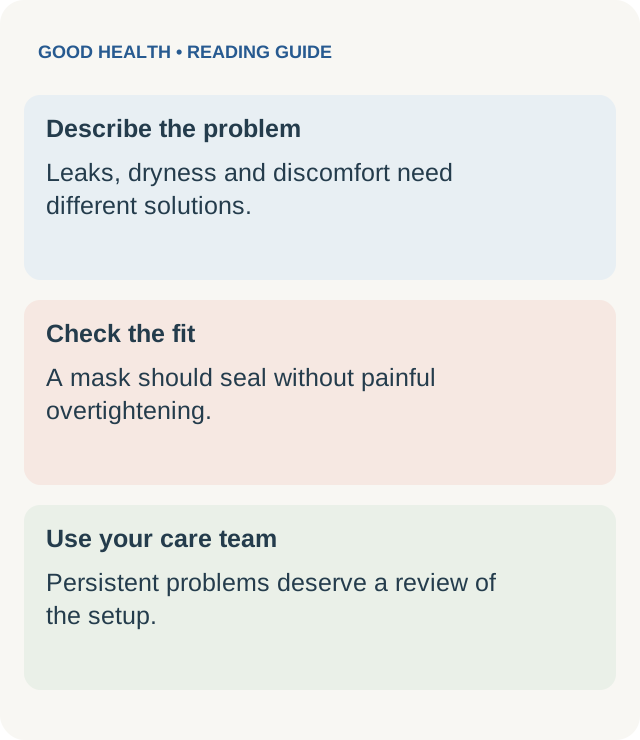
The NHLBI’s living-with-sleep-apnea guidance suggests checking mask fit while lying down with the machine running. A fit that seems reasonable while sitting upright may feel different on a pillow. Persistent leaks or difficulty keeping the mask on are reasons to contact the provider.
The useful question is not always whether the straps can be pulled tighter. It may be whether the mask style, size, cushion, or position suits you. Describe where you feel pressure and where you notice escaping air. Soreness and air blowing toward the eyes are worth mentioning clearly.
Bring your normal sleeping position into the conversation. Someone who turns repeatedly has a different practical problem from someone whose mask feels uncomfortable before they lie down. The supplier can help you understand the fitting procedure for your model, while the clinician can assess ongoing treatment concerns.
Distinguish an unwanted leak from the designed vent
The American Thoracic Society’s explanation of PAP therapy describes different mask interfaces and the role of positive airway pressure in obstructive sleep apnea. Your mask and machine instructions explain how their particular parts function, including the intended flow of exhaled air.
A useful fitting demonstration identifies which openings belong to the normal vent and which sounds or sensations suggest an unwanted leak. Without that explanation, it is easy to interpret every movement of air as a problem. Deliberately covering or obstructing a vent is not a way to improve the seal.
An equipment supplier can show you what normal operation looks and sounds like for your setup. Asking for that demonstration is reasonable, including after a replacement mask arrives. A new model can have a different feel, so familiarity with an older mask does not answer every question about the replacement.
Consider tubing and the surrounding setup
The American Thoracic Society’s troubleshooting guide notes that tubing pull can contribute to mask leaks. It also describes water collecting in tubing and options to discuss for humidity and temperature. The details depend on the equipment, rather than a universal bedroom arrangement.
An observation might be that the hose catches on a bedside edge just before you wake. Another might be that a gurgling sound appears only on colder nights. Those details help distinguish a routing question from a mask-size question or a discussion about condensation.
Before buying accessories, it may be useful to ask what is compatible with your exact model and what the manufacturer recommends. An improvised arrangement that blocks air, damages tubing, or places water where it does not belong can create another problem. The aim is to understand the setup, not accumulate equipment without a clear reason.
Treat dryness as a question with several possible answers
A dry mouth or nose is a symptom worth describing rather than an automatic instruction to change one setting. Note whether the dryness appears on waking, whether your nose feels blocked, and whether the problem began with a new mask or other change. Those observations do not establish a cause, but they make the discussion more focused.
Ask the care team how they assess mask fit, mouth breathing, nasal symptoms, and whether your equipment has suitable humidification options. A different interface or a clinician-recommended nasal treatment may be part of that conversation. A suggestion that helped another person does not establish what will work for you.
Persistent nosebleeds, significant pain, or symptoms that keep interrupting sleep deserve follow-up. It is also worth describing what you have already tried, including sprays or other products. That prevents the conversation from restarting with the same suggestion and helps the clinician consider your overall situation.
Make room for getting used to the mask
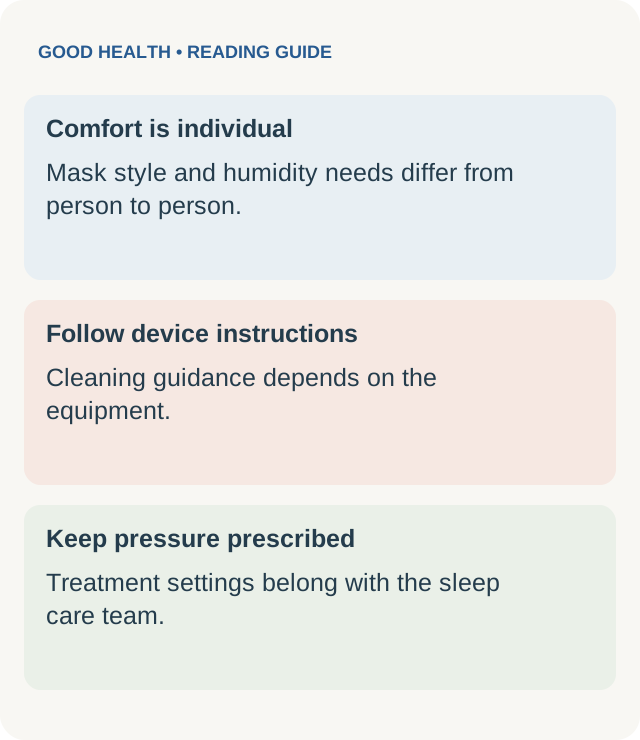
An unfamiliar mask can demand attention even when there is no obvious leak. For some people the difficult part is the sensation on the face; for others it is feeling enclosed, hearing equipment, or worrying that sleep will not come. Those are different experiences and deserve more than a generic reminder to relax.
One question for the sleep team is how to practice becoming familiar with the mask while awake. Another is whether a different interface would address the feeling that bothers you. A short, agreed practice plan can be easier to understand than trying to solve every issue in the middle of the night.
Practice is not a substitute for reporting a poor fit or breathing difficulty. It should not become a reason to dismiss distress. The useful distinction is between learning an unfamiliar sensation and repeatedly tolerating a problem that needs another solution.
Keep pressure decisions with the treating clinician
A sensation that the air feels too forceful, too weak, or difficult to breathe against is important information. It does not, by itself, reveal the appropriate treatment pressure. The settings were selected for a clinical purpose and should be reviewed in that context.
Your clinician may discuss comfort features, timing, a different interface, or another prescribed form of positive airway pressure. The relevant question is what might address your particular difficulty while continuing to treat the breathing disorder. It is not necessary to know the answer before asking for help.
Online instructions can make a hidden menu seem like an easy shortcut. A safer conversation explains the sensation, when it occurs, and whether it accompanies leaks or awakenings, then asks the clinician to review the setup. Pressure changes and decisions about continuing or changing treatment belong with that clinician.
Follow the cleaning instructions for your equipment
The FDA’s guidance on CPAP cleaning devices emphasizes following manufacturer cleaning directions. Ozone and ultraviolet products raise safety and compatibility concerns, and an add-on device does not replace the recommended cleaning process. A product being advertised for CPAP equipment does not establish that it suits your machine.
The practical first step is knowing which instructions apply to each component. A humidifier chamber, mask cushion, tubing, and filter may have different requirements. Ask the supplier to identify reusable and disposable parts and explain the correct water type, drying, and replacement guidance for your equipment.
A simple written routine can be easier to follow than trying to remember several verbal instructions. Keep the model information with it, especially if a replacement part looks similar but has different directions. Avoid assuming that stronger chemicals, a dishwasher, or an automated cleaner must provide a better result.
Use device information as one part of follow-up
A device display or app can give the impression that treatment has been reduced to a nightly score. The information can be useful, but it still needs context. A good-looking summary does not erase persistent symptoms, and one disappointing night does not by itself explain what needs changing.
A productive follow-up conversation can consider how you feel, how much of your sleep was covered by treatment, equipment concerns, and the information the clinician can review. Describe continuing sleepiness, awakenings, or problems using the device rather than presenting only the app score.
If you do not understand a term on the screen, asking what it means is more useful than guessing from a discussion board. You can also ask which changes should prompt a call and which information the clinic would like you to record. That turns the display into a communication tool rather than a nightly judgment.
Know who handles which kind of question
The University Hospitals of North Midlands sleep-service resource illustrates the range of equipment and symptom questions that may arise during treatment. Local services differ, so it is useful to have the actual contact information for your own supplier and sleep clinic.
The supplier may be the first contact for missing parts, fitting instruction, a damaged hose, or questions about compatible supplies. The treating clinician addresses persistent symptoms, treatment effectiveness, and prescription changes. When the boundary is unclear, describe the issue and ask who should handle it rather than repeatedly being redirected without a plan.
A small contact card can list the clinic, supplier, machine model, and where you keep the instructions. The point is convenience when something goes wrong, particularly before travel or a weekend. It also makes it easier for a trusted helper to understand whom to contact if you want assistance.
Take persistent sleepiness and new symptoms seriously
The NHS overview of sleep apnea explains why treatment and symptom follow-up matter. Continuing marked daytime sleepiness deserves a review even when the equipment appears to be running. Do not drive or perform safety-critical tasks when sleepy.
New chest pain, severe breathing difficulty, fainting, or other emergency symptoms require urgent assessment and may warrant calling 911. They should not be attributed automatically to getting used to CPAP. Significant new stomach pain or bloating also deserves prompt contact with the treating clinician for guidance.
CPAP comfort is an ongoing collaboration, rather than a test of character. A clear description of the problem, equipment-specific instruction, and follow-up on effectiveness can make the process more manageable. You do not need to arrive at an appointment with your own technical solution. Bringing the right observations is already useful work.
About this article
This original GHAC article was inspired by WebMD’s CPAP machine tips topic, used as topic inspiration.
Information here is educational and does not replace personalized medical advice.
Frequently asked questions
Should I tighten my CPAP mask if it leaks?
A leak can involve fit, mask style, cushion condition, position, or tubing pull. Ask your supplier to demonstrate the correct fitting procedure rather than assuming that tighter is always better.
Can I change the pressure myself if CPAP feels uncomfortable?
Pressure settings are part of prescribed treatment. Describe the discomfort to your sleep clinician and ask about an appropriate review and available comfort options.
Does a good app score prove that my sleep apnea is controlled?
A device summary is one source of information. Continuing sleepiness, awakenings, or difficulty using treatment still deserve clinical review.
Do I need an automated CPAP cleaning device?
Follow the equipment manufacturer’s cleaning instructions. The FDA raises concerns about ozone and ultraviolet devices; add-on products do not replace the recommended cleaning process.
Bring one clear problem to the next conversation
A note about what happens, when it happens, and which equipment you use can help your clinician or supplier focus the discussion. Effective treatment and a workable bedtime experience both deserve attention.
More everyday wellbeing reading

A Stye on Your Eyelid: Gentle Care and Signs to Get Help
What a stye is, how it differs from a chalazion, why squeezing can make things worse, and which symptoms need an eye-care professional.
Read article →
Chest Pain: Why the Cause Needs Medical Assessment
Chest discomfort can involve the heart, lungs, digestive tract, or chest wall. Understand emergency warning signs and why symptoms alone cannot establish the cause.
Read article →