
HEALTH JOURNAL
Breakfast Ideas for Diabetes: Build a Meal That Fits Your Morning
Explore adaptable diabetes breakfast ideas, carbohydrate labels, convenient options, and questions that help a morning meal fit your individual care plan.

Breakfast advice can become a competition between the perfect bowl of oats and an elaborate plate nobody has time to cook. Living with diabetes adds another layer: carbohydrate amounts, medicines, appetite, and a schedule that may not cooperate. A useful breakfast is one you can understand, obtain, and adapt to your own plan.
The ideas below are meal sketches rather than recipes with prescribed portions. They are meant to make a conversation about food more concrete. There is no claim that a particular combination will produce the same glucose reading for every person, and none of these examples replaces diabetes treatment.
Start with your morning, then consider the menu
NIDDK’s guidance on living with diabetes places food choices within an individual plan that also considers medicines, activity, and other health conditions. That matters at breakfast because people begin their days in very different circumstances. A shift worker eating after an overnight job and someone preparing for an early walk may need different arrangements.
A practical starting point is to describe a normal morning without editing it into an ideal one. When is food available? Is there a refrigerator at work? Do you wake up hungry, or does appetite come later? Are you eating alone or feeding a household? Those details help distinguish a food problem from a time, access, or preparation problem.
For example, someone who regularly leaves home with only coffee might find a ready-to-pack breakfast useful. Someone who already cooks for the family may prefer a small change to the shared meal. Neither person needs an entirely separate identity as a special-diet eater. The aim is to make the existing routine easier to work with.
Understand the carbohydrate part of the meal
CDC’s meal-planning guide explains that carbohydrate foods affect blood glucose, while the combination eaten with them influences how quickly it rises. Fruit juice generally raises glucose faster than whole fruit. Eating carbohydrate alongside protein, fat, or fiber can slow that rise; it does not erase the carbohydrate.
In a bowl of cereal with milk and fruit, all three components may contribute carbohydrates. In a yogurt parfait, the yogurt, fruit, granola, and sweetener can contribute. That does not make either meal unsuitable. It means a label on just one ingredient cannot describe the whole breakfast.
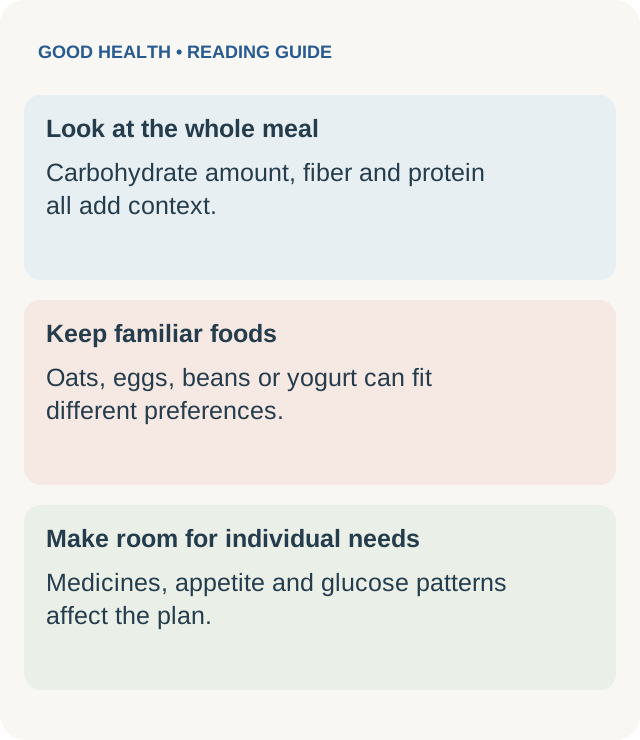
Carbohydrate counting and the plate method are different planning tools. Your diabetes team can help identify which approach suits your treatment. A breakfast article cannot assign a universal carbohydrate target because it does not know your medication schedule, glucose patterns, energy needs, or other dietary requirements.
Try an oatmeal breakfast with visible additions
One possible breakfast begins with plain oatmeal and adds a protein-containing food you enjoy, such as plain yogurt, alongside fruit or nuts if appropriate. Another version keeps the oats savory with an egg and cooked vegetables. These are flexible combinations, not a guarantee of a particular glucose response.
The useful comparison is between actual bowls. A packet of sweetened oats with dried fruit and honey differs from plain oats with a different topping, even though both are called oatmeal. An oversized restaurant bowl also differs from the amount you prepare at home. Keeping the ingredients visible makes the comparison less mysterious.
For preparation, oats can be cooked ahead or assembled as refrigerated overnight oats when safe storage is available. Someone who dislikes their texture can choose another breakfast. There is no need to force a single fashionable ingredient into a routine that would work better with toast, a tortilla, or another familiar food.
Use yogurt or a similar option as a starting point
A quick bowl might combine plain yogurt, a fruit you enjoy, and a suitable topping. A lactose-free yogurt or an unsweetened fortified plant-based option may suit some households, but their ingredients and protein content vary. Product names alone do not establish that they are nutritionally interchangeable.
It can be helpful to add toppings yourself when that makes the amounts easier to understand. A prepared parfait may still be convenient, but its size and layers can make it harder to compare. Crunchy toppings deserve attention as ingredients, whether they are marketed as natural, high-protein, or a wholesome treat.
An illustrative packing routine is to keep the yogurt chilled and carry a topping separately so it stays crisp. The practical benefit is predictability: you know what you packed and whether it will still be appealing when you eat. That is a useful organizational advantage without promising a medical result.
Keep savory breakfasts in the conversation
Eggs or tofu with vegetables and an appropriate portion of toast or another grain can be a familiar savory option. Leftover beans with a tortilla, or a modest bowl of a usual rice-and-vegetable dish with a suitable protein, can also be considered. Breakfast does not have to resemble a cereal advertisement.
Beans and grains still contribute carbohydrates, even when they also provide other nutrients. Pairing them with eggs or tofu does not make the carbohydrate disappear. This is one reason a balanced-looking plate and a carbohydrate estimate answer different questions. Both may be useful within a person’s chosen planning approach.
For a shared household meal, it may be easier to offer ingredients separately so everyone can assemble their own serving. Cultural familiarity, taste, cost, and what is already in the refrigerator can be part of the decision. A routine that preserves foods you enjoy is easier to discuss honestly than one built around foods you expect to abandon.
Compare cereal, toast, and packaged options fairly
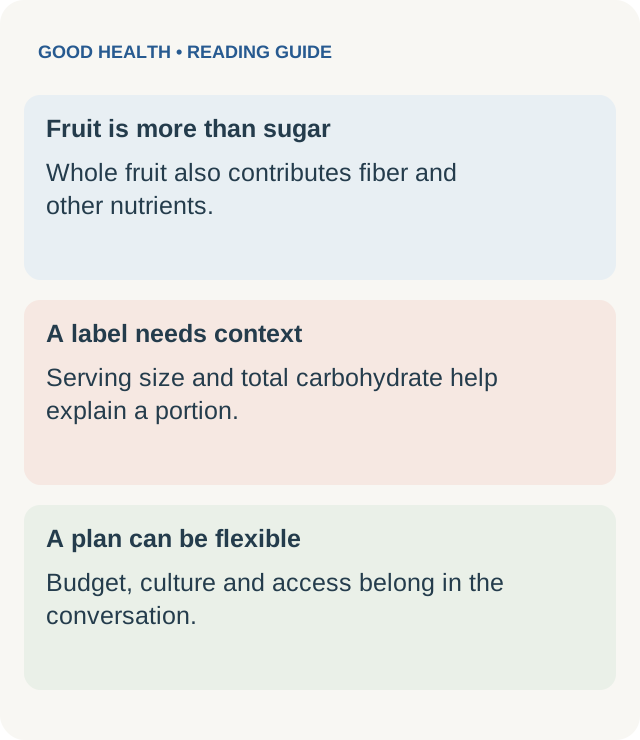
The FDA’s Nutrition Facts guide explains that the serving size is a reference amount, not a recommendation for how much a person should eat. The carbohydrate and added-sugar numbers describe that amount. A fair comparison starts by checking both the labeled serving and the portion you actually plan to have.
For example, a fictional cereal label might list information for a smaller bowl than the one in your cupboard. Adding milk changes the meal again. With toast, the number of slices and the spread matter. A product advertised as having no added sugar can still contain carbohydrates from its other ingredients.
Comparisons can stay modest. Two breads, two cereals, or two ready-made breakfast sandwiches are enough to practice reading the relevant information. There is no need to evaluate the whole supermarket in a single trip. Price, availability, allergens, and whether you will enjoy eating the product belong beside the nutrition information.
Notice what is in the cup
A breakfast can look unchanged while the drink makes it a different meal. Juice, a sweetened latte, a bottled smoothie, and plain coffee are different choices. The bottle or cup size also matters. A large drink may be consumed as a single serving even when its package presents nutrition information differently.
For a homemade smoothie, listing the ingredients can be revealing. Fruit, milk, yogurt, juice, and sweeteners may all contribute something to the finished drink. Adding a protein powder does not cancel the rest. A smoothie is best compared with its actual ingredients rather than treated as automatically suitable because it looks like fruit.
An unsweetened drink may be an option, depending on preferences and the rest of the plan. The purpose here is awareness, not a rule that every enjoyable drink must disappear. If your usual beverage matters to you, describing it accurately makes a discussion with a dietitian more useful than simply saying that you drink coffee.
Build a backup for busy or low-appetite days
A backup breakfast can be simple enough to repeat: a chilled item packed the night before, toast with a suitable topping, or a few ingredients kept where you normally eat. It should reflect your food safety needs and storage access. A complicated backup that needs special shopping is unlikely to help on the morning everything runs late.
Consider writing down two versions: an at-home option and an away-from-home option. These are organizational ideas rather than two prescribed menus. Someone who shops once a week may value shelf-stable ingredients; someone with a long commute may need a cooler or a breakfast available after arriving.
Persistent low appetite, nausea, swallowing difficulties, or an unintentional change in weight deserves its own discussion. It is not always solved by finding a more appealing recipe. Describing how often you cannot eat and whether it affects medicines gives the care team more useful information than trying to hide the difficulty behind an ideal meal plan.
Make a short shopping plan from what already works
A shopping list is easier to use when it names actual breakfasts rather than ambitious categories. Instead of writing healthy breakfast ingredients, someone might write the bread they usually buy, the plain yogurt they enjoy, and fruit that will be eaten before it spoils. Another household may prefer eggs, vegetables, and tortillas. These examples are about planning, not nutritional equivalence.
Checking the kitchen first can prevent a familiar problem: buying several promising ingredients with no realistic way to use them together. A small amount of preparation might mean setting out a bowl or moving tomorrow’s food to the front of the refrigerator. It does not have to mean spending Sunday making a week of identical meals.
For limited budgets, the useful comparison includes waste as well as the shelf price. A larger container may cost less per serving but be a poor fit if most of it goes uneaten. Likewise, a convenient individual portion can have practical value when it solves a real storage or timing problem. The best organizational choice depends on the household, not the photograph on a meal-planning page.
Keep medicine timing and low glucose safety visible
NIDDK’s hypoglycemia guide explains that insulin and some other diabetes medicines can make skipped or delayed meals a concern. Symptoms of low glucose may include shakiness, sweating, hunger, or confusion. Your personal low-glucose action plan takes priority over a breakfast suggestion on the internet.
A breakfast experiment should not become a self-directed medicine adjustment. If you are considering a substantial change in timing or carbohydrate amount, the useful question is how that change fits your existing treatment. The same applies to an exercise class scheduled before eating or an unusually long gap before lunch.
If someone is unconscious, having a seizure, or unable to swallow safely, call 911 and follow their emergency plan. Do not give food or drink by mouth. Everyday breakfast planning and treating severe hypoglycemia are different situations, and an emergency needs prompt help.
Use observations to prepare a better conversation
If monitoring is already part of your care plan, a short record of the actual breakfast, time, and relevant glucose reading can provide context for your team. It is a record to interpret together, not a scorecard for whether you have been good or bad. One unusual reading cannot identify a food as the cause.
A useful note might say that breakfast was later than usual, that you had a different drink, or that you ate less because you felt unwell. Those details can be more informative than a photo of the plate alone. There is no requirement to turn every meal into a detailed personal research project.
The next conversation can be specific: Does this amount suit my plan? How should I handle mornings when I cannot eat normally? Would another planning method be easier? Clear questions make room for both the medical considerations and the ordinary realities of getting through a day.
About this article
This original GHAC article was inspired by WebMD’s diabetes breakfast slideshow, used as topic inspiration only.
Information here is educational and does not replace personalized medical advice.
Frequently asked questions
Do people with diabetes have to avoid oatmeal or fruit?
Not automatically. The type, amount, other ingredients, and individual care plan matter. These foods are not guaranteed to produce the same glucose response for everyone.
Does adding protein cancel the carbohydrate in breakfast?
No. A mixed meal can change how quickly glucose rises, but the carbohydrates still count in a carbohydrate-planning approach.
Is skipping breakfast a simple way to reduce glucose?
That is not a universal solution. Skipped or delayed meals can cause low glucose with insulin or some other medicines, so timing belongs in your individual care discussion.
Make one morning easier to describe
A familiar meal, its usual portion, and the drink beside it are a useful starting point for a practical conversation with your diabetes team.

FEATURED NUTRITION DESIGN
Wear a message that matters to you.
Health Matters Nutritious Fruit Basket Unisex Soft Style T-Shirt
Explore this designFind more designs that speak to you. Browse all Nutrition designs →
More everyday wellbeing reading

Cholesterol Supplements: What the Evidence Can and Cannot Promise
Understand cholesterol supplement claims, plant sterols, psyllium, red yeast rice, and niacin, with practical questions about benefits, medicines, and safety.
Read article →
Outdoor Exercise for Older Adults: Options, Comfort, and Safety
Explore outdoor walking, supported strength, balance practice, and gardening, with ways to adapt the setting, weather, and effort to your abilities.
Read article →