
HEALTH JOURNAL
Food and Chronic Pain: What the Evidence Says
A practical look at food, inflammation, and chronic pain, with realistic expectations, simple meal ideas, and cautions about supplements.

When pain becomes part of everyday life, a promise of relief from the grocery store can be appealing. Food matters, but a list of “pain-fighting” ingredients can make the evidence sound more certain, and more universal, than it is. A useful food plan begins with nourishment and a clear understanding of the condition being treated.
You do not have to buy special powders or overhaul your kitchen. The practical question is how to make satisfying, varied meals easier while keeping medical care in place. This guide separates everyday meal choices from claims that a particular food acts like a pain medicine.
Start with the distinction between support and treatment
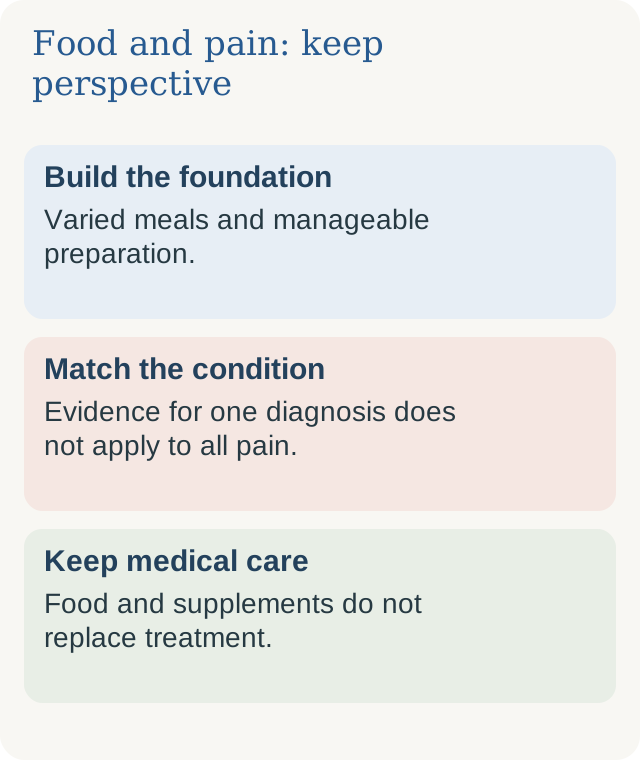
A healthy eating pattern can be worthwhile even if your pain score does not change. That is different from demonstrating a direct pain-relieving effect. The Victorian government’s arthritis and diet guidance explains that no special diet or miracle food cures arthritis. It encourages balanced meals and condition-specific advice.
Do not interpret continuing symptoms as evidence that you ate incorrectly. Pain has many contributors. A meal plan should help you look after yourself, not become another test you must pass. Keep any prescribed care in place while discussing food questions with your clinician.
Build meals from familiar, flexible ingredients
A Mediterranean-style pattern offers a practical organizing idea: vegetables, fruit, beans, whole grains, nuts, olive oil, and fish when suitable. It is a pattern of meals rather than a required shopping list. Cultural preferences, allergies, food access, and any medical restrictions still matter.
For illustration, breakfast could be oats with fruit and yogurt; lunch could be bean soup with bread; dinner could pair vegetables and a grain with fish, tofu, or another suitable protein. These examples are meal-planning ideas, not a menu shown to reduce pain. Choose versions you enjoy and can afford.
If standing or chopping is difficult, make preparation smaller. Try frozen vegetables, pre-cut produce, easy-open containers, a grocery delivery, or help with one batch of cooking. Keep a realistic backup meal available. A bowl assembled from convenient ingredients can be more useful than an ambitious recipe you have no energy to prepare.
Understand the limits of the omega-3 story
The NIH review of omega-3s describes possible symptom benefits in rheumatoid arthritis, while noting limitations in the evidence. That does not show that fish, fish oil, or any single ingredient relieves every kind of chronic pain. Food studies and supplement studies also cannot automatically stand in for each other.
Rheumatoid arthritis requires medical treatment to protect joints. NCCIH’s rheumatoid arthritis guidance emphasizes that complementary approaches should not replace prescribed therapy. Ask what a proposed dietary change is intended to accomplish, how strong the evidence is, and how it fits your actual diagnosis.
Use spices for flavor; evaluate supplements separately
Enjoying turmeric in cooking is different from taking a concentrated curcumin product. NCCIH reports encouraging early findings for some knee osteoarthritis outcomes, but says better evidence is needed. Products differ, and enhanced-absorption formulations have been associated with liver injury.
Before trying a supplement, bring the exact product and dose to a pharmacist or clinician. Ask about medicine interactions and whether a meaningful benefit is likely for your condition. The word “natural” does not settle those questions, and an attractive label is not evidence of effectiveness.
Make one change you can evaluate fairly
Choose a practical first step, such as arranging two easier lunches or adding a vegetable you like to a familiar dinner. Write down the aim: easier preparation, more regular meals, greater variety, or a concern discussed with a dietitian. This gives the change a purpose beyond hoping for an immediate symptom shift.
If you think a food repeatedly worsens symptoms, keep a brief record and discuss it rather than eliminating entire food groups on your own. A restrictive plan can become expensive and difficult to sustain. Ask for individualized support when eating is affected by poor appetite, unintended weight loss, a digestive condition, or a condition-specific diet.
For the broader care picture, read our guide to daily life with chronic pain and guide to pain types.
Sources and further reading
This original GHAC article was inspired by WebMD’s foods-and-pain topic, used as inspiration.
- Better Health Channel: Arthritis and diet: Balanced eating, dietary limits, and arthritis-specific context.
- NCCIH: Omega-3 supplements: Evidence and uncertainty in rheumatoid arthritis.
- NCCIH: Rheumatoid arthritis: The importance of continuing medical treatment.
- NCCIH: Turmeric: Evidence limitations and supplement safety.
Information here is educational and does not replace personalized medical advice.
Frequently asked questions
Can food cure chronic pain?
No food has been shown to cure chronic pain as a whole. Dietary advice depends on the underlying condition, and balanced meals support general health alongside appropriate treatment.
Should I take turmeric for pain?
Discuss the exact product with a clinician or pharmacist first. Evidence remains uncertain, supplements differ, and some enhanced-absorption curcumin products have been associated with liver injury.
Do I need to avoid whole food groups?
Broad elimination is not a routine starting point. Discuss repeated symptoms or a diagnosed condition with a clinician or dietitian before making a restrictive plan.
Make the next meal easier
Choose one familiar meal and one adjustment that makes it easier to prepare or more varied. Keep the goal practical, and bring treatment questions to your care team.
More everyday wellbeing reading

Living With Chronic Pain: Build a More Manageable Day
Practical ways to pace activities, discuss movement and sleep, prepare for appointments, and build support while living with chronic pain.
Read article →
Types of Pain: Understand the Terms, Describe Your Experience
Understand acute and chronic pain, tissue-related and nerve-related pain, and altered pain processing, with practical questions for your next appointment.
Read article →