
HEALTH JOURNAL
Living With Chronic Pain: Build a More Manageable Day
Practical ways to pace activities, discuss movement and sleep, prepare for appointments, and build support while living with chronic pain.

Living with chronic pain can turn ordinary planning into a negotiation. A shopping trip, a workday, or meeting a friend may take more preparation than other people see. Practical self-management aims to make life more manageable alongside treatment, without pretending that the right attitude can erase pain.
Start with one part of the day that you want to improve. The goal might be preparing lunch with fewer interruptions, attending an appointment, or staying connected with someone you care about. A useful plan respects both what matters to you and what your body can currently manage.
Define progress in terms of daily life
The National Library of Medicine’s chronic pain overview explains that treatment may help symptoms even when pain does not completely disappear. Improvement may include better function, sleep, or participation in daily life. Ask your clinician how you will judge whether a treatment is helping.
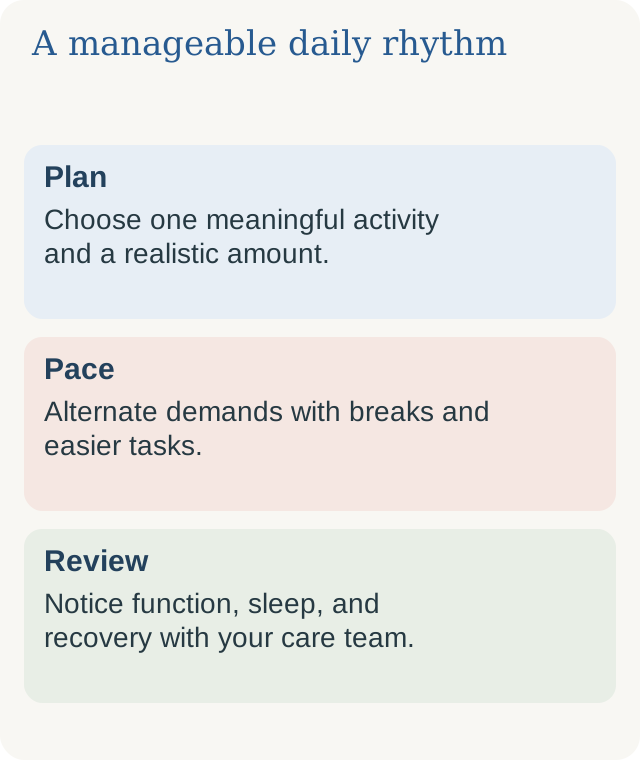
Write a concrete aim rather than “have a better day.” For example: prepare breakfast and sit comfortably to eat it, or join a short call with a friend. These are examples for planning, not clinical targets. Choose something meaningful enough to matter and small enough to review honestly.
Pace a task before it becomes an endurance test
The NHS self-management guidance includes pacing, gentle activity, relaxation, sleep routines, and maintaining social contact. Pacing means considering the demands of the day rather than doing everything at once whenever you feel able. A therapist can help adapt it to your condition.
As an illustration, divide meal preparation into choosing ingredients, washing produce, and assembling the meal, with an appropriate change of activity or break between stages. Set supplies within reach. You can also ask someone to handle the part that repeatedly causes difficulty. This is task design, not a fixed timetable you must follow.
Plan a smaller version for a difficult day: a simpler meal, a shorter visit, or one essential errand. Keeping a fallback ready saves the effort of making every decision again when symptoms are demanding.
Discuss movement that fits your condition
A clinician or physical therapist can help identify a suitable starting activity and how to progress it. An individualized plan is especially useful when pain, balance concerns, recent injury, or another condition complicates movement. Avoid copying an exercise routine simply because it is labeled gentle.
Ask practical questions: What amount should I begin with? What response is expected? Which symptoms mean I should stop? How should I adjust after a flare? Write down the answers so the plan remains clear between visits. A plan you understand is easier to use than general encouragement to exercise more.
Treat sleep and emotional support as part of care
Pain can interfere with sleep and affect mood and relationships. Bring persistent sleep problems or emotional distress to your clinician, rather than accepting them as issues you have to solve alone. A consistent bedtime routine may be worth discussing, but it should not become a reason to blame yourself for a difficult night.
The NIH’s complementary-health review describes evidence for some mind and body approaches in selected pain conditions. Benefits and safety vary. Psychological support can help with coping and daily function; being offered that support does not mean your pain is imaginary.
Keep social plans adjustable. Tell a friend what would make a visit easier: a shorter time, a seat with support, or a phone call instead of travel. Asking for a specific change gives people a way to help without requiring you to explain your whole medical history.
Bring a short, useful record to appointments
Record where the pain occurs, when it changes, what you were doing, and what it prevented you from doing. Add relevant sleep or medicine notes. A few clear examples are often easier to discuss than a long daily account. If tracking becomes exhausting, ask your care team what information they actually need.
Bring all medicines and supplements to a review, including nonprescription products. Ask what each one is for and how benefits or side effects will be monitored. Do not stop or change prescribed treatment because an article or an acquaintance suggests a different approach.
New symptoms deserve assessment even if you already live with pain. For example, back pain with new bladder or bowel changes, numbness around the genitals, or symptoms in both legs needs emergency evaluation, as described in NHS back-pain guidance. In the United States, call 911 for an emergency. Do not assume every new problem is a familiar flare.
Our pain-types guide offers language for describing symptoms, while our food and pain guide separates nourishment from treatment claims.
Sources and further reading
This original GHAC article was inspired by WebMD’s living-with-chronic-pain topic, used as inspiration.
- MedlinePlus: Chronic pain: Definitions, treatment goals, and effects on daily life.
- NHS: 10 ways to reduce pain: Everyday activity, pacing, sleep, relaxation, and social support.
- NCCIH: Chronic pain and complementary approaches: Condition-specific evidence and safety considerations.
- NHS: Back pain: Urgent and emergency warning signs.
Information here is educational and does not replace personalized medical advice.
Frequently asked questions
Does self-management replace pain treatment?
No. It complements appropriate medical care. Discuss a plan that addresses the cause when identifiable, symptoms, daily function, and your personal priorities.
Does psychological support mean the pain is not real?
No. Pain is a real experience, and support can help with coping, distress, and participation in life alongside other care.
Should I exercise through a flare?
Ask your care team for an individual flare plan. The appropriate activity and response depend on your condition and symptoms. New or concerning symptoms need assessment.
Choose one part of tomorrow
Pick one daily task and write down a full version, a smaller version, and any help you need. Bring questions about activity, flares, or treatment to your care team.
More everyday wellbeing reading

Food and Chronic Pain: What the Evidence Says
A practical look at food, inflammation, and chronic pain, with realistic expectations, simple meal ideas, and cautions about supplements.
Read article →
Types of Pain: Understand the Terms, Describe Your Experience
Understand acute and chronic pain, tissue-related and nerve-related pain, and altered pain processing, with practical questions for your next appointment.
Read article →