
HEALTH JOURNAL
Foods for Circulation: A Heart-Healthy Pattern, Not a Quick Fix
Explore what food can support in cardiovascular health, why no ingredient clears a clot, and how to compare everyday meal options.

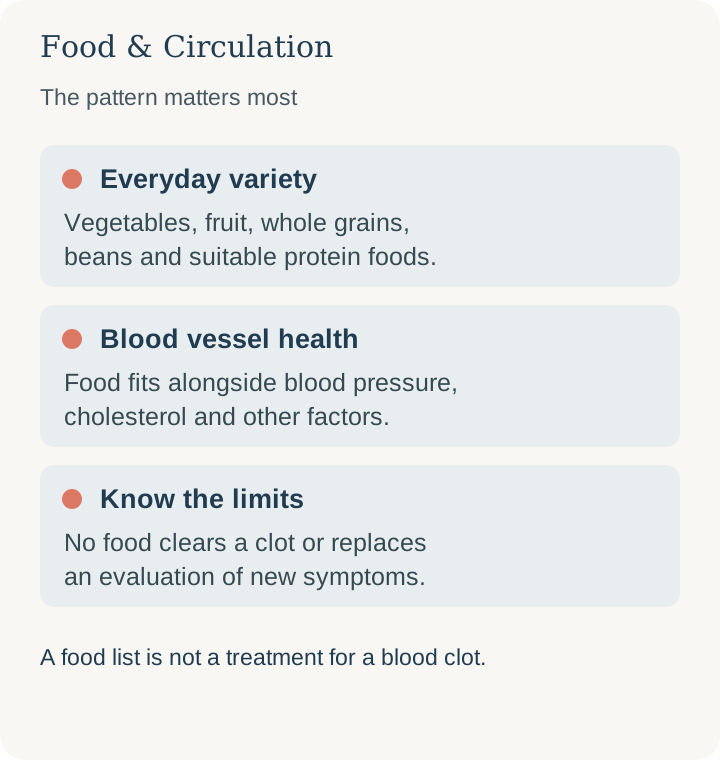
“Good for circulation” sounds appealing on a food list, but it can mean several different things. An article may be talking about blood pressure, cholesterol, blood vessel function, or a blood clot. Those are related to cardiovascular health, but they are not interchangeable.
The useful food conversation is about an overall eating pattern and the needs of the person eating. No shopping list can diagnose the cause of cold feet, leg discomfort, or swelling. This guide separates practical meal ideas from promises that a single food will restore blood flow.
Translate the circulation claim
When an advertisement says a berry, spice, or juice “boosts circulation,” ask what outcome it means. Was the claim based on a laboratory measurement, a temporary change after one serving, or fewer health problems over time? These are different kinds of evidence.
A study of a concentrated ingredient also raises a serving question. A capsule tested under study conditions is different from a pinch of spice in dinner. Even a promising result does not establish that a food can repair a blocked vessel.
This is a practical reading skill, not a reason to reject appealing foods. You can enjoy berries because they taste good while remaining uncertain about a dramatic claim attached to them.
Use a familiar eating pattern as the reference
The NHLBI DASH eating plan brings together vegetables, fruit, whole grains, beans, nuts, fish, poultry, lower-fat dairy, and vegetable oils. It limits foods high in saturated fat and sugary drinks. The plan does not require special branded foods.
DASH provides a framework for blood-pressure-conscious eating rather than a menu of circulation cures. A bean dish, vegetable soup, or simple grain bowl may fit the framework in different ways, depending on ingredients and individual needs.
A useful starting question is what the household already enjoys. Someone who likes rice and beans has a different starting point from someone who prefers fish and potatoes. Familiar food can anchor a pattern without importing an entirely new cuisine.
Look at sodium where it actually appears
The FDA explains that most dietary sodium comes from packaged and prepared foods, rather than salt added at the table. Its label guide considers 5% Daily Value or less per serving low in sodium and 20% or more high.
For example, comparing two soups means comparing the same amount. A can may contain more than one labeled serving, so the number beside sodium may not describe your full bowl. The goal is an accurate comparison, not labeling a familiar meal as a failure.
Bread, sauces, and ready-made meals can also be worth comparing when they appear frequently in your routine. Convenience is valuable. A lower-sodium version of something you already use may be more practical than expecting every meal to be cooked from scratch.
Build a meal from accessible ingredients
An illustrative lunch could combine a grain, beans, vegetables, and a dressing you enjoy. A dinner might pair fish or another suitable protein with potatoes and a vegetable. These are adaptable meal sketches, not prescribed portions or a complete nutritional assessment.
For a busy day, frozen vegetables and pantry staples can make a meal easier to assemble. The relevant questions are what is available, what you can prepare, and what the people sharing the meal will eat. A pattern that depends on expensive fresh ingredients every day may not fit.
A useful comparison is between realistic versions of the same meal: different soups, a different sauce, or another side dish. That keeps the decision concrete. It also avoids the impression that cardiovascular health requires an impressive collection of specialty foods.
Keep individual restrictions visible
NIH’s potassium fact sheet explains that kidney disease and some medicines can make excess potassium dangerous. Potassium-containing salt substitutes are not a universal replacement for ordinary salt. Individual advice matters before making that switch.
The same general menu can need adjustment for allergies, swallowing difficulties, appetite changes, or a prescribed eating plan. A heart-health headline cannot see those details. A registered dietitian can help translate a broad pattern into food that fits a person’s medical and practical needs.
When asking for help, an ordinary day of meals is useful context. So are the foods you want to keep, the appliances available, and the amount you can spend. Those details make advice more usable than a list of ideal ingredients.
Know where the food conversation ends
CDC’s blood-clot overview describes deep vein thrombosis as a clot in a deep vein requiring prompt attention. New swelling, pain, warmth, or discoloration in a leg or arm deserves medical assessment. Sudden trouble breathing, chest pain, coughing blood, or fainting can require emergency care.
Food does not dissolve a suspected clot, and a circulation-themed drink cannot replace evaluation or prescribed treatment. Persistent leg discomfort or changes in walking also deserve their own discussion rather than an assumption that diet is the explanation.
The long-term eating conversation remains useful. It is simply a different conversation from deciding what a new symptom means. Keeping those roles separate makes both nutrition information and medical care easier to understand.
About this article
This original GHAC article was inspired by WebMD’s foods-for-circulation slideshow, used as topic inspiration only.
Information here is educational and does not replace personalized medical advice.
Frequently asked questions
Can a particular food clear blocked arteries or dissolve a clot?
No food should be treated as a way to clear a blockage or dissolve a suspected clot. Symptoms need medical evaluation.
Do heart-conscious meals require specialty foods?
No. DASH uses ordinary food groups and can be adapted around familiar meals, preferences, and resources.
Is a potassium-based salt substitute suitable for everyone?
No. Kidney disease and certain medicines can change potassium safety. An individual discussion is useful before switching.
Give the food claim a clear meaning
A helpful question is whether a claim concerns a long-term eating pattern, a measured risk factor, or a symptom that needs assessment. Those distinctions make food information more useful.

FEATURED NUTRITION DESIGN
Wear a message that matters to you.
Health Matters Nutritious Fruit Basket Unisex Soft Style T-Shirt
Explore this designFind more designs that speak to you. Browse all Nutrition designs →
More everyday wellbeing reading

Women’s Vitamins and Minerals: What Changes With Life Stage?
A food-first look at iron, folate, calcium, vitamin D, and B12 across adulthood, pregnancy, menopause, and later life, without a one-size-fits-all supplement list.
Read article →
Probiotic Foods: What Live-Culture Labels Really Mean
Understand fermented foods, probiotic strains, and supplement labels without assuming every cultured food offers the same benefit.
Read article →