
HEALTH JOURNAL
Vitamin D Foods: Everyday Sources and What to Check on the Label
Find practical vitamin D sources, from fatty fish to fortified drinks, and learn why labels and individual needs matter more than a food ranking.

Vitamin D can be surprisingly easy to overlook in meal planning. A glass of milk, a plant-based drink, a serving of fish, and a carton of mushrooms may contribute very different amounts. Similar-looking products can differ too.
Instead of memorizing a long list of supposed superfoods, start with foods you enjoy and check which ones actually provide vitamin D. This guide offers practical ways to do that without treating a grocery list as a diagnosis or a supplement prescription.
Why vitamin D deserves attention
Vitamin D helps the body absorb calcium and supports bone, muscle, and nerve function. The NIH Office of Dietary Supplements consumer guide explains that few foods naturally contain much vitamin D, so fortified products are important sources in the United States.
That does not make every meal a nutrient puzzle. It does make vitamin D worth checking when you change the foods you regularly buy, especially if you replace milk with a different beverage or stop eating fish. A small shopping habit can be more useful than an ambitious menu you cannot sustain.
Fatty fish: a natural source with several kitchen options
Salmon and trout are among the natural sources highlighted in NIH’s detailed food-source guidance. Amounts differ by species, serving, and preparation. An egg yolk or a little cheese contributes much less than a typical serving of some fatty fish.
If fish already suits your household, give it a familiar role. Flake cooked salmon into a rice bowl, make a simple fish sandwich, or serve trout with potatoes and a vegetable. Canned fish can be a convenient option when fresh fish is expensive or difficult to store.
Do not buy several unfamiliar varieties at once. Try one meal, notice the taste and cost, and decide whether it earns a regular place. If you are pregnant, breastfeeding, or feeding a child, use current fish-selection advice for mercury as well as considering nutrients. The AHA’s fish guidance points readers to FDA advice for those groups.
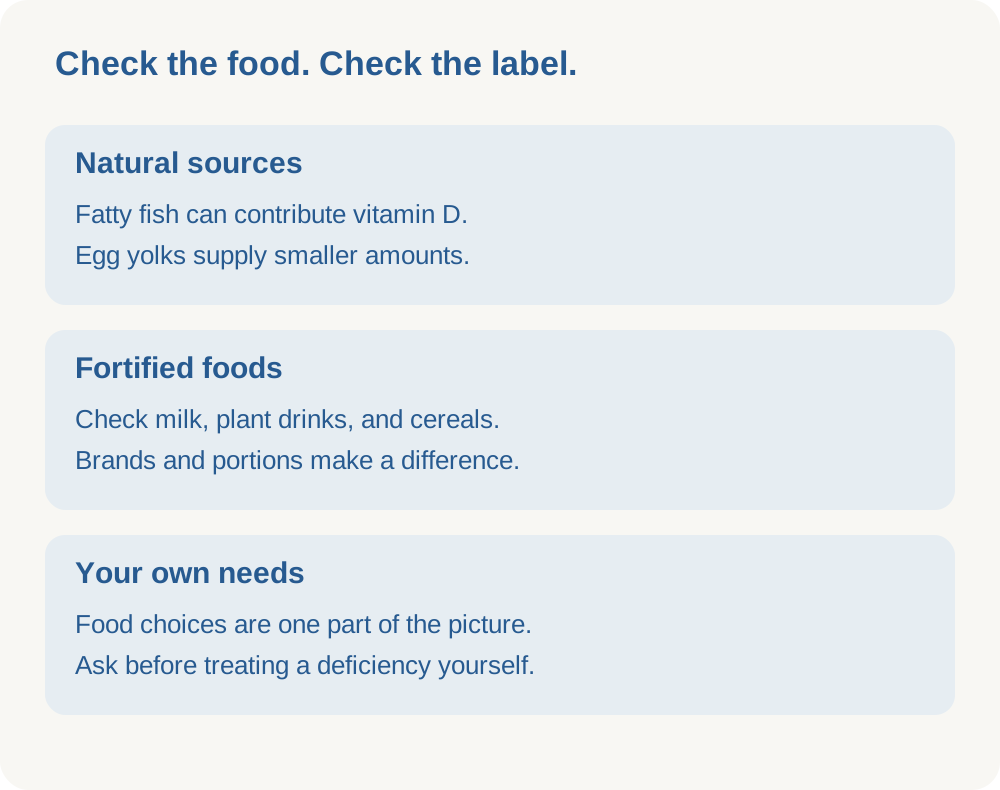
Fortified milk and plant-based drinks: compare the actual carton
NIH notes that most U.S. milk is fortified, as are many plant-based alternatives. Some cereals, yogurts, and orange juices also contain added vitamin D, but not every product does. Cheese made from milk should not be assumed to have the same fortification.
Look at the product you actually use. An oat drink for coffee, a soy beverage for breakfast, and a coconut-based yogurt can have quite different nutrient profiles. Vitamin D is one comparison; protein, calcium, allergies, taste, price, and any dietary restrictions also matter.
At breakfast, you might use a fortified beverage with cereal or prepare a familiar porridge with it. If you prefer yogurt, compare brands before assuming it contributes vitamin D. There is no need to buy a sweetened drink you do not enjoy simply because a label emphasizes one vitamin.
Mushrooms and eggs: useful, with realistic expectations
Ordinary mushrooms contain some vitamin D, and exposure to ultraviolet light can increase their content. NIH’s food table distinguishes UV-exposed mushrooms from other varieties. Look for the amount on the package rather than assuming every mushroom is an equivalent source.
Use mushrooms for flavor and texture first. Add them to a stir-fry, fold them into an omelet, or roast them alongside a familiar dinner. If the package lists vitamin D, it can help you understand the contribution without turning a vegetable side into a treatment.
Eggs can still belong in a varied meal even when they are not a major vitamin D source. Pair an egg with toast and fruit because you enjoy that breakfast. The meal does not need to meet every nutrient goal through one ingredient.
Read micrograms and percent Daily Value together
The FDA’s Daily Value guide explains that vitamin D must appear on the Nutrition Facts label. The amount is given in micrograms, and the percent Daily Value helps compare a serving with a standard labeling reference. The vitamin D Daily Value for adults and children age 4 and older is 20 micrograms.
As a made-up label example, a drink with 4 micrograms per serving supplies 20% of that Daily Value. Two servings would provide 8 micrograms. Check the serving size before making the calculation, and do not assume your mug holds the amount printed on the carton.
A Daily Value is not a personalized prescription. NIH lists 15 micrograms, or 600 IU, daily for most adults through age 70, and 20 micrograms, or 800 IU, after age 70. One microgram equals 40 IU. Ask for individual advice if you have a prescribed target.
Build a short, usable shopping plan
Choose one breakfast option and one lunch or dinner option you can picture eating. For example, compare your usual beverage with a fortified version, then plan a fish meal if fish suits your household. If you avoid animal foods, pay particular attention to fortified products and discuss any remaining gap with a qualified professional.
Keep notes on what matters in real life: whether the carton gets used before it expires, whether the family likes the taste, and whether the meal fits your budget. A source you use regularly is more useful than a prestigious ingredient left untouched in the refrigerator.
The goal is variety over time. You do not have to eat fish every day, make mushrooms a daily requirement, or force all your vitamin D into breakfast. Work with the foods and eating pattern that fit you.
When food is not the whole answer
The NIH consumer guide warns that excessive vitamin D from supplements can be harmful. Do not stack several products or choose a high dose simply because food intake seems low. A clinician can help decide whether testing or supplementation is appropriate.
Continue sun protection. Intentional unprotected sun exposure is not a reliable dietary plan and carries skin risks. Symptoms or a suspected deficiency deserve a conversation with a clinician rather than a guess based on a menu.
Bring the labels of any multivitamin, calcium product, or vitamin D supplement you already take. That makes it easier to discuss your total intake and avoid accidentally counting only the bottle with vitamin D in its name.
About this article
This original GHAC article was inspired by Health.com’s vitamin D foods topic, used as topic inspiration.
Information here is educational and does not replace personalized medical advice.
Frequently asked questions
Are all plant-based drinks fortified with vitamin D?
No. Check the Nutrition Facts label on the actual product. Brands and formulations differ.
Do mushrooms always provide a lot of vitamin D?
No. UV exposure can increase their vitamin D content, but amounts vary. Check the label rather than relying on the food name.
Are eggs enough to meet my vitamin D needs?
Egg yolks contain some vitamin D, but they are generally smaller contributors than fatty fish or some fortified products. Consider the whole eating pattern and individual advice.
Does a low intake mean I have a deficiency?
A food list cannot diagnose deficiency. Your clinician can consider your health history and whether assessment is appropriate.
Should I take a high-dose supplement?
Do not choose a high dose to treat a suspected deficiency yourself. Too much supplemental vitamin D can be harmful. Ask what amount, if any, fits your circumstances.
Check one food you already buy
Look for vitamin D on your usual beverage or cereal label. Start with that information, then choose one practical meal change if it would help.

FEATURED NUTRITION DESIGN
Wear a message that matters to you.
Health Matters Nutritious Fruit Basket Unisex Soft Style T-Shirt
Explore this designFind more designs that speak to you. Browse all Nutrition designs →
More everyday wellbeing reading

Fiber and Sleep: A Promising Connection, Not a Bedtime Cure
What research says about fiber and sleep, plus comfortable ways to add plant foods without treating dinner as an insomnia remedy.
Read article →
Beyond Oats: Everyday Foods That Support a Cholesterol Plan
Try beans, barley, fruit, nuts, and practical fat swaps while keeping LDL cholesterol, medication, and the overall eating pattern in perspective.
Read article →