
HEALTH JOURNAL
Fiber and Sleep: A Promising Connection, Not a Bedtime Cure
What research says about fiber and sleep, plus comfortable ways to add plant foods without treating dinner as an insomnia remedy.

If a bowl of beans or a piece of whole-grain toast could make sleep easier, that would be welcome news. Researchers are exploring connections between food and sleep, including the role of dietary fiber. The encouraging part is that familiar foods can fit into an ordinary day. The caution is that fiber has not been established as a treatment for insomnia.
A useful approach is to make food choices that suit your health and comfort while keeping realistic expectations about nighttime results. You do not need a special sleep snack, a large serving of bran before bed, or a supplement to begin.
What the research actually found
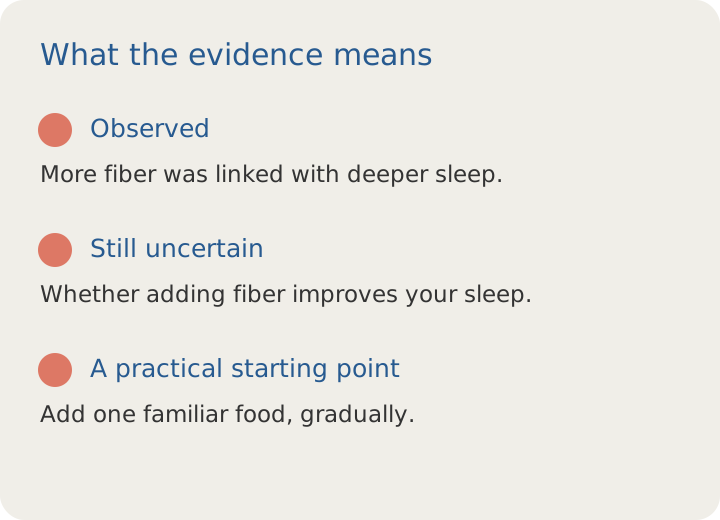
In a small 2016 sleep-laboratory study, 26 adults ages 30 to 45 spent time in a controlled setting. Researchers analyzed habitual-sleep conditions, comparing sleep after controlled meals with sleep after a day of self-selected eating. On the self-selected day, higher fiber intake was associated with more slow-wave, or deep, sleep.
That dietary analysis did not randomly assign people to a high-fiber treatment. It was small, short, and involved a limited group of adults. It cannot establish that increasing fiber causes better sleep, predict a personal benefit, or tell us how much fiber would treat insomnia.
Why fiber is still a useful food topic
According to MedlinePlus dietary-fiber guidance, fiber comes from plant foods and has an established role in digestive health. Whole grains, beans, fruit, vegetables, nuts, and seeds can contribute. Those everyday reasons to eat a varied diet stand on their own, whether or not you notice a sleep change.
Fiber is not one identical ingredient in every food. A pear, a spoonful of seeds, and a bowl of lentils differ in texture, portion, and preparation. There is no evidence here that one specific food is the best bedtime choice. Select foods you enjoy and can use regularly.
Build a daytime pattern that fits your kitchen
At breakfast, try whole-grain toast alongside your usual meal, or add berries to a cereal you enjoy. At lunch, put a modest portion of chickpeas into a soup or salad. At dinner, include vegetables or substitute some beans into a familiar dish. These are meal ideas, not tested sleep prescriptions.
Convenience helps: frozen vegetables, canned beans, and whole-grain bread can be practical choices. You can keep the rest of the meal familiar. If you already eat these foods comfortably, there is no need to keep escalating portions in pursuit of deeper sleep.
For more ways to combine familiar ingredients, see our guide to protein and fiber in everyday meals. The aim is a workable eating routine, rather than another rule to meet perfectly.
Add gradually, and make comfort the guide
NIDDK food and fiber guidance recommends adding fiber a little at a time and choosing fluid amounts that fit individual needs. Start with one modest change rather than adding several high-fiber foods together. A sudden increase can bring gas or bloating, which is hardly helpful when you are trying to rest.
If you have been prescribed a low-fiber diet, follow that advice. If you have a fluid restriction, do not override it because a general article suggests drinking more. Persistent digestive discomfort, swallowing problems, or difficulty eating enough call for individual guidance.
A large bedtime snack is not required
NHLBI healthy-sleep guidance advises avoiding large meals close to bedtime and making space for a consistent sleep schedule and a quiet wind-down. Adding fiber earlier in the day may simply be more comfortable than trying to fit a large new serving into your evening.
Notice your own response without turning dinner into a sleep test. You might enjoy beans at lunch but find a large late meal uncomfortable. That is useful practical information. It does not establish that fiber caused a particular good or bad night, since stress, caffeine, schedules, pain, and other factors can change too.
Keep supplements and gut-health promises in perspective
A food-and-sleep association does not prove that a fiber powder, prebiotic drink, or probiotic capsule will improve sleep. Products differ, and evidence about a food pattern cannot automatically be applied to a concentrated supplement.
If a supplement has been recommended for a separate medical reason, discuss its use with your clinician or pharmacist. There is no need to buy a product solely to try the food ideas in this article. Ordinary meals are a reasonable place to begin.
When better food choices are not enough
Ongoing trouble falling asleep or staying asleep deserves a conversation with a healthcare professional. NHLBI insomnia treatment information describes cognitive behavioral therapy for insomnia, or CBT-I, as a usual first treatment for long-term insomnia. It is more structured than simply receiving a list of sleep tips.
Tell your clinician about loud snoring, gasping during sleep, or marked daytime sleepiness. Do not drive when sleepy. Food changes should support your care, rather than delay a sleep evaluation or make you feel responsible for symptoms that persist.
About this article
This original GHAC article was inspired by Health.com’s topic on fiber and sleep, used as topic inspiration.
Information here is educational and does not replace personalized medical advice.
Frequently asked questions
Does fiber improve sleep?
Some research links greater fiber intake with deeper sleep, but the evidence does not establish that adding fiber reliably improves sleep or treats insomnia.
Should I eat fiber just before bed?
There is no established bedtime fiber prescription. Spread food choices through the day and avoid a large late meal if it interferes with comfort or sleep.
Which foods are practical sources?
Beans, lentils, whole grains, fruit, vegetables, nuts, and seeds can contribute. Choose portions and textures that suit your needs and increase gradually.
Should I buy a fiber supplement for sleep?
The food-and-sleep research does not establish a fiber supplement as a sleep treatment. Ask your care team if a supplement is appropriate for another health need.
What if I still cannot sleep?
Seek advice for persistent problems, especially with snoring, gasping, or substantial daytime sleepiness. Insomnia and other sleep conditions may need specific evaluation and treatment.
Choose a comfortable daytime change
Give one familiar plant food a place in a meal you already enjoy. Keep expectations gentle: a useful food choice can be worthwhile without promising a different night’s sleep.
More everyday wellbeing reading

Vitamin D Foods: Everyday Sources and What to Check on the Label
Find practical vitamin D sources, from fatty fish to fortified drinks, and learn why labels and individual needs matter more than a food ranking.
Read article →
Lower-Body Kettlebell Exercises: Build the Foundations First
Learn how squats and hip hinges fit into lower-body kettlebell training, with practical starting cues, easier options, and clear reasons to slow down.
Read article →Fitness Measures and Longevity: What Strength, Balance, and Stamina Can Tell Us
Explore how strength, balance, and stamina relate to longevity, what fitness tests cannot predict, and how to use the findings constructively.
Read article →