
HEALTH JOURNAL
Beyond Oats: Everyday Foods That Support a Cholesterol Plan
Try beans, barley, fruit, nuts, and practical fat swaps while keeping LDL cholesterol, medication, and the overall eating pattern in perspective.

Oatmeal is a familiar choice when cholesterol comes up, but it is not a required breakfast. You can build a useful eating pattern around other foods, including savory meals, convenient pantry ingredients, and flavors your household already enjoys.
Two ideas do much of the work: make room for soluble-fiber foods, and consider what replaces foods rich in saturated fat. The result is a set of repeatable meal choices, rather than a shopping list that promises a particular blood-test result.
Two useful levers: soluble fiber and fat type
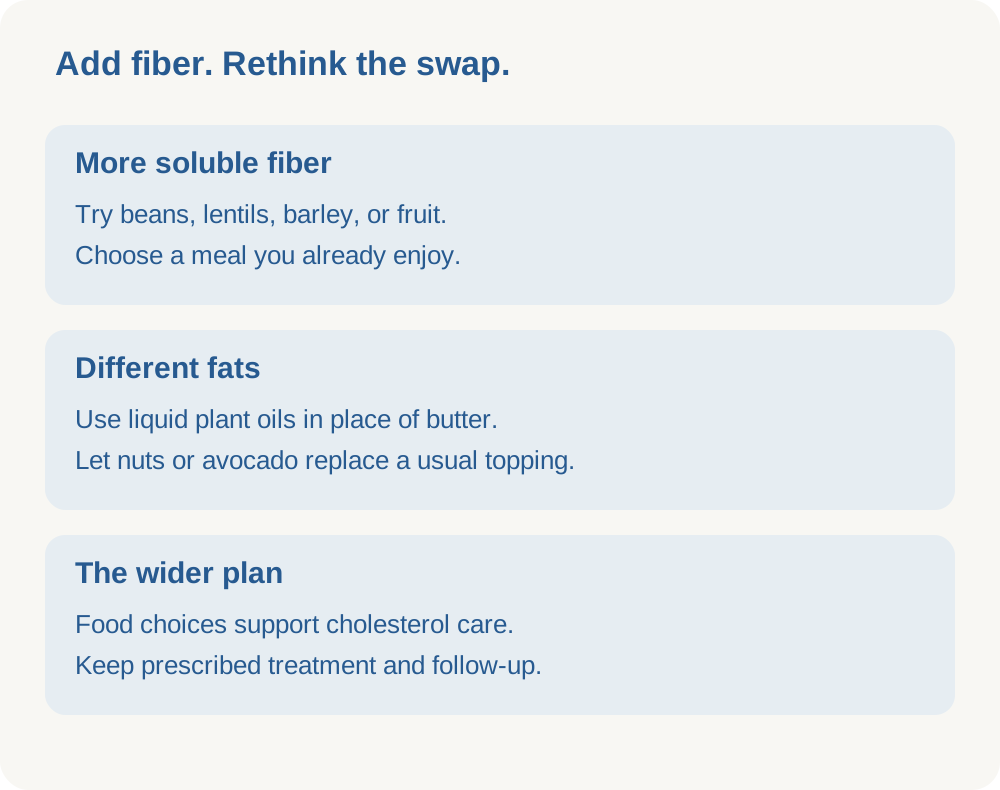
The NHLBI Therapeutic Lifestyle Changes program includes increasing soluble fiber and reducing saturated fat as ways to help lower LDL cholesterol. Soluble fiber occurs in foods including beans, lentils, barley, and some fruits. Different foods contribute different amounts.
LDL is one part of a cholesterol panel and a key focus of many treatment plans. If the test terms are unfamiliar, our guide to cholesterol numbers explains why results belong in a wider risk discussion.
A helpful meal question is: what could I add, and what could I replace? Adding a spoonful of nuts to a meal is one change. Using nuts instead of a usual rich topping is another. Neither needs to be dramatic, but the distinction helps you choose with a purpose.
Beans and lentils: use a meal you already know
Try a bean chili, a lentil soup, or chickpeas folded into a familiar salad. These options do not require a perfect recipe. They need a place in your routine and seasonings you enjoy. Start with one meal rather than buying a pantry full of unfamiliar ingredients.
For a meat-based taco filling or sauce, replace part of the meat with cooked lentils or beans. You can adjust the texture gradually. Keep the flavor recognizable, then decide whether you want to repeat the change.
Canned beans can make this easier when time is short. Compare labels for sodium if that matters to your care plan, and follow preparation directions. If a larger amount of beans bothers your digestion, try a smaller portion rather than forcing a whole bowl.
Barley and fruit: take fiber beyond breakfast
NHLBI lists barley and fruit among soluble-fiber choices. Soluble fiber is a feature of several foods, not an exclusive property of oats. A grain used at dinner can be just as practical as a breakfast cereal if you prefer savory meals.
Add cooked barley to a vegetable soup or use it as part of a grain bowl. Choose the version and cooking time that suit your evening. Barley contains gluten, so it is unsuitable for someone who needs a gluten-free diet.
For fruit, start with what you like: an apple with lunch, orange segments alongside a snack, or a pear after dinner. Whole fruit offers a different eating experience from juice. You do not need to follow a rigid fruit schedule or buy expensive berries to make produce part of your routine.
Nuts and avocado: let the substitution guide you
NHLBI’s cholesterol treatment guidance encourages a pattern including nuts, whole grains, fruits, and vegetables while limiting saturated fat. Nuts can be a convenient ingredient, but a garnish is not a treatment dose and a large portion is not automatically more helpful.
Try chopped nuts in place of a usual buttery crumble, or a suitable nut butter on toast instead of butter. An avocado spread can also offer a different texture for a sandwich. These are meal ideas, not interchangeable nutrient packages or a promise of a certain LDL reduction.
Choose safe textures for children and anyone with chewing or swallowing difficulties, and follow an allergy plan. If nuts or avocado are costly or unsuitable, other changes remain available. A useful eating pattern should not depend on a single fashionable food.
Liquid plant oils: a small kitchen decision worth noticing
The American Heart Association explains that replacing saturated fats with unsaturated fats can help lower LDL cholesterol. Its cooking-oil guide includes olive, canola, soybean, and other nontropical liquid plant oils as alternatives to solid fats and tropical oils.
Choose an oil that suits your taste, budget, and cooking method. Canola oil may fit an everyday pan dish; olive oil can work in a dressing. A more expensive bottle is not a requirement for making a useful substitution.
Think of the meals you cook most often. If butter is your automatic starting point, try an appropriate liquid oil for one of those dishes. The aim is a repeatable substitution, with enough flavor that you still enjoy dinner. Coconut oil is not an equivalent swap simply because it comes from a plant; it is rich in saturated fat.
Where fish fits, and what it does not supply
The AHA’s fish guidance places fish within a heart-conscious dietary pattern and notes that fatty fish provide omega-3 fats. Fish can be a useful replacement for a meal built around fatty meat, depending on preparation and the rest of the plate.
Fish does not supply dietary fiber. Omega-3 fats and soluble fiber are different reasons foods can have a place in an eating pattern. It is clearer to think of fish as a protein choice than to present it as another bean or barley equivalent.
If you eat fish, try a baked fillet with vegetables and a grain, or a simple canned-fish sandwich. If you do not eat fish, you can still work on fiber and fat substitutions through other foods. There is no requirement to force an ingredient you cannot safely eat or do not enjoy.
Turn the ideas into three familiar meals
For breakfast, choose whole-grain toast with a suitable nut butter and fruit, or a cereal you enjoy with an appropriate milk or alternative. Oatmeal can stay if you like it, but it does not need to be the only option.
For lunch, try a bean-based soup and a side you enjoy, or a chickpea sandwich filling with vegetables. Keep convenience in the plan. A meal you can assemble on a workday has a better chance of becoming routine.
For dinner, use lentils in a familiar sauce, barley in soup, or fish with a vegetable side. Change one component at a time so you can judge whether the substitution works for taste, cost, and preparation.
Read labels in context. A food can be cholesterol-free and still contain substantial saturated fat. Compare the serving you will eat and the nutrient relevant to your goal instead of relying on the front-of-package message.
Food supports care, including medication when needed
NHLBI describes lifestyle changes and medicines as possible parts of cholesterol treatment. Your LDL goal and follow-up plan depend on your health history and risk. Some people need medication even with thoughtful eating habits. That is a reason to personalize care, not to assign blame.
Do not stop a prescribed cholesterol medicine to test a food plan on your own. Bring your questions, preferences, and any side effects to your clinician. Ask when to recheck your results and which changes are most useful for you.
If you have a prescribed low-fiber diet, kidney disease, food allergies, or another condition affecting your meals, get tailored advice before making broad substitutions. The most useful next step may be one manageable meal change and a clear follow-up appointment.
About this article
This original GHAC article was inspired by Health.com’s article on cholesterol-friendly foods beyond oats, which prompted this original guide.
Information here is educational and does not replace personalized medical advice.
Frequently asked questions
Do I have to eat oats to improve my cholesterol?
No. Soluble fiber occurs in other foods, and fat substitutions also matter. Choose a pattern that fits your preferences and care plan.
Can beans replace cholesterol medicine?
No. Food choices can support treatment, but medication decisions depend on your individual risk and results. Do not stop a prescribed medicine without discussing it with your clinician.
Does fish contain fiber?
No. Fish is a protein food; fatty fish also provide omega-3 fats. Beans, grains, fruits, and vegetables are sources of dietary fiber.
Is coconut oil a heart-friendly substitute for butter?
Coconut oil is rich in saturated fat. The AHA favors nontropical liquid plant oils when replacing fats higher in saturated fat.
How quickly will my LDL fall?
A food list cannot predict your result or timing. Ask your clinician when to repeat testing and how to assess the whole treatment plan.
Choose one swap you can repeat
Pick a familiar meal and try beans, a soluble-fiber grain, or a different cooking fat where it fits. Keep what works, and discuss your cholesterol goals and follow-up with your care team.

FEATURED NUTRITION DESIGN
Wear a message that matters to you.
Health Matters Nutritious Fruit Basket Unisex Soft Style T-Shirt
Explore this designFind more designs that speak to you. Browse all Nutrition designs →
More everyday wellbeing reading

Vitamin D Foods: Everyday Sources and What to Check on the Label
Find practical vitamin D sources, from fatty fish to fortified drinks, and learn why labels and individual needs matter more than a food ranking.
Read article →
Fiber and Sleep: A Promising Connection, Not a Bedtime Cure
What research says about fiber and sleep, plus comfortable ways to add plant foods without treating dinner as an insomnia remedy.
Read article →