
HEALTH JOURNAL
Beginner Back Exercises: A Simple Place to Start
Explore three beginner back exercises, with clear setup tips, gentle progression, and guidance on when to stop and seek help.

A back workout does not have to start with heavy weights or a long gym session. For a beginner, a useful first step is learning a few controlled movements and finding a comfortable way to practice them. There is no prize for choosing the hardest version on day one.
This guide takes a simple approach: one seated movement, one exercise lying down, and one on hands and knees. These are options to discuss with a qualified professional, especially if you have back pain or a previous injury. They are not a diagnosis or a treatment plan.
Set up before you start
Choose a clear space and a mat that stays put. Wear clothing that lets you move without needing to tug at it. Read an exercise through before getting into position, so you are not trying to twist around and follow a screen mid-movement.
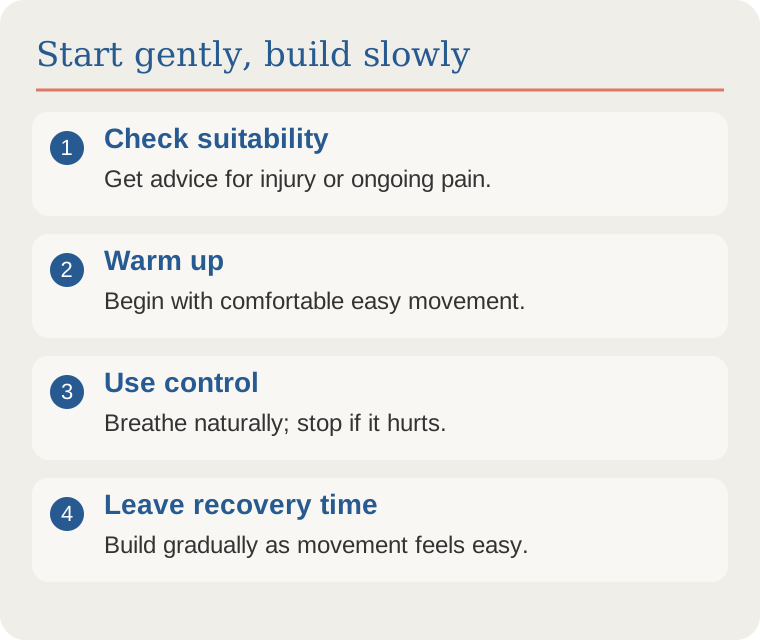
The American Academy of Orthopaedic Surgeons recommends five to ten minutes of low-impact activity before its spine exercises. An easy walk can serve as a warm-up. Ask a clinician or physical therapist which movements fit your needs if you have an injury, recent surgery, or ongoing symptoms.
1. Try a seated shoulder blade squeeze
For an upper-back starting point, Mayo Clinic’s back exercise guide includes a shoulder blade squeeze. Sit upright on an armless chair or stool. Gently draw your shoulder blades toward each other, hold for five seconds, then release. Its suggested amount is three to five repetitions.
This is a useful option to learn when floor exercises are inconvenient. Keep the chair stable and leave room for your arms. If you are unsure what the movement should look like, use the linked demonstration or ask for someone qualified to show you.
2. Learn the bridge position
Mayo Clinic also demonstrates a bridge. Lie on your back with knees bent and feet on the floor. Keep your head and shoulders relaxed. Tighten your belly and buttock muscles, then lift your hips until your knees, hips, and shoulders form a line. Hold for three deep breaths and lower slowly. Its beginner starting point is five repetitions.
Do not make the height of the lift your goal. If getting down to the floor or back up is difficult, skip this option and ask a physical therapist about an alternative. You do not need to complete every exercise in an article to have a worthwhile movement session.
3. Build toward a bird dog
For the bird dog, AAOS starts with hands under shoulders and knees under hips. Engage your belly muscles, reach one arm forward to body height, then extend the opposite leg behind you. Keep your back flat and pelvis steady. Return slowly and switch sides. AAOS describes a 15-second hold and five repetitions; ask for an easier version if you cannot stay steady.
Treat balance and control as the task. A small, careful attempt is more useful than rushing to copy a pose. If pressure through the wrists or knees is uncomfortable, stop and ask about a different exercise rather than improvising through pain.
Keep the routine manageable
The CDC’s adult activity guidance recommends muscle-strengthening activity for the major muscle groups at least two days a week. This short selection is only a starting point, not a complete strength program. Give yourself recovery time between sessions and continue breathing during exercise instead of holding your breath.
Choose a time that fits your actual day. You might leave your mat ready in a quiet corner or write down one exercise you want to learn. Keep a simple note of what felt comfortable and what you want to ask about. That gives your next session a clear starting point.
Pair strength work with other movement you enjoy. Our walking pace guide offers a way to think about everyday activity without turning it into a competition.
Know when to stop
AAOS advises that exercise should not hurt. Stop for pain, and seek guidance if symptoms persist or worsen. The NHS back pain guidance recommends medical review when pain interferes with daily life or is not improving after a few weeks.
Get urgent medical help for sudden severe or rapidly worsening back pain, especially with fever or feeling unwell. Seek emergency care for back pain with new bladder or bowel changes, numbness around the groin, symptoms in both legs, chest pain, or after a serious accident. Do not try to exercise through these symptoms.
Make space for everyday movement
At Good Health Apparel Company, we see movement as part of everyday wellbeing. A comfortable outfit and a small space can make getting started feel simpler, but no purchase is required for these exercises. Explore our apparel collection if you would enjoy a health-minded reminder, and keep the focus on movement that suits you.
About this article
This original GHAC article was inspired by Health.com’s article on back exercises.
Information here is educational and does not replace personalized medical advice.
Frequently asked questions
Do I need weights for these back exercises?
No. These options use body weight or a seated movement. Focus on learning the positions before thinking about additional resistance.
Should back exercises hurt?
No. Stop if an exercise causes pain. Seek professional guidance rather than forcing the movement or assuming pain means progress.
What if I cannot get onto the floor?
Start by asking a physical therapist for suitable seated or standing options. The shoulder blade squeeze is seated, but it does not replace a complete strengthening program.
Can these exercises cure back pain?
No exercise list can promise a cure. Back pain has different causes, and the right approach depends on your situation. Persistent or concerning symptoms deserve assessment.
Keep the next step simple
Small, repeatable choices are often the ones that last. Explore the Health Blog for more everyday wellbeing reading, or visit the Fitness collection for apparel that celebrates movement in real life.
More everyday wellbeing reading

Ultra-Processed Foods: A Practical Everyday Guide
Understand ultra-processed foods, what research can and cannot tell us, and simple ways to make everyday meals work better for you.
Read article →
Lower-Sugar Fruits: Simple Choices for Everyday Eating
Enjoy fruit without turning it into a food rule. Explore lower-sugar choices, easy snack ideas, and what matters beyond sugar alone.
Read article →
Mediterranean Fall Meals: Simple Ideas for Cooler Days
Bring Mediterranean-style eating into fall with easy meals, affordable pantry swaps, seasonal produce, and a manageable shopping plan.
Read article →