
HEALTH JOURNAL
Ultra-Processed Foods: A Practical Everyday Guide
Understand ultra-processed foods, what research can and cannot tell us, and simple ways to make everyday meals work better for you.

Ultra-processed foods are part of many everyday routines. They can be affordable, familiar, and ready when time or energy is short. Understanding the term can help you make choices, but it does not require throwing away everything in your pantry.
The useful question is how your usual meals support you over time. Start with what you eat often, keep convenience where you need it, and choose one change you can realistically repeat.
What does ultra-processed mean?
The NOVA research system groups foods according to the extent and purpose of processing. Ultra-processed products are typically industrial formulations containing ingredients or combinations that go beyond ordinary home preparation. Soft drinks, some packaged snack foods, and many ready-to-eat products are common examples. Recipes differ, so a broad food name alone does not always settle the classification.
Processing itself includes ordinary steps such as freezing, pasteurizing, and canning. Those steps can make food safer, last longer, or easier to use. A bag of plain frozen vegetables and a sweetened snack bar should not automatically be treated as equivalent because both come in packages. Think about the actual food, its ingredients, and what it contributes to your meals.
What the research tells us
A 2024 BMJ umbrella review found associations between higher ultra-processed food intake and several poorer health outcomes. Much of this evidence comes from observational research. That can identify patterns, but cannot by itself prove that a particular product caused a disease. Other eating habits, living conditions, and differences in how diets are measured can affect the findings.
Controlled research adds another piece. In a small NIH feeding study published in 2019, 20 adults ate each of two diets for two weeks in random order. Participants ate more calories and gained weight during the ultra-processed diet. This was a short, closely supervised experiment, not a test of every packaged food or a prediction of any one person’s long-term health.
These findings give us reasons to pay attention to overall eating patterns. They do not mean that one snack determines your future health, or that every additive has been shown to be harmful. A blanket rule based on whether an ingredient sounds unfamiliar is not a reliable nutrition assessment.
Read the label with a purpose
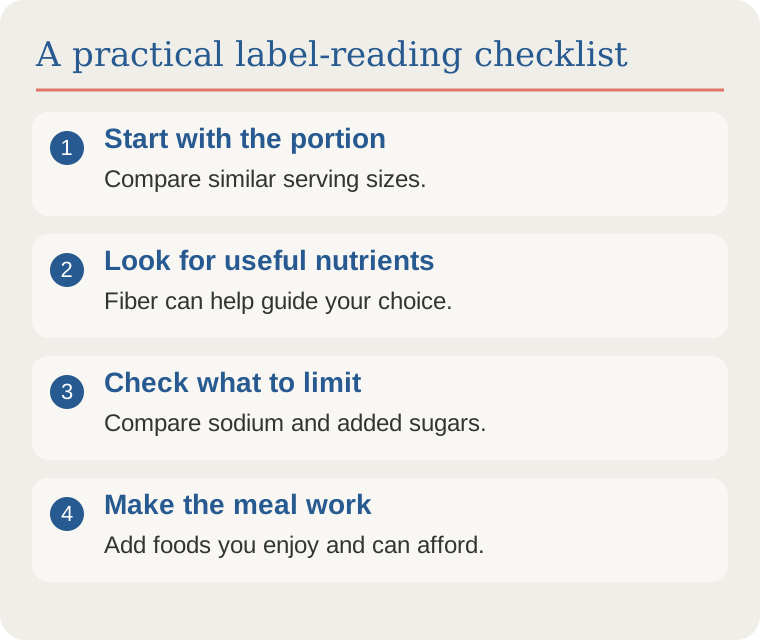
For packaged foods, compare products you would actually use for the same job. Begin with the serving size, then look at fiber, sodium, saturated fat, and added sugars. The FDA’s percent Daily Value guide describes 5% DV or less per serving as low and 20% DV or more as high. Use comparable serving sizes when comparing products.
More often, look for more fiber and less sodium, saturated fat, and added sugar. A label is a tool for choosing between options, not a complete score for a food or a person. If you have a prescribed diet, your own nutrient targets may take priority over general guidance.
Keep convenience, improve the meal
Try adding something useful to a meal you already rely on. Stir frozen peas into a quick pasta dish, add rinsed canned beans to a salad, or serve a piece of fruit beside breakfast. These are meal-building ideas rather than promises about changing a food’s processing category.
If sweet drinks are a frequent habit, replace one with water or unsweetened sparkling water when that suits you. If breakfast leaves you hungry, experiment with oats, fruit, or yogurt instead of trying to redesign the entire day. Our Greek and regular yogurt comparison can help you choose by taste, protein, and how you plan to use it.
Make a plan you can afford
Choose one meal or snack to work on this week. Check what is already in the cupboard, then add one or two ingredients you know how to use. Frozen produce, canned staples, and leftovers can make a workable plan easier. You do not need to buy everything fresh or cook every meal from scratch.
Consider the whole week rather than judging a single occasion. A familiar ready meal may be the practical choice on a difficult day. If food changes are becoming stressful, or you need help balancing nutrition with a health condition, a registered dietitian can offer advice suited to your circumstances.
Keep the next step small
Notice what makes a change easier to repeat: a food you enjoy, a price that fits, and preparation you can manage. Keep that change before adding another. Eating well should leave room for pleasure, culture, and the realities of daily life.
At GHAC, we share everyday wellbeing ideas that make room for real life. Explore our Health Blog for more food and movement guides, including simple Mediterranean-style fall meals. Our apparel collections offer another way to share the health messages that matter to you.
About this article
This original GHAC article was inspired by Verywell Health’s article on eating ultra-processed foods regularly.
Information here is educational and does not replace personalized medical advice.
Frequently asked questions
Are all packaged foods ultra-processed?
No. Packaging does not determine the category. Plain frozen vegetables, oats, and many canned staples differ from industrial formulations made with multiple food-derived ingredients and additives. Look at the actual product.
Do I need to eliminate ultra-processed foods completely?
This guide does not prescribe complete avoidance. Focus on your usual eating pattern and manageable changes. Cost, access, medical needs, and the foods you enjoy all matter.
Does a long ingredient list prove a food is unhealthy?
No. Ingredient count alone does not describe nutritional value or establish harm. Read the ingredients alongside the Nutrition Facts label and consider the role the food plays in your meals.
Can one food swap prevent chronic disease?
No single swap guarantees prevention. Research on dietary patterns can guide choices, but personal health depends on many factors. Use individual advice for medical conditions or specific nutrition needs.
Keep the next step simple
Small, repeatable choices are often the ones that last. Explore the Health Blog for more everyday wellbeing reading, or visit the Fitness collection for apparel that celebrates movement in real life.
More everyday wellbeing reading

Lower-Sugar Fruits: Simple Choices for Everyday Eating
Enjoy fruit without turning it into a food rule. Explore lower-sugar choices, easy snack ideas, and what matters beyond sugar alone.
Read article →
Mediterranean Fall Meals: Simple Ideas for Cooler Days
Bring Mediterranean-style eating into fall with easy meals, affordable pantry swaps, seasonal produce, and a manageable shopping plan.
Read article →
Greek vs. Regular Yogurt: Protein, Cultures, and Choice
Compare Greek and regular yogurt for protein, live cultures, sugar, and everyday meals. A simple guide to choosing the tub that works for you.
Read article →