
HEALTH JOURNAL
Meditation for Beginners: Find a Practice That Fits Your Life
Explore gentle ways to practice meditation, from guided sessions to walking, with realistic expectations, accessible adaptations, and a simple plan for getting started.

You do not need a quiet mind to begin meditation. You need a small amount of time, a place where you feel reasonably comfortable, and permission to notice what is happening without turning the session into another performance. Thoughts, background sounds, and the urge to check your phone can all show up. The useful question is whether a particular practice feels workable enough to try again.
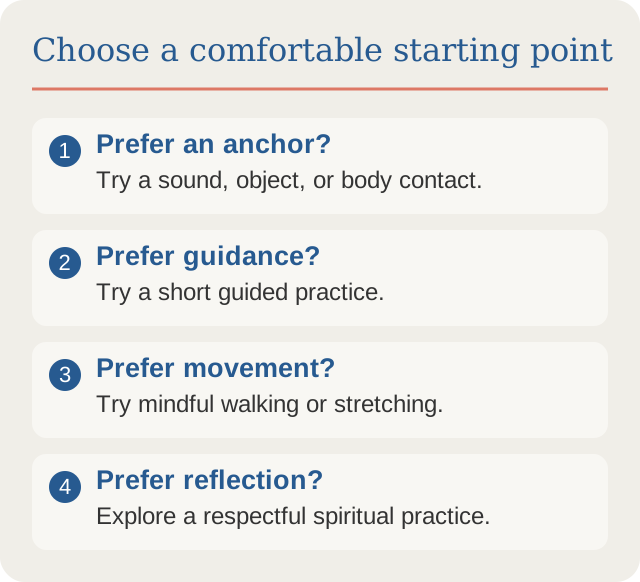
This guide starts with everyday choices: whether you prefer a voice or silence, sitting or moving, and an outward focus or an inward one. The examples are invitations to experiment, not a treatment plan or a promise that everyone will feel calm. Start with a minute or two, keep your eyes open if you prefer, and choose the version that fits your body, surroundings, and beliefs.
Start with your situation, not a label
Before selecting a practice, consider what you are asking of it. Perhaps you want a transition between work and home, a way to pause before an uncomfortable conversation, or a few minutes without scrolling. Those are different situations, and they need not have the same answer. A walking practice might suit the afternoon gap between meetings. A short recording might be easier after a busy evening. Quiet seated practice may feel appealing on a morning when the household is still asleep.
Also consider what makes practice harder. You might find closed eyes uncomfortable, have pain when sitting on the floor, or struggle to follow a rapid stream of spoken instructions. These are practical design questions, not signs of being bad at meditation. A supportive chair, an outdoor focus, a slower recording, or a shorter session can change the experience. Choose something you can adapt freely rather than something that requires you to ignore your own needs.
A useful starting intention is specific and modest: “I will spend two minutes noticing the room before answering more messages.” Compare that with “I must become completely relaxed.” The first gives you an action you control. The second makes a feeling into a test. Your session can be worthwhile even if the day remains demanding afterward.
Know what the evidence can and cannot tell you
The National Center for Complementary and Integrative Health describes research suggesting that some mindfulness approaches may help with certain symptoms, while emphasizing that study quality and findings vary. A structured clinical program is different from trying a short recording at home. Evidence about one program does not establish that every meditation style works equally well for every person.
This guide does not rank techniques as treatments for anxiety, depression, pain, or insomnia. Meditation should not replace medical care or delay getting help. If you want support for an ongoing health concern, ask a qualified professional about appropriate options. You can still approach everyday practice as a small experiment in paying attention, without expecting it to diagnose, repair, or explain everything you feel.
Be wary of claims that a particular technique guarantees better memory, permanently changes your brain in a specific way, or eliminates difficult emotions. A convincing testimonial is an individual experience, not a prediction for you. For beginners, the most useful comparison is often more ordinary: Which instructions can I follow comfortably, and which practice leaves me willing to return tomorrow?
A simple attention practice: choose one anchor
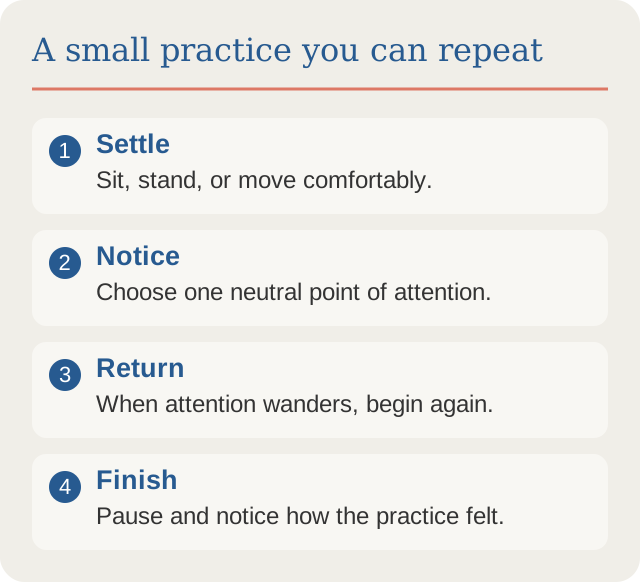
An anchor is something you return your attention to. It could be the contact of your feet with the floor, a steady sound in the room, or an object resting on a table. Pick one that feels neutral or pleasant enough to notice. Sit in a supported position, set a gentle timer for one minute, and allow your attention to rest on that anchor. When another thought takes over, acknowledge that it happened and come back.
There is no need to stare intensely, tense your face, or block every competing sound. If you choose a visual object, let your gaze stay soft. If you choose sound, listen at an ordinary comfortable volume. If your anchor is physical contact, notice pressure or texture without trying to create a special sensation. Returning is the practice, so wandering attention gives you opportunities to do it.
At the end, look around and take a moment before moving into the next task. Notice whether the instructions felt manageable. You may have spent most of the minute thinking about dinner. That does not require a longer session to compensate. The next experiment can be another minute with the same anchor, or a different anchor if this one felt awkward.
Using breath awareness without controlling your breathing
Some people enjoy noticing the natural rhythm of breathing. If that appeals to you, choose a comfortable position and notice where breathing is easiest to feel: perhaps movement at the chest, clothing against the abdomen, or air near the nose. Let the breath happen at its usual pace. This is an attention exercise, not a requirement to breathe deeply, hold your breath, or match a demanding count.
If your mind wanders, gently return to the next ordinary breath. You can use a quiet label such as “in” and “out” if it makes the instructions easier to follow, but you do not need to synchronize perfectly. Breathing through the nose is not mandatory for this experiment. Comfort matters more than following an imagined ideal version of the practice.
Breath attention is optional. If it makes you feel trapped, dizzy, worried, or overly aware of breathing, stop and choose an external anchor instead. Opening your eyes and noticing colors in the room may suit you better. People managing breathing problems or other health concerns can ask their clinician about any breathing exercises they are considering. You never have to push through distress to prove commitment.
An open awareness practice: notice, then let the next thing arrive
A more open practice lets attention notice changing experiences rather than repeatedly selecting one object. You might hear a bird, notice a thought about an appointment, and feel the chair beneath you. Start with a minute of looking around the room, then allow yourself to notice whatever is most apparent. Keep the exercise brief and ordinary. You are not expected to analyze every thought or discover a hidden meaning.
A light label can help: “sound,” “planning,” or “warmth.” Use it only if it makes things simpler. Once you recognize an experience, allow the next one to arrive. Avoid turning the labels into a running commentary that you must get right. If the experience becomes too busy, return to a stable anchor such as the chair or an object in front of you.
This can appeal to people who dislike the idea of excluding distractions, because surrounding sounds become part of what they notice. Others find the lack of a single focus frustrating. Neither response is a verdict on your ability. A more structured practice may be a better choice on a day when your attention already feels pulled in several directions.
Guided practice: let a voice provide the structure
A guided recording or live teacher can handle the sequence for you: settling into a position, choosing a focus, and ending the session. That may be useful when remembering instructions feels like extra work. Listen to a short sample before committing. Is the voice easy to hear? Are the pauses comfortable? Does the guide offer choices about posture and eyes, or demand that everyone respond in the same way?
Choose a recording with a clear duration and an easy pause button. A two-minute practice is a reasonable first experiment. Keep the volume low enough to remain comfortable, and skip music if it distracts you. Captions or written instructions may be helpful if listening is not your preferred format. A free recording can be enough; you do not need to purchase an app to begin.
Remember that guided describes the delivery, not one unique technique. A recording might lead breath awareness, imagery, or another practice. Read its description so you know what to expect. If an instruction feels wrong for you, ignore it, adapt it, or stop. The recording does not know your health history, your environment, or how you are responding in that moment.
Walking practice: keep the world in view
If stillness feels uncomfortable, try a short walking attention practice in a familiar, safe place. Keep your eyes open and walk at a pace that allows you to notice your surroundings. For a minute, attend to the changing contact between your feet and the ground, or the rhythm of your steps. Then notice the environment again. You can alternate between those two forms of attention without needing a special route.
Safety takes priority over concentration. Do not use a practice to narrow your attention while crossing streets, navigating uneven ground, or moving through a crowded area. Avoid headphones if they make it harder to hear what is happening nearby. A hallway or level garden path may be a simpler first setting than a busy sidewalk. There is no need to walk unusually slowly if that would interfere with other people.
Movement can be adapted. If walking is not accessible, you might notice your hands resting on a table, slowly open and close your fingers within a comfortable range, or follow the sensation of moving your wheelchair along a safe route. Choose movements already appropriate for you. This is not a workout prescription, a balance challenge, or a reason to force a painful movement.
For ideas on fitting a walk into your week, see our simple walking guide. Keep awareness of your surroundings ahead of the exercise.
Gentle movement classes require their own judgment
Yoga and tai chi can include attention to movement, but they are broader practices with their own methods, traditions, and physical demands. A class that feels meditative to one person might feel challenging to another. Look for beginner instruction, clear modifications, and a teacher who welcomes questions. A description such as gentle or restorative does not automatically mean every movement is suitable for every body.
The NCCIH guidance on yoga recommends appropriate instruction and recognizes that health conditions can affect what is safe. If you have an injury, a balance concern, pregnancy-related needs, or another relevant condition, seek individualized advice before trying unfamiliar poses. You can choose a seated attention exercise instead while you work out suitable movement options.
Do not measure the quality of a practice by how far you stretch or how still you appear. If you are thinking about managing physical discomfort throughout the session, changing the movement or posture is reasonable. A teacher should be able to explain alternatives without treating them as an inferior version. Comfort and appropriate support make it easier to pay attention to what you are doing.
Body awareness: make it optional and adjustable
A body awareness practice might invite you to notice different areas in sequence, such as your hands, shoulders, or feet. Try a small version first rather than a long scan of the entire body. Notice one area that feels reasonably neutral, then decide whether you want to continue. You are observing what you experience, not checking for illness or requiring every muscle to relax.
Some people like this kind of attention. Others find internal sensations uncomfortable or become preoccupied with them. If you start searching for what might be wrong, choose something external, such as the shape of a window or a sound in the room. You can keep your eyes open, move position, or end the session. These choices belong within the practice rather than being exceptions you have to earn.
Avoid using an instructional recording as a medical assessment. A sensation can have many explanations, and meditation cannot determine what it means. New, persistent, or concerning symptoms deserve appropriate medical advice. For everyday practice, a brief focus on the contact between your hand and a familiar object may be more comfortable than scanning an area associated with pain or worry.
Imagery: create an ordinary scene, or skip pictures entirely
An imagery practice invites you to picture a setting or experience. You could imagine sitting beside a familiar tree or looking at a quiet room you know well. Choose something personally comfortable rather than accepting that everyone finds beaches, forests, or silence soothing. Add one simple detail, such as a color or the texture of a chair, and notice whether the exercise feels useful.
You do not need a vivid inner picture. Some people imagine mainly through words, concepts, or other senses, and some do not form mental images easily. You can describe the scene to yourself, look at a real photograph, or select a different practice. Difficulty visualizing is not a problem that needs to be fixed before you can take a reflective pause.
Avoid making imagery a promise that thoughts can control events, cure an illness, or guarantee an outcome. An imagined successful conversation does not remove the need to prepare what you want to say. If scenes bring up upsetting memories or feel unreal in a disturbing way, return to your immediate surroundings and stop. A familiar external object may be a better anchor for you.
Words, compassion, and personal meaning
A repeated phrase can offer structure without needing an audio guide. Choose a short, ordinary sentence that does not ask you to believe something untrue, such as “I can take this one step at a time.” Repeat it slowly a few times, with pauses. Notice how it feels rather than trying to make the words erase frustration, sadness, or uncertainty. Silence between repetitions can be part of the exercise.
Compassion-oriented practice may involve offering a kind wish to yourself or someone else. Start with a person or situation that feels manageable. You do not need to begin with a painful relationship or force forgiveness. A phrase such as “May you have support today” can acknowledge difficulty without pretending it has disappeared. If the words feel artificial, ordinary reflection or another attention practice is an equally reasonable choice.
Spiritual practice is personal and may belong within a particular religious or cultural tradition. If you want that context, learn from a community or teacher who can explain it respectfully. If you prefer a secular practice, choose instructions that make that clear. You do not need to borrow sacred language you do not understand, adopt a belief, or make spirituality part of your routine to try meditation.
Traditional systems and intensive retreats are a separate decision
Names such as Vipassana or Transcendental Meditation refer to approaches with specific traditions or teaching systems. A brief online description is not the same as learning that system. This article offers ordinary attention experiments, not instruction in a lineage, a branded course, or a retreat practice. If one of those approaches interests you, ask a qualified teacher about the method, expectations, costs, and ways to adapt it.
A long silent retreat is also different from a two-minute pause at home. Before signing up, find out how much sitting is expected, what support is available, and whether the organizers discuss participant suitability. Ask how they handle distress, medical needs, sleep, and leaving early. You should be able to get clear answers before committing money or time.
Do not choose an intensive experience because you feel a short practice is not impressive enough. More duration is not automatically a better fit. If you have a mental health history or are currently struggling, discuss the plan with your treating professional. A supportive teacher should respect that conversation and should not frame medical care as an obstacle to authentic practice.
A three-day experiment that keeps the choice manageable
On the first day, try one minute with an external anchor, such as a plant, a quiet sound, or your feet on the floor. Before starting, decide where you will sit and what will mark the end. Afterward, note only two things: whether the instructions were comfortable and whether you would consider trying them again. You do not need to score your mood, your thoughts, or your personality.
On the second day, try a short guided recording or a safe movement practice. Keep the duration similar so you are comparing the experience rather than endurance. On the third day, repeat whichever felt most workable. If neither appealed, choose a different anchor or leave meditation aside for now. Reading, a walk, talking with someone supportive, or another ordinary activity may be a better use of that time.
These three days cannot tell you whether a method will produce a health benefit. They can help you learn about preferences. Perhaps you like silence but need a chair, or enjoy guidance but dislike music. Those details are useful because they let you design a routine around your actual life rather than an idealized image of how a person who meditates should behave.
Make the routine easy to start and easy to end
Link a short practice to an existing moment, such as finishing lunch or closing your workday. Choose a time when you can stop safely and give yourself permission to keep the session brief. A cushion, candle, or specially arranged room is optional. If getting ready takes longer than the practice, simplify the setup. A chair and a visible timer can be plenty.
Set a clear ending so the practice does not drift into something you feel obliged to continue. When the timer sounds, notice the room, move gently if needed, and choose your next action. You might drink water, write down an appointment, or return to a task. A transition helps the practice sit within everyday life rather than become a separate standard you must live up to.
Missed days do not require a catch-up session. Restart with the duration that felt manageable. If habit trackers make you feel judged, skip them. A note beside the place you usually sit may be enough of a reminder. The aim is to make a voluntary practice available, not create another streak that turns an already demanding week into a test of discipline.
If you prefer an evening pause, our calmer-night guide offers other quiet activities as well as practical ways to reduce interruptions.
When practice feels uncomfortable, change the plan
Meditation is not automatically comfortable or harmless for everyone. NCCIH notes that negative experiences can occur and that safety research has limitations. If a session increases anxiety, brings up troubling memories, or leaves you feeling disconnected or overwhelmed, stop. Open your eyes, notice your immediate surroundings, and choose an ordinary activity that helps you feel oriented. There is no requirement to remain seated until the timer ends.
If you have a trauma history or an ongoing mental health concern, consider talking with a qualified professional before trying inward-focused or intensive practices. You may prefer brief, eyes-open attention to the environment, or may choose not to meditate. Ask a teacher whether they offer real choices and understand when someone should seek clinical support. Continuing despite distress is not evidence that a method is working.
If upsetting effects persist or interfere with daily life, seek professional help. The practical measure of a good fit is not whether you can tolerate increasingly difficult sessions. It is whether the practice is appropriate for you and can be used with reasonable comfort and support. Your own response matters more than a glowing review, a popular label, or someone else's preferred routine.
About this article
This original GHAC article was inspired by Verywell Mind's overview of meditation approaches by Toketemu Ohwovoriole.
Information here is educational and does not replace personalized medical advice.
Frequently asked questions
What is a manageable first meditation practice?
Try one minute of noticing an external object, a sound, or the contact of your feet with the floor. Keep your eyes open if you prefer. Return gently when attention wanders, and stop if the experience becomes uncomfortable.
Do I need to stop thinking to meditate?
No. Thoughts can appear during practice. You can notice that your attention has moved and return to your chosen anchor without trying to force your mind to be empty.
Can I meditate in a chair or while moving?
Yes. A supported chair, an appropriate gentle movement, or a safe walking route may fit better than sitting on the floor. Choose a position or movement suitable for your body and circumstances.
Is meditation a substitute for mental health treatment?
No. Meditation should not replace treatment or delay professional help. A clinician can help you decide whether and how a practice fits your situation.
What should I do if meditation makes me anxious?
Stop, open your eyes, and notice your surroundings. Choose an ordinary activity that helps you feel oriented. If distress persists or affects daily life, seek support from a qualified professional.
Do I need an app or paid course?
No. A brief self-guided practice or a free recording can be enough to explore your preferences. If considering a course, ask about instructor qualifications, adaptations, expectations, and costs.
Keep the next step simple
Small, repeatable choices are often the ones that last. Explore the Health Blog for more everyday wellbeing reading, or visit the Fitness collection for apparel that celebrates movement in real life.
More everyday wellbeing reading

Natural Sleep Helpers: Build a Calmer Night Without the Hype
A practical guide to affordable wind-down habits, the limits of sleep supplements, and when to seek support for ongoing insomnia.
Read article →
Food and Sleep: An Everyday Meal Planning Guide
Build a comfortable evening around regular meals, practical snack choices, and realistic expectations about foods promoted for sleep.
Read article →
Brown Rice vs. Quinoa: Choosing What Works for Your Meals
Compare brown rice and quinoa without the food rules, with practical advice on balanced meals, cooking, cost, blood sugar, and safe leftovers.
Read article →