
HEALTH JOURNAL
Natural Sleep Helpers: Build a Calmer Night Without the Hype
A practical guide to affordable wind-down habits, the limits of sleep supplements, and when to seek support for ongoing insomnia.

When sleep feels difficult, a product promising a natural solution can be appealing. But the most useful place to begin may be much less dramatic: the way your evening is arranged, what keeps pulling your attention back, and whether your sleeping space feels comfortable.
This guide separates everyday routine ideas from treatments for a sleep disorder. You can experiment with a quieter evening without expecting a bath, a breathing exercise, or a supplement to fix everything. The goal is a kinder transition toward rest, with appropriate help when the problem continues.
Choose one barrier instead of a whole new lifestyle
Before changing your routine, identify the part of the evening that feels hardest. Is it finishing work, finding a quiet space, being physically uncomfortable, or mentally rehearsing tomorrow? A useful first step responds to that barrier. It does not require copying someone else’s elaborate ritual or buying the same products they use.
For a household with children, the barrier may be interruption. For a person sharing a room, it may be light or sound. For someone who works late, it may be the lack of any transition between a demanding shift and bed. These situations deserve practical accommodations rather than a message that you simply need more discipline.
Choose something small enough to try tonight: set out tomorrow’s essentials, move the charging cable, or decide when you will stop checking messages. You can add another change later. Beginning with a manageable action gives you information about your own evening without making the routine feel like an additional job.
Create a closing signal for the day
A closing signal is an ordinary action that marks the end of the day’s active tasks. You might wash a cup, put away the dishes you can manage, change into comfortable clothes, or close the laptop and place it out of reach. The action does not need special properties. Its value is that it creates a clear stopping place.
If tomorrow’s tasks keep returning to your mind, try writing a short list before the quiet part of the evening. Include the next concrete action, such as “call the office after breakfast,” rather than an open-ended worry like “sort everything out.” Then put the note where you will find it tomorrow. This is an organizational suggestion, not a treatment for anxiety.
Leave room for an unfinished day. You do not have to tidy the entire home or complete every message before you deserve rest. A routine that only begins after everything is done can be impossible to follow. Choose a modest finish line you can reach even on a day that did not go according to plan.
Make the room more comfortable with what you have
Check the basics before browsing accessories. Is a bright light reaching your pillow? Is the bedding too warm? Is a charger blinking directly beside you? Adjusting those details may be simpler than introducing a new device. NHLBI’s healthy sleep habits recommends a sleeping space that is quiet, cool, and dark, with a dim light if needed.
Comfort also includes practical access. Keep a clear route to the bathroom, place needed mobility aids within reach, and choose lighting that allows you to move safely. A darker room is not an invitation to create a fall hazard. Adapt general advice to the way you actually use the space.
If you share a bedroom, discuss one specific change instead of declaring new rules for everyone. Perhaps a lamp can point away from the bed, or headphones can replace a loud video. A routine is easier to maintain when the people around you understand its purpose and have a realistic way to cooperate.
Use daylight and daily rhythm as planning anchors
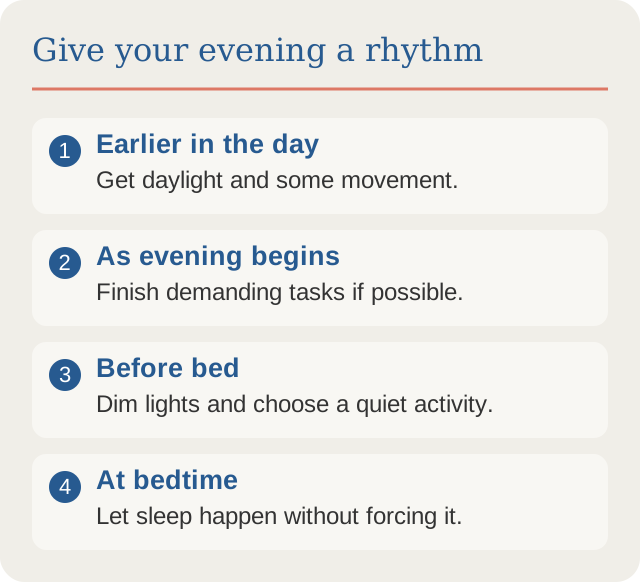
A regular rhythm can be easier to organize around an existing activity than around a brand-new checklist. Connect getting outside, when possible, to walking the dog, an errand, or a break from work. You do not need to turn it into an exercise challenge. The practical aim is to make the activity fit the day you already have.
Consider the same approach for waking. If your schedule allows it, choose a wake time you can generally maintain rather than repeatedly shifting between very early weekdays and much later days off. NHLBI’s sleep guidance supports a regular sleep schedule and spending time outdoors when possible. It also recognizes that shift workers need different strategies.
For rotating shifts, caregiving, or unpredictable hours, avoid judging yourself against a fixed nine-to-five routine. Identify the sleep period you are protecting and reduce avoidable interruptions around it. If adapting to a work schedule remains difficult, discuss that specific challenge with a healthcare professional rather than assuming the answer is a stronger supplement.
If a walk fits your day, our everyday walking guide offers flexible ways to begin.
Pick a wind-down activity you actually enjoy
Reading a familiar book, doing a quiet craft, listening to gentle music, or taking a comfortable bath may offer a pleasant transition. Choose an activity that does not create extra work afterward. If a bath involves extensive cleanup or is difficult to access, another option may be a better fit.
Keep the activity separate from a demand to fall asleep. You are making room for rest, not performing a technique that must succeed on schedule. Watching the clock to see whether relaxation is working can make the evening feel like a test. Let the activity be worthwhile because it is comfortable or enjoyable.
You can also lower the stimulation of something you already do. Select a familiar program instead of an intense new episode, put a puzzle away before it becomes frustrating, or choose a book you can set down without wanting another chapter. The best routine for your household may look ordinary from the outside, and that is entirely fine.
For another practical part of the evening, our food and sleep planning guide looks at meals, hunger, and comfort. You can combine one useful idea from each guide without trying to adopt an entire new routine at once.
Try gentle relaxation without chasing a result
If you want to try a short pause, sit in a position that feels supported and notice where your body meets the chair or bed. Let your breathing remain comfortable. There is no need to hold your breath, force a very deep inhale, or follow a demanding count. A minute or two is a reasonable starting experiment.
Another option is to soften one area at a time: unclench your jaw if you can, lower your shoulders, or let your hands rest. Adapt the activity around pain, disability, or discomfort. You can simply notice sensations without deliberately tensing muscles. Stop if the exercise feels unpleasant or increases worry.
The NCCIH review of complementary sleep approaches describes evidence and limitations for relaxation and other practices. A personal routine experiment is different from a proven treatment. If inward attention feels distressing, choose an outward activity, such as looking at a familiar object or listening to quiet music, instead of pushing through.
Our beginner meditation guide includes outward-focused and moving alternatives, with room to stop or adapt.
Set an evening boundary around devices
A useful device boundary solves a specific problem. If work messages pull you back into decisions, silence that group for the evening. If you keep reading upsetting news, decide where you will stop. If the phone is necessary for emergencies or caregiving, keep that access while reducing the alerts that are not necessary.
You do not need an all-or-nothing ban to make a meaningful adjustment. Charge the phone somewhere you cannot reach without getting up, use an alarm that does not require opening a feed, or prepare a familiar audio track before the quiet period starts. The practical benefit is less repeated choosing at the end of a tiring day.
Be careful with apps that turn sleep into a performance score. If checking the number leaves you worried about whether you slept correctly, step back from the tracking habit. Your experience during the day and your conversation with a clinician may be more useful than a nightly grade from a consumer device.
Give supplements a different standard of evidence
A pleasant ritual and a supplement are not interchangeable. A supplement introduces an active product with potential effects, interactions, and uncertainties. The word natural does not establish that it is safe for your circumstances. Keep a list of anything you already use so a clinician or pharmacist can assess the combination.
Melatonin deserves particular care. NCCIH’s melatonin guidance notes limited evidence for recommending it for chronic insomnia, possible side effects, interactions with medicines, and uncertainty about long-term safety. It may have roles in specific circumstances, but that does not make it a routine solution for every difficult night. This guide does not recommend a dose.
Ask before giving a sleep supplement to a child, using one while pregnant or breastfeeding, or adding one to prescription medicines. Keep products safely stored away from children. If you already take a product, bring the package or a clear photo of its label to an appointment rather than relying on a vague description of the ingredients.
Recognize marketing that adds pressure
Be cautious when a product promises to reset your sleep instantly, remove the need for medical care, or work for everyone. A testimonial describes someone’s story, not a reliable forecast for yours. Before spending, ask what problem the product claims to solve and whether you have good evidence that it addresses your actual situation.
Consider the burden as well as the price. A routine with several timed powders, repeated measurements, and a long list of prohibited activities may make evenings more demanding. If you find yourself worried about completing every step correctly, simplify. A helpful ritual should make room for rest rather than creating another standard you must meet.
You can enjoy a scented product, special pillow, or favorite tea without believing it treats insomnia. Keep the claim modest: “I like this” is enough. Preferences do not need scientific branding to be valid, and a product’s popularity does not create an obligation to buy it.
Build a one-week experiment you can repeat
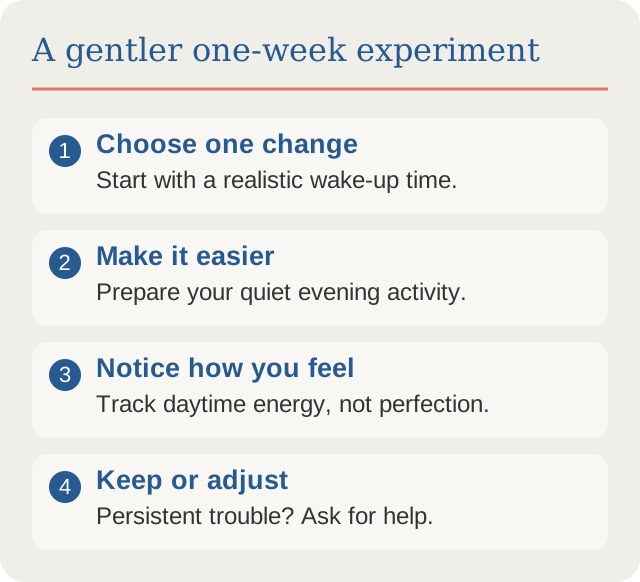
Choose one barrier, one action, and one way to notice whether the action fits. For example: messages keep interrupting the evening, so you will mute nonessential alerts after dinner and note whether the hour feels quieter. This experiment asks about the routine first, not whether every night becomes perfect.
Keep any notes brief. Record the change, an unusual event, and how the evening or next day felt. Avoid watching the clock throughout the night to collect exact numbers. If a clinician has asked for a sleep diary, follow their instructions instead. Personal notes can support that conversation without becoming a new source of vigilance.
At the end of the week, decide whether the change was feasible. Keep it, modify it, or let it go. If the room is still noisy because of circumstances you cannot control, your experiment has identified a practical limitation, not a personal failure. Focus the next step on the barrier you can influence.
Know when support matters more than another helper
If difficulty falling asleep or staying asleep persists, affects your work or relationships, or leaves you unsafe during the day, seek professional advice. Mention loud snoring, waking gasping, unusual nighttime behaviors, or new symptoms. Avoid driving when you are too sleepy to do so safely. These concerns should not be reduced to a missing bedtime habit.
For long-term insomnia, NHLBI’s treatment guidance describes cognitive behavioral therapy for insomnia, or CBT-I, as a usual first option. It is a structured approach that may include several components and professional guidance. Do not try to reproduce sleep restriction techniques from a short article without appropriate support.
Your next step can be small and still worthwhile. Put tomorrow’s note aside, choose one comfortable activity, and make the room work as well as it can. If more help is needed, asking for it belongs in a thoughtful sleep plan. You do not have to prove that you exhausted every natural option before you deserve care.
About this article
This original GHAC article was inspired by Verywell Mind’s article on natural sleep helpers.
Information here is educational and does not replace personalized medical advice.
Frequently asked questions
What is the best natural sleep helper?
There is no single best helper for everyone. Start with a practical barrier you can change, such as an uncomfortable room or work messages late in the evening. Persistent insomnia may need treatment rather than another routine adjustment.
Is melatonin safe because it is natural?
Natural does not mean risk-free. Melatonin can cause side effects and interact with medicines, and long-term safety information is limited. Ask a clinician or pharmacist before using it, especially for a child or during pregnancy.
Can relaxation replace insomnia treatment?
Relaxation can be one part of a sleep plan, but it does not replace assessment or structured treatment when insomnia persists. CBT-I is a usual first option for long-term insomnia.
Do I need an expensive sleep app or device?
No. A book, a comfortable room, and a simple evening boundary may be enough for a useful routine experiment. Products are optional and should not create new pressure.
What if meditation makes me uncomfortable?
Stop or choose a different activity. Looking around the room, listening to familiar music, or reading may feel more comfortable. You do not need to close your eyes or persist with a practice that increases distress.
Keep the next step simple
Small, repeatable choices are often the ones that last. Explore the Health Blog for more everyday wellbeing reading, or visit the Fitness collection for apparel that celebrates movement in real life.
More everyday wellbeing reading

Meditation for Beginners: Find a Practice That Fits Your Life
Explore gentle ways to practice meditation, from guided sessions to walking, with realistic expectations, accessible adaptations, and a simple plan for getting started.
Read article →
Food and Sleep: An Everyday Meal Planning Guide
Build a comfortable evening around regular meals, practical snack choices, and realistic expectations about foods promoted for sleep.
Read article →
Brown Rice vs. Quinoa: Choosing What Works for Your Meals
Compare brown rice and quinoa without the food rules, with practical advice on balanced meals, cooking, cost, blood sugar, and safe leftovers.
Read article →