
HEALTH JOURNAL
Gut Health After Antibiotics: A Practical Care Guide
Understand gut changes after antibiotics, food and probiotic choices, and the symptoms that need medical advice.

Antibiotics can change the community of microorganisms in your gut, sometimes bringing diarrhea or other digestive symptoms. There is no single recovery timetable, and no food or supplement can promise a complete reset. The useful starting points are taking your medicine as directed, eating and drinking as tolerated, and getting advice about symptoms.
If you feel well, you do not need an elaborate recovery routine. If you feel unwell, you deserve more than a shopping list of gut-health products. Here is a calm way to separate ordinary meal choices, uncertain supplement claims, and the signs that need professional attention.
What antibiotics can change in your gut
Your gut microbiome is a community of bacteria and other microorganisms. Antibiotics treat bacterial infections, but their effects can extend to bacteria that normally live in the digestive tract. That helps explain why your stomach or bowel habits may feel different during treatment. It does not mean an antibiotic was unnecessary or that you should stop a prescribed medicine.
The CDC explains how antibiotics can disturb helpful gut bacteria. In some circumstances, this disruption gives C. diff bacteria an opportunity to grow and cause illness. Most changes in bowel habits are not enough on their own to identify that infection. A clinician can decide whether symptoms need testing.
It is also possible to take an antibiotic without noticing digestive changes. How you feel is useful information, but it is not a measurement of how many microbial species you have. Try to avoid reading every rumble as proof that something is damaged. Focus on symptoms that affect eating, drinking, sleep, or daily activity, and bring those concerns to your care team.
There is no universal recovery deadline
A search for gut recovery can turn up confident promises about seven days, one month, or a particular supplement. Research does not supply a countdown that works for every person. Different antibiotics and different people produce different patterns of change, and the definition of recovery matters.
In a small 2018 study of 12 healthy men, the overall community moved toward its starting composition after treatment, while some species remained undetectable months later. The unusual combination of antibiotics and small group limit how directly that result applies to an ordinary prescription. A 2022 study of commonly used antibiotic regimens also found that recovery differed by treatment and by the feature being measured.
These findings support patience, not waiting indefinitely with symptoms. Feeling better and returning to a previous microbial profile are different outcomes. You do not need to prove that every species has returned before resuming normal meals. Conversely, a calendar saying you should be recovered is no reason to dismiss ongoing diarrhea or pain.
1. Keep medicine instructions at the center
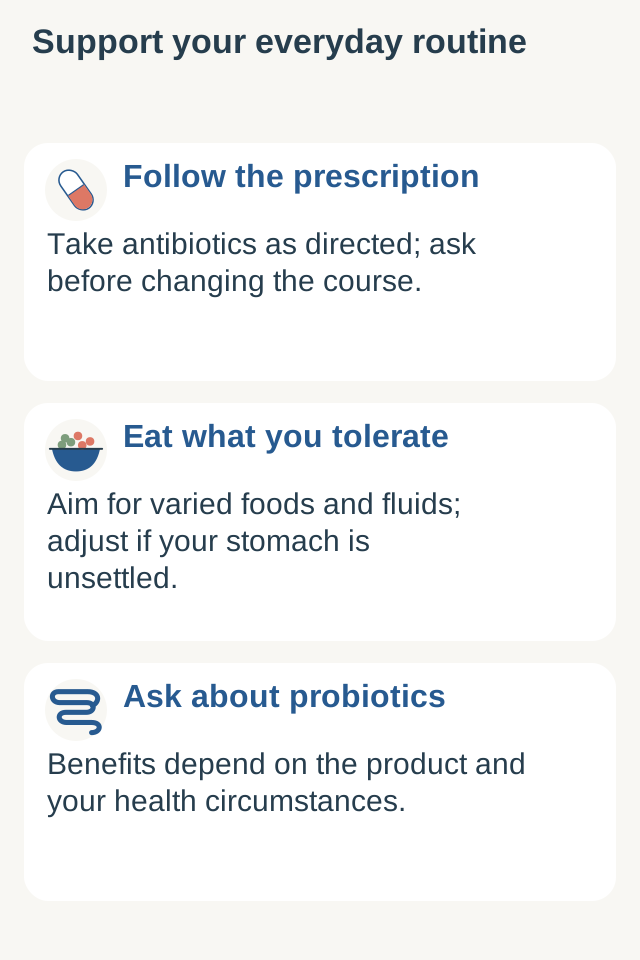
Take your antibiotic exactly as prescribed. If digestive symptoms make a dose difficult, call the prescriber or pharmacist rather than skipping it, doubling another dose, or deciding on a shorter course yourself. The right response depends on the medicine, the infection, and the severity of the problem.
The NHS guide to antibiotics emphasizes following the packet, information leaflet, and professional instructions. Food directions vary. Do not assume that every antibiotic should be taken with a meal, or that a recommendation to eat yogurt overrides the directions for your prescription. Ask specifically about food, supplements, and other medicines you already use.
Make the conversation concrete: “I take this at breakfast and dinner. Is that right for this prescription? Do my usual calcium supplement or antacid need different timing?” Keep the answer with your medicine so you can follow it when you are tired. If you miss a dose, use the specific leaflet or pharmacist advice instead of guessing. Do not share leftover antibiotics or save them to treat a future illness.
2. Know when diarrhea needs medical advice
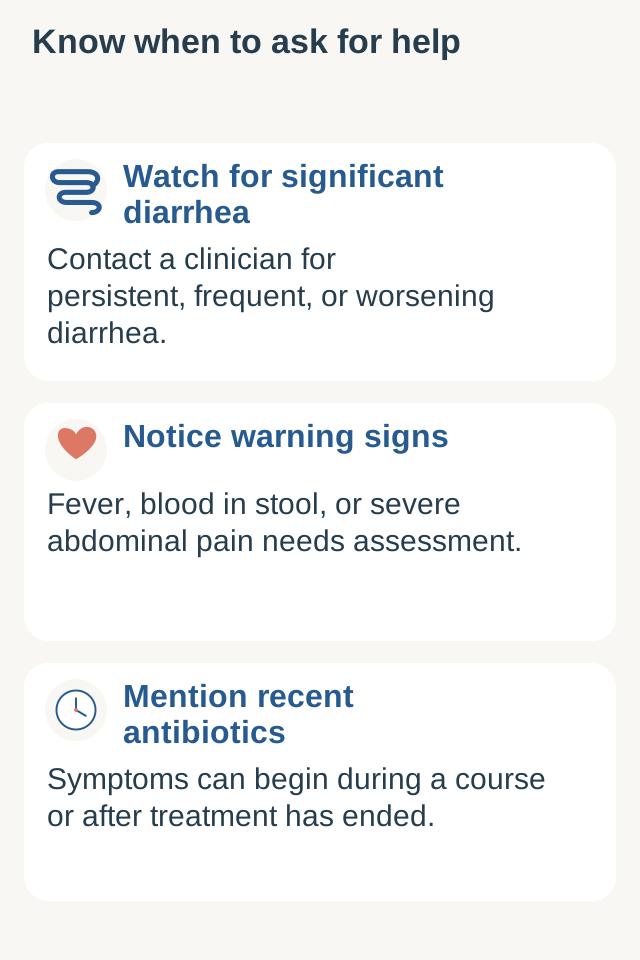
Diarrhea during or after antibiotics deserves a call to a healthcare professional. Mention the antibiotic name and when you started or finished it. Do not assume it is simply a harmless adjustment, and do not use a probiotic as a reason to delay the call. The CDC advises evaluation for diarrhea associated with antibiotic use because C. diff is one possible cause.
Seek prompt medical care for severe belly pain, blood or black stools, a high fever, repeated vomiting, or signs of dehydration. Feeling faint, becoming confused, or being unable to keep fluids down calls for urgent attention. The NIDDK symptom guide explains these warning signs and notes that older adults, pregnant people, and people with weakened immune systems may need earlier advice.
This guide is for general adult education. Children need age-specific advice, especially babies and young children who can lose fluid quickly. If you care for someone else, report the changes you actually see instead of assuming they would mention feeling unwell. A quieter day, reduced drinking, or unusual sleepiness can be useful information for the clinician.
3. Make fluids and manageable meals the priority
If you have diarrhea, the immediate issue is replacing lost fluid and electrolytes, not buying a microbiome product. NIDDK describes hydration as part of diarrhea treatment. Ask about an appropriate oral rehydration solution when losses are significant. People with kidney disease, diabetes, or fluid restrictions should check which drinks and amounts suit their care plan.
Keep a drink within reach and notice whether you can drink comfortably. A huge bottle is not a recovery target. Follow the plan you receive, and get help if you are drinking less because of nausea, vomiting, or pain. Do not assume that a sports drink or sweetened wellness beverage is the right replacement for an oral rehydration product.
For food, start with what feels manageable and return toward usual meals as tolerated. You do not have to design a perfect menu while recovering from an infection. Something simple that you can eat is more useful than an ambitious grocery list you cannot face. Ask for help with shopping or cooking if fatigue is making regular meals difficult.
4. Bring variety back without a fiber challenge
Once eating feels comfortable, familiar plant foods can make ordinary meals varied again. Oats, cooked vegetables, fruit, beans, and whole grains offer different tastes and textures. These are meal ingredients, not a guaranteed way to restore a particular microbial community. There is no need to turn the week after treatment into a competition to eat the most fiber.
If you have been eating very little, add foods in manageable amounts. For example, try oatmeal at breakfast, a cooked vegetable with lunch, or a small serving of beans in soup. Choose one change at a time so that meal preparation stays simple. If a food makes symptoms worse, pause the experiment and discuss persistent trouble rather than pushing through.
During acute diarrhea, food tolerance may temporarily change. The NIDDK nutrition guide explains that alcohol, caffeine, high-fat foods, some sweeteners, and lactose may worsen symptoms for some people. It also discourages unnecessary fasting and broadly restrictive diets. Use individual advice when you have an existing digestive condition or a prescribed eating plan.
5. Treat fermented foods as food
Yogurt can be a convenient breakfast or snack if you enjoy and tolerate it. Other fermented foods may fit your meals too. Their place in an eating pattern is different from a medical claim that they repair antibiotic effects. Buying several unfamiliar products at once is not necessary.
The NIH Office of Dietary Supplements explains probiotics and fermented foods: fermentation does not automatically mean a food contains living organisms with a demonstrated health benefit. The food, the organisms, and the evidence all matter. Our Greek vs. regular yogurt guide can help with everyday label choices.
If dairy worsens symptoms, do not force a yogurt routine. A food allergy is also different from lactose intolerance, so a lactose-free dairy product is not a workaround for a milk allergy. Ask your pharmacist about food timing while you are still taking medicine. A familiar snack that fits the prescription is enough; no single fermented food is a required part of recovery.
6. Ask specific questions before buying a probiotic
Probiotics are not interchangeable. A study of one strain, dose, and group of people does not establish that every product on the shelf works the same way. The National Center for Complementary and Integrative Health reviews the evidence and notes both promising findings for antibiotic-associated diarrhea and continuing uncertainty about which products and approaches help.
Ask a clinician or pharmacist whether a supplement has a useful role in your situation. If they recommend one, get the exact product or strain, dose, timing, and duration. Ask what benefit to expect and what would be a reason to stop and call. A larger number on the label is not, by itself, proof of a better product.
People who are seriously ill or have weakened immune systems need particular caution because live microorganisms can sometimes cause harm. Probiotics are not a substitute for evaluating diarrhea, and evidence about preventing diarrhea does not prove a supplement restores your original microbiome. You may reasonably leave the store without a bottle if your care team sees no clear reason to add one.
7. Keep a short record if symptoms continue
A brief note can make a healthcare conversation easier. Write down your antibiotic name, start and finish dates, when the bowel changes began, and whether you have fever, pain, or trouble drinking. Include other medicines and any supplements you added. If a clinician asks about stool frequency or appearance, report what you have noticed plainly.
Keep the record practical. You do not need to score every food, photograph every meal, or repeatedly search for explanations. One short daily note while arranging care is often easier to use than pages of anxious detail. Ask the clinician what information would actually help them decide on the next step.
When you call, try: “I finished this antibiotic three days ago and now have diarrhea. I can drink, but it is interrupting my day. Do I need to be seen or tested?” That gives the team a clear starting point. If you have urgent warning signs, seek urgent care instead of waiting to complete a record.
An ordinary recovery plan is enough
Shop for meals you already know how to make. A small list might include oats, a tolerated protein, rice or potatoes, cooked vegetables, fruit, and a convenient snack. Adjust it for allergies, culture, budget, and any treatment instructions. Frozen vegetables and simple pantry foods can save effort when you are not ready to cook much.
You can also make tomorrow easier by leaving your medicine instructions somewhere easy to find, asking a family member for one specific errand, and keeping the number for your pharmacy handy. These are small practical supports. They do not require you to interpret microbiome research while you are still recovering from an infection.
Recovery can also mean letting someone else handle dinner, resting when you need it, and resuming everyday activity according to how you feel and the advice for your illness. A plan does not need to promise a gut reset to be useful. Its job is to help you eat, drink, take medicine safely, and recognize when symptoms need attention.
At Good Health Apparel Company, we value practical steps that fit real life. The Health Blog offers more reading on food, movement, and wellbeing. For this week, keep the priority simple: follow your prescription, choose manageable meals, and ask for medical advice when your digestive symptoms need it. Extra products are not a measure of how well you are taking care of yourself.
About this article
This original GHAC article was inspired by Verywell Health’s topic coverage of gut health after antibiotics.
Information here is educational and does not replace personalized medical advice.
Frequently asked questions
How long does the gut take to recover after antibiotics?
There is no fixed timeline for everyone. Studies measure different features of the microbiome and find different recovery patterns. Persistent digestive symptoms need medical advice rather than a deadline from a general guide.
Should everyone take probiotics with antibiotics?
No. Benefits depend on the product and the person, and some people face greater risks. Ask your clinician or pharmacist whether a specific probiotic is appropriate, including its dose, timing, and duration.
Can I eat yogurt while taking an antibiotic?
It depends on your prescription instructions and tolerance. Ask your pharmacist about food timing. Yogurt can be an ordinary food choice, but it is not a required treatment for microbiome recovery.
Is diarrhea after antibiotics always C. diff?
No, but C. diff is one possible cause that needs medical evaluation. Contact a healthcare professional about diarrhea during or after treatment. Severe pain, blood in stool, or dehydration requires prompt attention.
Keep the next step simple
Small, repeatable choices are often the ones that last. Explore the Health Blog for more everyday wellbeing reading, or visit the Fitness collection for apparel that celebrates movement in real life.
More everyday wellbeing reading

After-Dinner Habits for Long-Term Heart Health
Build an evening routine with manageable movement, satisfying food choices, sleep, and consistent care to support long-term heart health.
Read article →
High-Fiber Foods for Heart Health: Everyday Meal Ideas
Find practical ways to enjoy high-fiber foods for heart health, with familiar ingredients, meal ideas, and guidance on gradual changes.
Read article →
Exercises for Stronger Bones: A Practical Start
Build a balanced bone-health routine with weight-bearing movement, simple strength exercises, balance practice, and clear safety guidance.
Read article →