
HEALTH JOURNAL
High-Fiber Foods for Heart Health: Everyday Meal Ideas
Find practical ways to enjoy high-fiber foods for heart health, with familiar ingredients, meal ideas, and guidance on gradual changes.

A bowl of oats, a pot of beans, an apple beside lunch. Foods that support heart health do not have to look unusual or cost more than the rest of your grocery list. Many useful choices are ordinary plant foods that bring fiber along with flavor, texture, and a reason to sit down to a satisfying meal.
The useful question is how to fit more of those foods into the meals you already enjoy. This guide explains the link between fiber and cholesterol, then offers flexible ways to use grains, beans, fruit, vegetables, nuts, and seeds. It is a starting point for everyday eating, with room for your budget, culture, appetite, and any advice from your own care team.
Understand what fiber does for heart health
Fiber is a part of plant foods that your body does not fully digest. Different fibers behave differently. Some help keep bowel movements regular, while certain soluble fibers can help reduce LDL cholesterol. LDL is often called “bad” cholesterol because high levels contribute to the buildup of plaque in arteries. A high-fiber food is useful, but no one food can clear arteries or replace treatment.
The National Heart, Lung, and Blood Institute’s TLC program includes soluble fiber from foods such as oats, fruit, and beans as part of cholesterol management. It combines food choices with activity and other care. That matters because adding a single ingredient to an otherwise unchanged routine is a different approach from building a pattern you can repeat.
You do not need to sort every bite into a fiber category. For most everyday meals, variety is the simpler approach. Keep a few different plant foods in rotation and think about what they replace. Beans in place of some fatty meat, for instance, make a different change from simply adding beans beside the same meal. Your overall pattern is where those choices add up.
Make oats and other whole grains easy to use
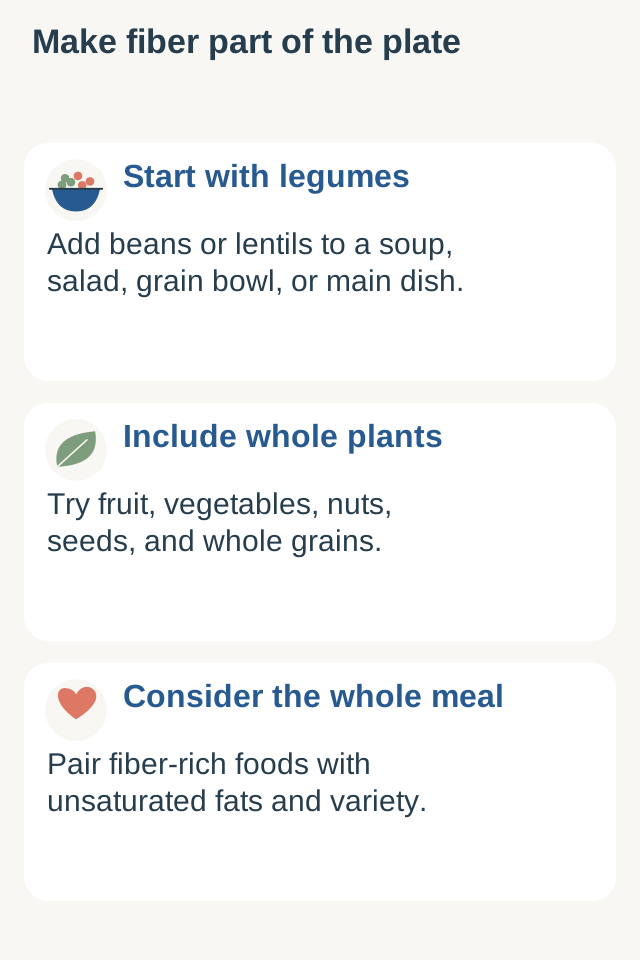
Oats can be a familiar starting point. Cook them with water or a milk that suits you, then add fruit and a few nuts if those foods are safe for you. Cinnamon, plain yogurt, or a spoonful of nut butter can change the flavor without requiring a complicated recipe. Savory oats with vegetables are another option if sweet breakfasts do not appeal.
Barley can go into soup or become a side dish. Whole-grain bread, whole-wheat pasta, brown rice, and other grains offer useful variety, although they do not all supply the same amount or type of fiber. Read the package rather than assuming a brown color proves that a food is whole grain. Compare the serving sizes as well as the fiber line.
Build around the grains you actually like. Our brown rice and quinoa guide offers another way to think about texture, convenience, and the rest of the plate. You might cook one grain for two different meals, serving it with roasted vegetables one day and stirring it into a bean soup the next. There is no need to buy six new grains at once.
Use beans and lentils as part of the meal
Beans, lentils, chickpeas, and split peas can do more than fill a small corner of the plate. Use them in tacos, soups, salads, stews, pasta dishes, or a quick bowl with rice. If your household is less familiar with them, start with a dish people already enjoy. Mixing a modest amount of lentils into a familiar sauce can feel easier than introducing an entirely new dinner.
Canned beans save time, while dried beans may suit people who like batch cooking. Choose no-salt-added or lower-sodium cans when practical. Drain and rinse ordinary canned beans if that fits the recipe. The aim is a useful pantry ingredient, not a rule that everything must be made from scratch. A convenient food can make the difference between a plan and a meal.
If a large serving leaves you uncomfortable, try a smaller amount and build gradually. You can mash beans into a spread, blend them into soup, or add a few spoonfuls to a bowl. Changing texture does not require abandoning the ingredient. Keep track of what tastes good and feels comfortable, then use that version again instead of forcing a portion you dislike.
Keep fruit whole and make it convenient
Apples, pears, berries, oranges, and many other fruits can bring fiber to a meal or snack. Keep edible skins when you enjoy them and can chew them comfortably. Wash produce before eating or preparing it. Whole fruit is a different food from juice, which generally supplies much less fiber. A piece of fruit beside lunch is often the simplest choice.
Fresh fruit is only one option. Unsweetened frozen fruit can be stirred into oats or thawed for yogurt. Canned fruit can also be useful, especially when fresh produce spoils before you use it. Look at what is in the container and choose a form that fits your needs. The best bargain is often the food you finish rather than the larger package you discard.
Our guide to lower-sugar fruits explains why sugar alone does not tell the whole story. For heart-conscious eating, there is little reason to turn fruit into a competition. Choose a few varieties you enjoy and notice where they could make an existing meal more complete. If you manage diabetes, use your own carbohydrate guidance for portions and meal planning.
Give vegetables a regular place without making them a project
Vegetables can add fiber and make meals more varied. Try peas in a rice dish, carrots in soup, broccoli with pasta, or greens folded into a bean stew. A mix of cooked and raw choices can keep textures interesting. You do not need a large salad at every meal to include vegetables consistently.
Frozen vegetables can be especially helpful on busy evenings. Plain frozen broccoli or mixed vegetables give you a flexible ingredient without the pressure to use it immediately. Canned vegetables are useful too. Compare sodium where labels are available and choose versions that fit your budget. Use seasonings you like so the vegetable becomes part of a pleasant meal rather than a task to finish.
Consider one place vegetables are missing from a meal you already repeat. If sandwiches are common, add a side you enjoy. If soup is a regular dinner, add a vegetable that suits its flavor. Start there. An achievable change repeated through the week is more practical than a refrigerator full of unfamiliar produce with no plan for how to prepare it.
Let nuts and seeds add texture and variety
Nuts and seeds can bring fiber along with unsaturated fats. A small amount of walnuts in oats, almonds beside fruit, or seeds over a grain bowl can make a meal more interesting. Nut or seed butter may suit people who prefer a softer texture. Check ingredients if you need to avoid a particular allergen, and follow any swallowing guidance you have been given.
What these foods replace matters. A handful of nuts instead of a snack rich in saturated fat is a different change from eating both out of habit. There is no required serving that everyone must add after dinner. Let your appetite, overall meals, and care plan guide you rather than treating nuts as an extra dose of medicine.
The American Heart Association explains that replacing saturated fats with unsaturated fats can support heart health. That is why the conversation should include the kind of fat in a meal as well as its fiber. A high-fiber label does not cancel out the rest of a product’s ingredients or make unlimited portions necessary.
Think in useful swaps, not extra food rules
Choose one familiar meal and ask what would make it easier to include a plant food. You could use oats at breakfast, add chickpeas to lunch, or serve beans beside dinner. Another option is replacing some butter in a recipe with an appropriate liquid plant oil. These are examples to adapt, not a checklist that has to be completed in one day.
Breakfast might be oatmeal with berries. Lunch might be a sandwich on whole-grain bread with an apple. Dinner could be a lentil soup with vegetables and bread you enjoy. Those meals show several places fiber can fit, but they are not a prescription or a complete nutrition plan. Protein foods, enough energy, fluids, and enjoyment still deserve attention.
If a swap leaves you hungry, bland food is not the answer. Adjust the meal so it is satisfying. Add a suitable protein food, change the seasoning, or choose a different grain. A food pattern you resent is hard to sustain. The goal is to make supportive choices fit your life well enough that you do not have to debate them every time you eat.
Shop for meals you can actually make
Before shopping, choose two or three ways you will use your fiber-rich foods. A can of chickpeas might become a lunch salad and part of a dinner. Oats might cover several breakfasts. Frozen berries can wait until you need them. Planning the use matters more than collecting foods that sound healthy but do not match your cooking habits.
Keep a short backup meal available. Beans, frozen vegetables, and a grain can become a simple bowl. Whole-grain toast with a suitable nut butter and fruit can cover a rushed morning. Use what you have space to store and time to prepare. For some households, individual portions reduce waste; for others, a larger bag is more practical.
Compare prices per usable amount when you can, and leave room for convenience. A prepared ingredient is not a failure. If chopping vegetables is a barrier, pre-cut or frozen options may help. If chewing is difficult, cooked vegetables, soft fruit, or blended bean soups may fit better. People need meals they can manage, not a shopping list designed for someone else’s kitchen.
Increase fiber gradually and respect your own needs
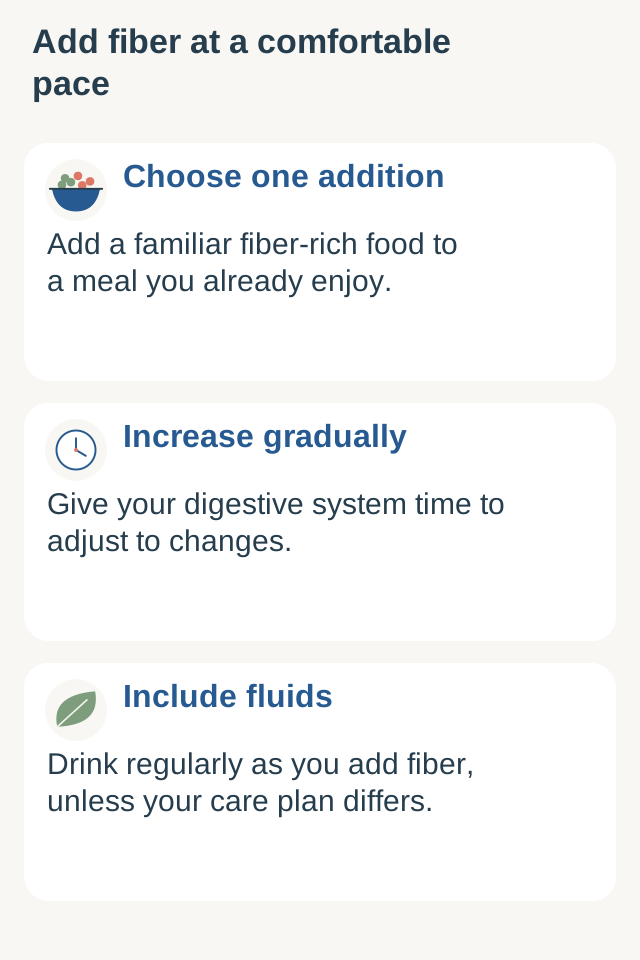
A sudden jump in fiber can cause gas or bloating. The National Institute of Diabetes and Digestive and Kidney Diseases advises adding fiber a little at a time and drinking appropriate fluids. Your fluid needs depend on your health and circumstances. Follow any fluid restriction from your care team instead of adding large amounts of water on general advice.
Add one small change, give yourself time to notice how it feels, and then decide whether to increase it. If you already eat very little fiber, introducing large servings of beans, bran, and seeds together may make it hard to tell what caused discomfort. Keeping the first step modest gives you more useful information about your own tolerance.
People with digestive conditions, a narrowed bowel, recent bowel surgery, kidney disease, or a prescribed nutrition plan may need tailored advice. Fiber supplements also have their own directions and possible medication considerations. Ask a clinician or pharmacist before using one to treat cholesterol or constipation. Persistent or severe symptoms need medical attention rather than an increasingly ambitious food experiment.
Choose a small plan for the coming week
Pick one meal that is already predictable. If breakfast is the easiest place to begin, choose oats on a few mornings or add fruit to a breakfast you already like. If dinner is more predictable, plan a bean-based dish. Put the needed ingredient on your list and choose a backup for the day the original plan falls through.
After a week, review the practical questions first. Did you enjoy the food? Was it affordable? Did preparation fit your schedule? Did your digestion feel comfortable? Those answers help you decide whether to keep, adjust, or replace the habit. A missed day does not erase the rest of the week, and variety can grow over time.
Cholesterol change is assessed with blood tests and your care team, not by how a meal feels. Keep prescribed treatment and follow-up appointments in place. At GHAC, our Health Blog supports small, repeatable choices that fit everyday life. Use these ideas as a practical starting point, then build a pattern with enough flexibility to remain yours.
About this article
This original GHAC article was inspired by Health.com’s coverage of high-fiber foods for heart health.
Information here is educational and does not replace personalized medical advice.
Frequently asked questions
What is a good high-fiber food to start with?
Choose a familiar food you enjoy, such as oats, beans, a pear, or vegetables in a meal you already make. Start with a modest amount and increase gradually. There is no single best starting food for everyone.
Does all fiber lower cholesterol the same way?
No. Different fibers have different effects. Certain soluble fibers can help lower LDL cholesterol, while other fibers have useful digestive roles. A varied eating pattern is more practical than trying to make every food supply the same type.
Can high-fiber food replace cholesterol medicine?
No. Food choices can support cholesterol management, but medicine may still be needed based on your levels and overall risk. Keep taking prescribed medicine and discuss changes with your care team.
Do canned and frozen foods count?
Yes. Beans, fruit, and vegetables can be useful in canned or frozen forms. Compare ingredients and sodium or added sugars when relevant, then choose options that fit your meals and budget.
Keep the next step simple
Small, repeatable choices are often the ones that last. Explore the Health Blog for more everyday wellbeing reading, or visit the Fitness collection for apparel that celebrates movement in real life.
More everyday wellbeing reading

After-Dinner Habits for Long-Term Heart Health
Build an evening routine with manageable movement, satisfying food choices, sleep, and consistent care to support long-term heart health.
Read article →
Exercises for Stronger Bones: A Practical Start
Build a balanced bone-health routine with weight-bearing movement, simple strength exercises, balance practice, and clear safety guidance.
Read article →
Morning or Evening Walks for Blood Sugar?
Choose a practical walking time for blood sugar, with guidance on morning routines, after-meal walks, and diabetes safety.
Read article →