
HEALTH JOURNAL
Ultra-Processed Foods and Bowel Cancer: Beyond the Headline
What a large new study really found about ultra-processed foods, bowel cancer, and small food swaps that fit everyday life.

A headline about swapping a small amount of ultra-processed food for whole foods sounds encouraging. It also raises a fair question: what should actually change at breakfast, lunch, or dinner? The answer needs more care than a promise that a single swap will prevent cancer.
A new study offers a useful reason to look beyond the processing label and consider the foods themselves. For everyday choices, the clearest direction is familiar: make room for whole grains and other fiber-rich foods, and rely less on processed meat. Our practical guide to ultra-processed foods explains the broader category. Here, we look at what this particular cancer study adds.
What the study actually found
The 2026 PLOS Medicine study followed 461,682 U.S. adults who were cancer-free when they enrolled at ages 50 to 71. Over follow-up through 2018, researchers identified 10,075 colorectal adenocarcinomas. Colorectal cancer is often called bowel cancer and includes cancers of the colon and rectum.
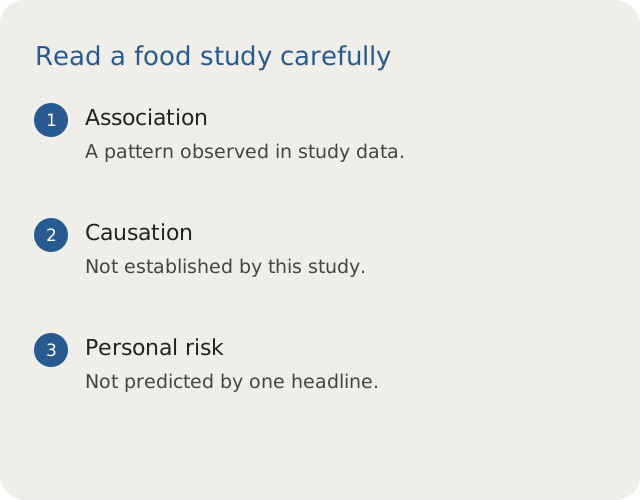
Its main finding matters: total ultra-processed food intake was not associated with colorectal cancer incidence in this group. Associations differed within the category. Whole grains, fiber, dairy, and calcium from ultra-processed sources were linked with lower incidence, while meat from these sources was linked with higher incidence.
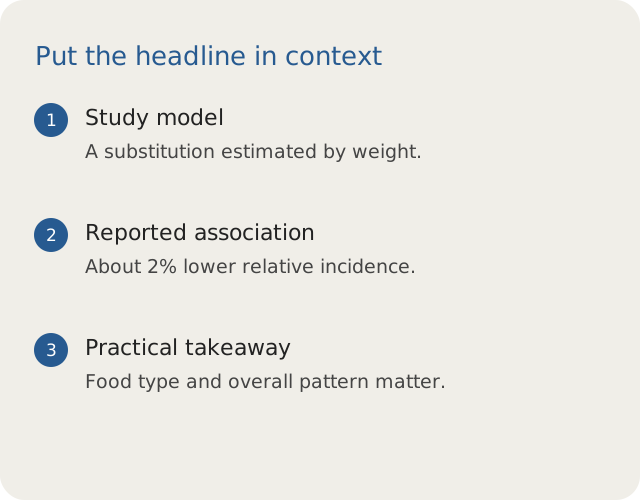
A separate statistical substitution model linked replacing ultra-processed food with minimally processed food, measured by weight, with a small reduction in incidence. This was an estimate based on reported diets, not an experiment in which people were assigned new meals. The study cannot prove that a particular substitution caused a change in cancer risk.
What the 10% and 2% numbers mean
The model exchanged 10 percentage points of dietary weight from ultra-processed foods for the same weight from minimally processed foods, while holding the other processing groups constant. It was not a trial of cutting 10% of calories, skipping one meal in ten, or removing one-tenth of every packaged item. Food weight and calories measure different things: water-rich foods weigh more per calorie than dry foods.
The associated hazard ratio was 0.98, described as about 2% lower relative incidence. That is a small relative association, not a two-percentage-point reduction in everyone’s lifetime chance of cancer. It does not tell an individual how many cases a particular grocery purchase would prevent.
There is no need to weigh your meals to imitate this analysis. Its value is in helping researchers compare eating patterns. At home, a more useful question is whether a familiar meal could include more whole plant foods or less processed meat without becoming costly, stressful, or hard to prepare.
Why the processing label cannot do all the work
Ultra-processed foods are not one recipe or one nutrient profile. A packaged whole-grain bread, a sweet drink, and a hot dog can fall within a broad processing category while bringing very different things to a meal. Treating the label as the entire nutrition story can obscure those differences.
That does not mean processing is irrelevant, or that this study settles every question about ultra-processed foods. It examined one cancer outcome in an older U.S. population. A result about colorectal cancer cannot automatically be extended to heart disease, diabetes, or overall health. Nor does a lack of association for the total category prove that every item is harmless.
When choosing a food, ask two questions together: what is it made from, and what role will it play in my usual meals? A convenient option that helps you eat whole grains or an adequate meal may be useful. A strict rule that removes affordable staples without replacing their nutrients may be less helpful.
For a broader explanation, see our everyday guide to ultra-processed foods.
Start with the processed meat you eat often
The American Cancer Society’s guidance on red and processed meat explains that processed meat includes meat preserved through methods such as curing, smoking, or salting. Bacon, hot dogs, sausage, and many deli meats are examples. Poultry can also be processed, so a turkey label does not automatically remove that issue.
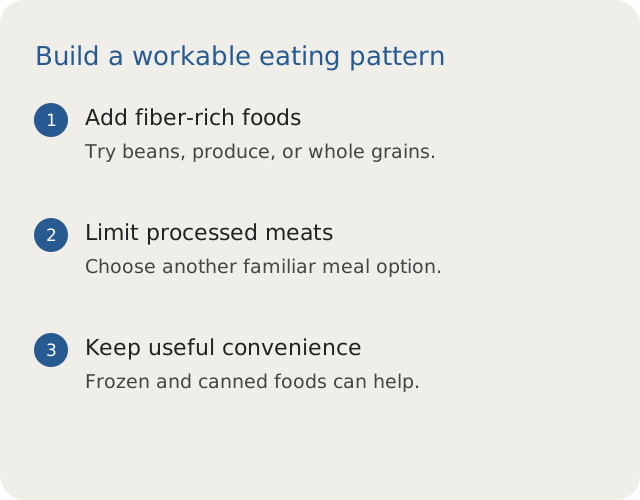
Begin with a meal that repeats. If a deli-meat sandwich is your usual lunch, try a bean spread, egg, leftover unprocessed chicken, or another filling you enjoy on some days. If sausage is a regular pasta ingredient, try a smaller amount alongside lentils and vegetables, or make a different sauce for one meal.
These are meal ideas, not tested cancer-prevention prescriptions. Keep the part that matters to you, such as a filling lunch or an easy dinner, while changing one ingredient. An occasional food does not need to become a source of guilt. The goal is to make your usual pattern more supportive over time.
Make whole grains and fiber easier to include
The American Cancer Society’s nutrition guidance favors whole grains and fiber from foods such as beans, vegetables, fruit, nuts, and seeds. It recommends making at least half of grain intake whole grain. That is a practical direction rather than a demand to change every familiar food at once.
Choose one place where a whole grain would fit. Oats may suit breakfast. Brown rice might work in a soup, and whole-wheat bread may be the simplest option for a sandwich. If a new taste or texture is a barrier, mix it with something familiar or try a different preparation. You do not need to enjoy every grain.
Look at what accompanies it, too. A quick bowl can combine a grain, beans or another protein, vegetables, and a sauce you like. Our Mediterranean-style fall meal ideas offer ways to build varied meals. Think of them as flexible starting points, with room for your budget, culture, allergies, and preferences.
Three everyday swaps worth trying
For breakfast, try plain oats with fruit on a morning when you would otherwise grab a sweet pastry. Keep the preparation simple: use the oats you can afford and fruit you enjoy. If your current whole-grain cereal works well for you, there is no need to discard it simply because it is packaged. Compare the actual foods.
For lunch, make a sandwich filling that you can use twice. Mash beans with a little seasoning, cook an extra egg, or save some unprocessed chicken from dinner. Add vegetables if you have them and choose bread you like. This creates an alternative to processed meat without requiring a completely new lunch routine.
For dinner, build around a familiar dish. Add beans to a rice bowl, serve frozen vegetables beside a ready meal, or use lentils in part of a meat sauce. Adding vegetables to a ready meal does not change that product’s processing category, but it can change the balance of the meal. These examples illustrate meal planning; the study did not test them individually.
Pick the option with the fewest obstacles. A change that needs special shopping, costly ingredients, and an hour of cooking may be less useful than one that fits a normal Tuesday. Convenience can be part of the plan.
Keep cost, energy, and access in the picture
A pantry reset is rarely necessary. First, look for ingredients you already use: oats, rice, dried or canned beans, frozen vegetables, eggs, or fruit. Plan around what is available rather than around an ideal shopping list. Buying an unfamiliar ingredient is only helpful if you have a realistic way to eat it.
Packaged and frozen foods can save preparation time and reduce waste. A can of beans can become lunch, and frozen vegetables can wait until you need them. These foods also illustrate why packaging alone is a poor guide to processing or nutritional value. Check labels when comparing similar products, but do not turn shopping into a test you must pass.
If cooking is difficult, aim for assembly rather than a recipe: a simple sandwich, a bowl with ready-to-use ingredients, or leftovers with an added side. When money, mobility, fatigue, or caregiving limits your choices, work with those realities. A useful eating plan has to leave you fed and able to manage the rest of your day.
A one-week plan without counting percentages
On your next shopping day, choose one meal you eat often and decide on a single adjustment. Write down both the change and the practical step that makes it possible. For example: “I will make a bean filling for two lunches, so I need one can of beans and a few minutes after dinner.”
Try it once before buying a large quantity. Notice taste, cost, preparation time, and whether the meal is satisfying. If it does not work, adjust the seasoning, portion, or format. You might prefer beans in a warm bowl to a cold sandwich, or oats baked rather than served as porridge.
Keep a backup for busy days. That may be a frozen meal with a side, leftovers, or a familiar packaged food. A backup helps a small change survive a week that does not go to plan. There is no requirement to make every meal an improvement project.
At the end of the week, keep what was easy and leave what was not. If you need a restricted diet, have ongoing digestive symptoms, or are receiving cancer treatment, ask your clinician or a registered dietitian before making broad changes. General prevention advice may not match your current medical or nutrition needs.
Food choices belong beside screening and medical care
Diet is one part of prevention. The American Cancer Society’s colorectal cancer prevention overview also discusses screening, physical activity, smoking, and alcohol. No eating pattern guarantees protection, and a cancer diagnosis is not evidence that someone ate badly. Risk reflects many factors, including factors outside a person’s control.
For adults at average risk without symptoms, the U.S. Preventive Services Task Force recommends colorectal cancer screening from ages 45 through 75. Decisions from 76 to 85 depend on health, prior screening, and preferences. Family history or other risk factors may require a different plan. Ask which test and schedule fit you.
Do not put off medical advice about symptoms while trying to improve your meals. Screening is for people without symptoms; new concerns need a clinical assessment. Better lunches and appropriate medical care can support each other, but one does not replace the other.
A small next step that fits real life
At GHAC, we share health information to make everyday choices clearer and less overwhelming. Explore the Health Blog for more practical food and wellbeing guides, or browse our apparel collections to share a health message that matters to you.
For this week, choose one meal you already eat. Make one useful adjustment, keep the convenience you need, and give yourself room to find what works.
About this article
This original GHAC article was inspired by Erikka Loftfield’s Nautilus article, originally published by The Conversation.
Information here is educational and does not replace personalized medical advice.
Frequently asked questions
Does swapping 10% of ultra-processed food prevent bowel cancer?
The study cannot show that. It found a small association in a statistical model that replaced dietary weight from ultra-processed foods with minimally processed foods. Participants were not assigned a food swap, and the finding does not guarantee a benefit for an individual.
Does the 2% finding mean two fewer people out of every 100 get cancer?
No. It describes a relative association in the model, not a two-percentage-point drop in absolute risk. Personal risk depends on many factors, and the result cannot be used to predict what one food swap will do for you.
Should I stop eating packaged whole-grain bread?
Not simply because it is packaged. The study found different associations within the ultra-processed category. Consider the ingredients, whole-grain content, nutrition label, and how the bread helps you build meals. A convenient staple can still be useful.
Is this a reason to start calcium supplements?
No. Associations involving calcium or dairy do not establish that a supplement will prevent cancer. Ask your clinician about your needs, especially if you have a medical condition or take medicines. Do not use this study to choose a supplement dose.
What is a sensible first change?
Choose one recurring meal. Try an alternative to processed meat, include a whole grain, or add beans or vegetables in a way you enjoy. These are practical meal ideas consistent with broader guidance, not individually proven cancer-prevention treatments.
Keep the next step simple
Small, repeatable choices are often the ones that last. Explore the Health Blog for more everyday wellbeing reading, or visit the Fitness collection for apparel that celebrates movement in real life.
More everyday wellbeing reading

Ultra-Processed Foods: A Practical Everyday Guide
Understand ultra-processed foods, what research can and cannot tell us, and simple ways to make everyday meals work better for you.
Read article →
Preparing for a Mammogram: Six Things to Know
A calm guide to booking, preparing for, and understanding a mammogram, plus breast awareness and screening advice for every season.
Read article →
Gut Health After Antibiotics: A Practical Care Guide
Understand gut changes after antibiotics, food and probiotic choices, and the symptoms that need medical advice.
Read article →